Get in touch with Guangzhou Toplay amusement equipment co. Company

TOPLAY
VENUE
✓ ISO Certified
Play Cafes & Small Venues
Kids Cafe Playground Equipment for Play Cafes & Small Venues
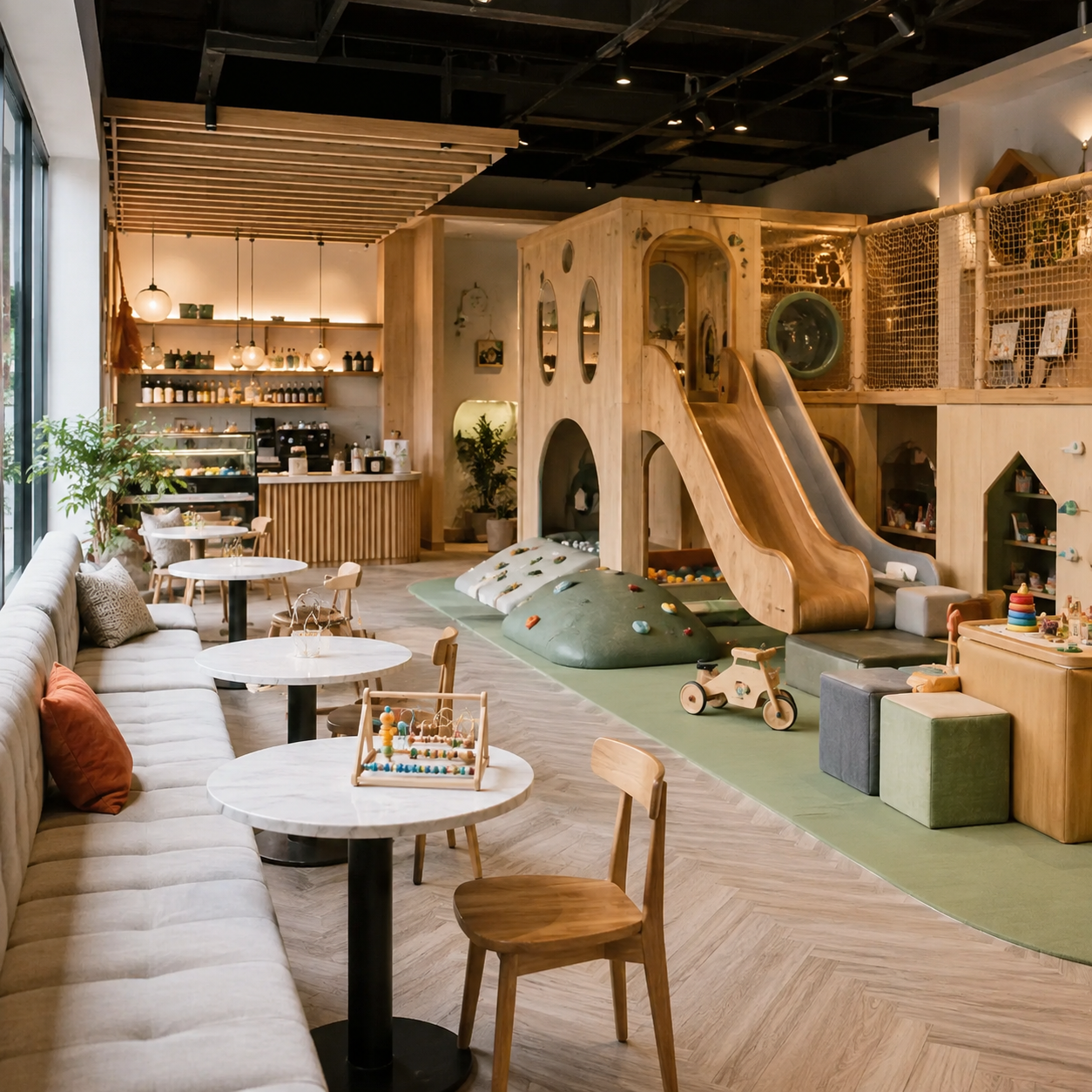
Kids cafe playground equipment has to work with seats, service routes, supervision, cleaning, and local project requirements—not just fit inside a rectangle. Toplay plans custom play cafe equipment around measured room inputs, intended users, and a written supply scope.
Use the popup to start your request and confirm how to transfer drawings. Include room dimensions, clear height, fixed obstructions, seating relationship, target age band, destination, and preferred activities.
Send Your Floor Plan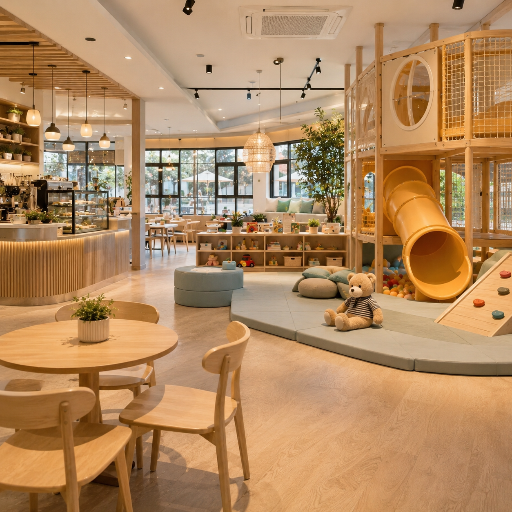
Custom Planned
Project Terms Buyers Can Compare Early
Quote comparisons create risk and delay when production, order quantity, payment, and delivery basis remain implicit. These four controls put the 15–30 working day schedule and the other commercial terms in view before detailed design.
Production Window
15–30 working days
After order details and design are confirmed; transit time is additional.
Starting Order
Minimum order quantity starts at one set
Subject to the approved custom project scope.
Payment
30% T/T deposit and 70% balance
Balance before loading; L/C terms may be reviewed for large orders.
Delivery Basis
EXW, FOB or CIF
Other Incoterms are reviewed with the quotation.
Screen the Room Before Choosing Equipment
The common mistake is treating nominal floor area as the only fit test; the 60 in (1525 mm) U.S. route reference illustrates how access geometry can change a compact plan. The Compact Venue Fit Screen exposes that risk but produces a planning result, not a safety, code, or commercial guarantee.
Pass to Review
Measured Room Package
Dimensions, clear height, columns, entrances, service routes, seating, and intended age bands are available.
Needs Inputs
Resolve Missing Interfaces
Confirm fixed obstructions, food and hot-drink routes, access, egress, maintenance access, and destination requirements.
Redirect
Choose Another Route
Home products, loose toys, immediate retail checkout, software, local venue search, and profit forecasts belong elsewhere.
Planning Reality
A floor plan can show enough area and still hide a blocked sightline, service-route conflict, or unreachable maintenance point. Cleaning access is a layout input, not a task to solve after installation. Food and hot-drink routes must be drawn beside the play entrance and seating flow.
Operations
Build an Activity Mix Around Users and Operations
The wrong indoor play activity creates a cleaning, circulation, or age-zone problem for a restaurant operator even when the structure fits. Candidate indoor playground equipment modules are not interchangeable, and the trade-off must be checked against users from 2 through 12 years, room geometry, destination rules, and the approved layout.
ASTM F1918-21 publishes a user scope from the fifth-percentile two-year-old through the ninety-fifth-percentile twelve-year-old. A request outside that range is not automatically covered by the same project assumptions.
Movement Layer
Commercial soft play equipment, each climber or play structure, balance, crawling, sliding, ball play, and gross-motor routes can be explored as separate candidate elements.
Imaginative Layer
Role play, themed touchpoints, and open-ended activity areas can support the venue concept without becoming product specifications.
Age and Size Layer
Toddler zoning, mixed-size kids play, and under-two requests require explicit operating rules and separate scope review.
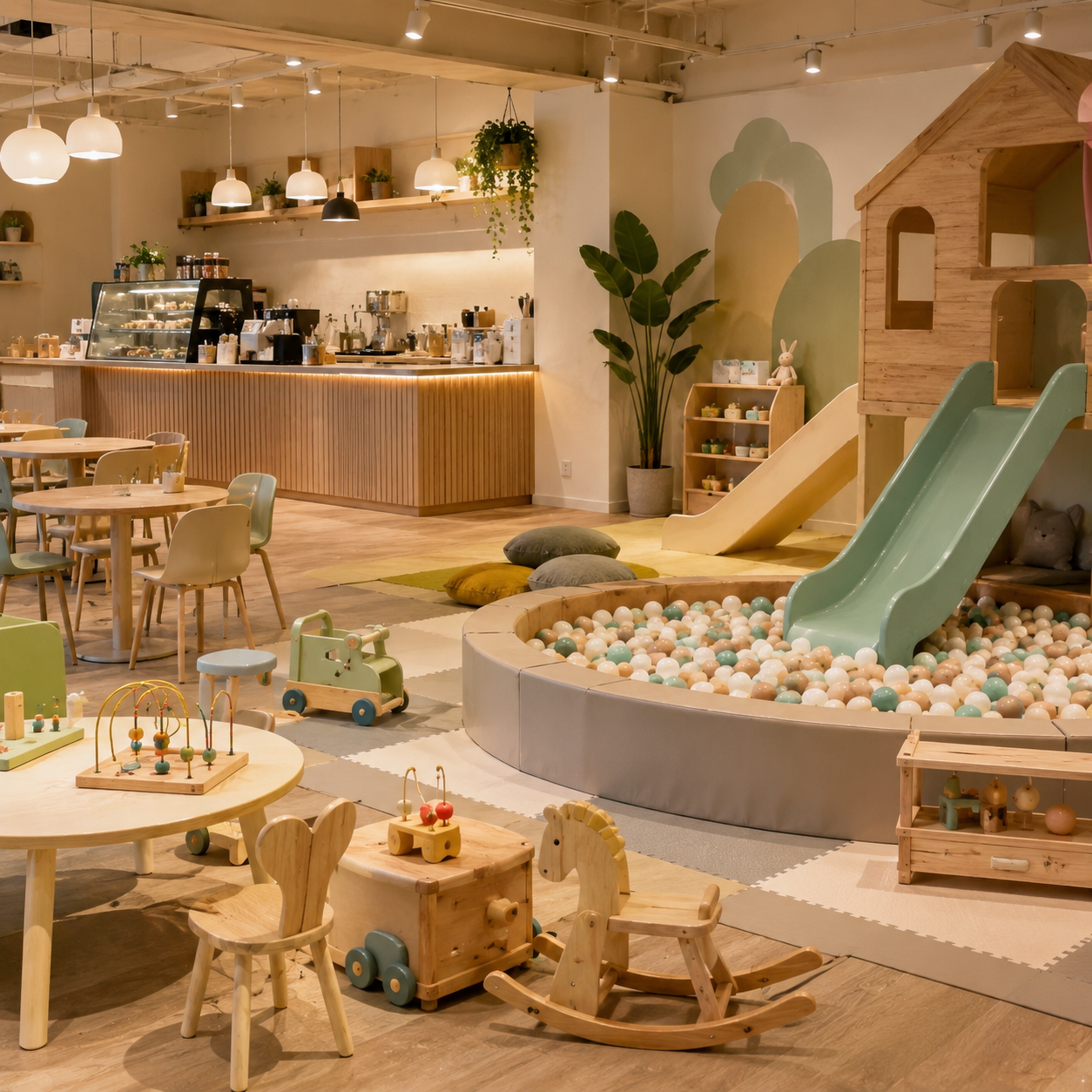
Map Seats, Play Zones, and Staff Access Together
A clear line from one café table to part of the play area does not establish active supervision. The Sightline-to-Seat Map is not a substitute for assigned staff, scanning, counting, listening, anticipation, engagement, or access.
Planning aid — conceptual layout, not a Toplay installation- Mark every intended seat and staff position, then test what each point cannot see.
- Keep the play entrance, queue, stroller area, and service circulation in the same drawing.
- Identify how staff can reach a child or blocked route without crossing an unsafe shortcut.
- Define who will scan, count, listen, anticipate, engage, and redirect during operation.
Connect Approved Drawings to the Production Chain
An equipment list creates a proof gap because machine ownership cannot define acceptance criteria or inspection evidence. As the manufacturer, Toplay describes laser tube cutting, tube sawing, punching, drilling, bending, MIG/TIG/CO₂ and robotic welding, grinding, and polishing equipment; if an ISO reference is required, it must be named in the project documents rather than inferred from that list.
Established in 2014
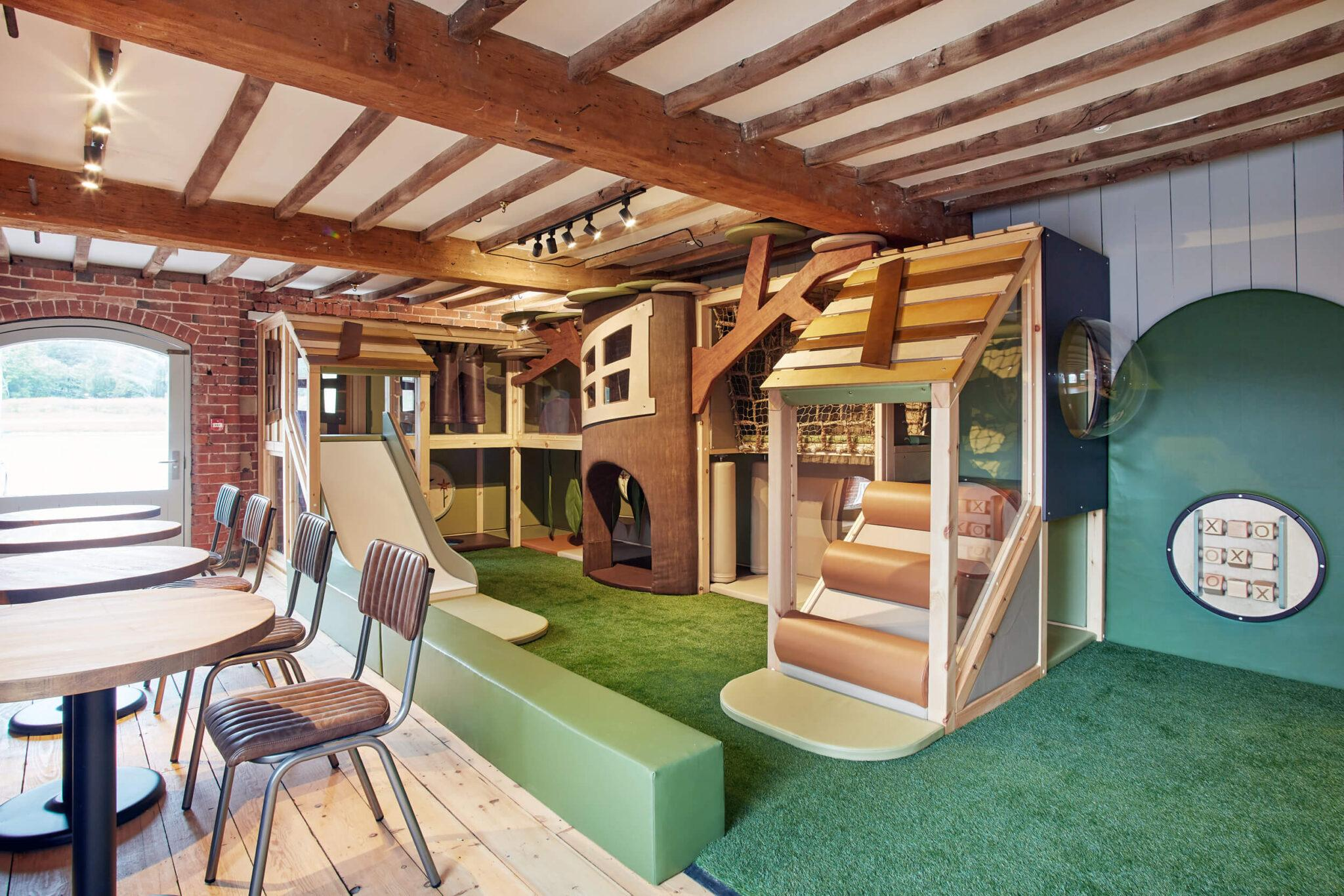
Guangzhou Toplay Amusement Equipment Co., Ltd. specializes in indoor children’s playground equipment.
Customizable products
Project geometry, activity selection, and theme are defined in approved documents rather than assumed from a generic model.
40+ countries
Toplay states that products have been exported to markets including France, India, Sri Lanka, South Africa, Mexico, Malaysia, and Poland.
90%+ global sales
The company identifies international business as the large majority of its product sales.
20%+ stated growth
This is Toplay’s stated average annual growth figure, not an audited performance claim for a buyer’s venue.
International fairs
Toplay reports active participation in international fairs.
Provide required drawing references, acceptance criteria, destination documents, or named standards before the production scope is approved. The word durable is not a measurable acceptance criterion, and machine ownership alone cannot answer those requirements.
Put Dimensions, Applicability, and Terms in Writing
The following table separates planning references from Toplay’s commercial commitments. Reference dimensions are not product specifications and do not establish project compliance.
| Control | Published value | How to use it | Who confirms applicability |
|---|---|---|---|
| ASTM F1918-21 published user scope | Age 2 through 12 percentile range stated in the scope | Define the intended-user discussion | Project team and applicable authority |
| U.S. ground-level accessible route | 60 in (1525 mm) | U.S. planning reference | U.S. project designer or authority |
| Conditional U.S. route exception | 44 in (1120 mm) for certain areas under 1,000 sq ft (93 m²) | Check every condition before use | U.S. project designer or authority |
| U.S. elevated accessible route | 36 in (915 mm) | U.S. planning reference | U.S. project designer or authority |
| U.S. clear floor or ground space | 30 × 48 in (760 × 1220 mm) | U.S. planning reference | U.S. project designer or authority |
| Toplay production schedule | 15–30 working days after order details and design are confirmed | Transit time is additional | Written quotation and approved schedule |
Pricing
Final quotation follows the approved custom project scope, geometry, activity mix, materials, destination, delivery basis, and assigned services.
Order quantity
Minimum order quantity starts at one set, subject to the approved custom project scope.
Payment terms
30% T/T deposit and 70% balance before loading; L/C terms may be reviewed for large orders.
Trade terms
EXW, FOB or CIF; other Incoterms are reviewed with the quotation.
Move From Room Inputs to an Approved Supply Scope
Submit inputs
Share room, users, destination, activity, and commercial requirements.Screen interfaces
Identify missing access, supervision, service, maintenance, and operating inputs.Review concept
Compare layout, activity zones, circulation, and responsibilities.Approve documents
Record design, supply scope, price, schedule, and delivery basis.Schedule production
Start after order details and design are confirmed.Complete handoff
Execute freight, site work, installation, inspection, and operation as assigned.| Responsibility | Toplay supply side | Buyer or operator | Other project party |
|---|---|---|---|
| Room and access information | Identify required inputs | Provide and verify dimensions, obstructions, and access | Surveyor or contractor confirms when appointed |
| Destination rules and approvals | Provide only documents included in the quotation | Identify requirements and secure approvals | Authority, consultant, or inspector decides applicability |
| Freight and installation | Perform the written Incoterm and installation scope | Coordinate customs, unloading, storage, site access, and local work | Forwarder, broker, carrier, installer, or builder performs assigned work |
| Supervision and venue operation | Provide agreed equipment-use information | Assign staff, operating rules, cleaning, inspections, and records | Operations adviser or regulator reviews when required |
Play Cafes & Small Venues Essential Evaluation Tools
01
Compact Venue Fit Screen
Check whether the basic room and operating inputs are ready for a custom concept review. This is a briefing screen, not a compliance or fit approval.
Access Tool →02
Sightline-to-Seat Map
Turn observation points, blind spots, route conflicts, and staff access into one review score. The score is a planning prompt, not proof of active supervision.
Access Tool →03
Play Cafe Input Pack
Check whether six quotation inputs contain enough information for a useful first review. This tool measures brief completeness; it does not upload, store, or approve project data.
Access Tool →Play Cafe Equipment Questions to Resolve Before Ordering
01.
How much room is needed for play cafe equipment?
There is no universal minimum promised on this page. Start with measured geometry, access, seating, service routes, maintenance access, intended users, and destination requirements.
02.
What information is needed to plan kids cafe playground equipment?
Use the Play Cafe Input Pack for room, user, activity, destination, installation, and commercial inputs. Missing information should be identified before a final quotation.
03.
How should café seating and playground sightlines be planned?
Map seats, staff positions, play entries, massing, columns, and service routes together. The map is a planning aid; the operator remains responsible for an active-supervision system.
04.
Which activities fit a compact commercial play café?
Candidate activities can include soft play, movement, imaginative, sensory, and open-area elements. Final selection depends on intended users, room fit, applicable requirements, cleaning access, and the approved project scope.
05.
How should different age or size groups be considered?
Define intended age and size groups before layout review, then address physical zoning and operating rules. Under-two requests need separate scope review rather than an assumed extension of the cited ASTM F1918-21 range.
06.
Can Toplay customize the theme and layout?
Yes, Toplay offers customizable products. Geometry, activity mix, theme, manufacturing documents, and included services are confirmed in approved project documents.
07.
What affects the price of play cafe equipment?
Pricing follows the approved scope, room geometry, activity mix, materials, destination, delivery basis, and assigned services. This page does not publish a price before those inputs are defined.
08.
What is the production window?
Production is scheduled for 15–30 working days after order details and design are confirmed; transit time is additional. The written quotation confirms the project schedule.
09.
What are the minimum order, payment, and trade terms?
Minimum order quantity starts at one set, subject to the approved custom project scope. Payment is 30% T/T deposit and 70% balance before loading; L/C terms may be reviewed for large orders, while EXW, FOB or CIF are available and other Incoterms are reviewed with the quotation.
10.
Who handles freight, customs, installation, inspection, and venue operations?
Ownership follows the written quotation and responsibility matrix. The buyer must confirm the importer, local approvals, site work, operating supervision, hygiene, inspections, maintenance, and any third-party appointments.



