Get in touch with Guangzhou Toplay amusement equipment co. Company

Hospitality & Restaurants: A Practical Guide to Family Play Areas

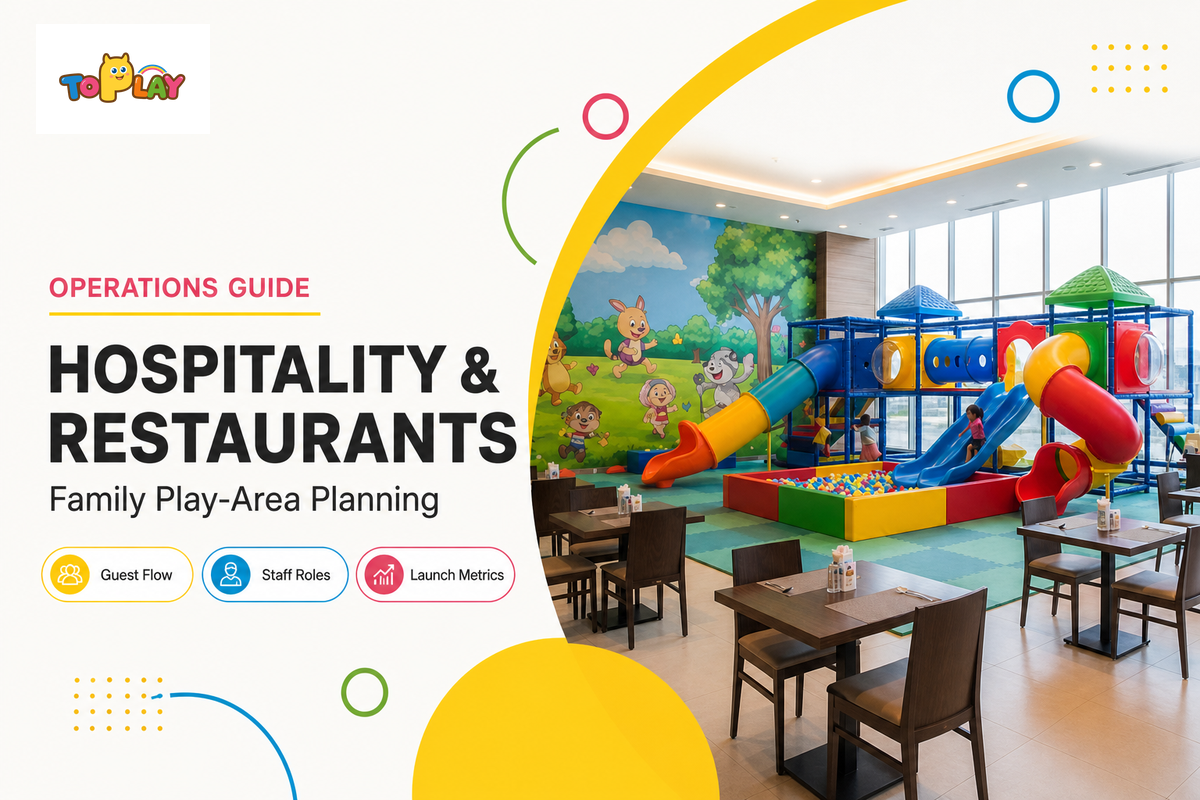
Project Build Support
Need an indoor playground layout before your next quote?
Send venue size, ceiling height, age range, theme direction and opening schedule. Toplay can match the play route, safety surface and delivery scope before you lock the quotation.
Layout fitFootprint, traffic and age zones
Build scopeEquipment, surface and installation
Quote pathFactory review before RFQ
RFQ Checklist
What to include for faster project matching
Venue and capacity
Floor size, ceiling height, entrance route, target age groups and daily visitor expectations.
Theme and operation
Brand direction, supervision plan, opening timeline and any food, retail or party-room requirements.
Delivery context
Send Project Details
City, floor access, installation window, local review needs and budget direction.
Hospitality & Restaurants refers to venues that combine food, lodging, or guest service with a family play area. The play space becomes a small operating system inside the wider guest experience: it changes movement, staff responsibility, cleaning, inspections, and the response when something is not ready for use. Equipment is one layer. Daily control keeps the idea workable after opening day.
This guide is for restaurant operators, hotel managers, play-cafe founders, designers, and shift leaders. It focuses on operating decisions rather than equipment configuration or purchasing. Requirements vary by location, venue type, insurer, and play-system classification, so use the referenced standards and guidance as starting points—not as a substitute for local review.
Key takeaways
- Choose the supervision and staffing model before approving a floor plan.
- Map guest, service, hot-food, stroller, restroom, cleaning, and emergency routes together.
- Treat sightlines as one control layer, not proof that supervision is adequate.
- Give every inspection finding an owner, an action, a verification step, and a reopening decision.
- Measure downtime, exceptions, complaints, and corrective-action closure before claiming a business result.
What Does “Hospitality & Restaurants” Mean for Family Play Areas?
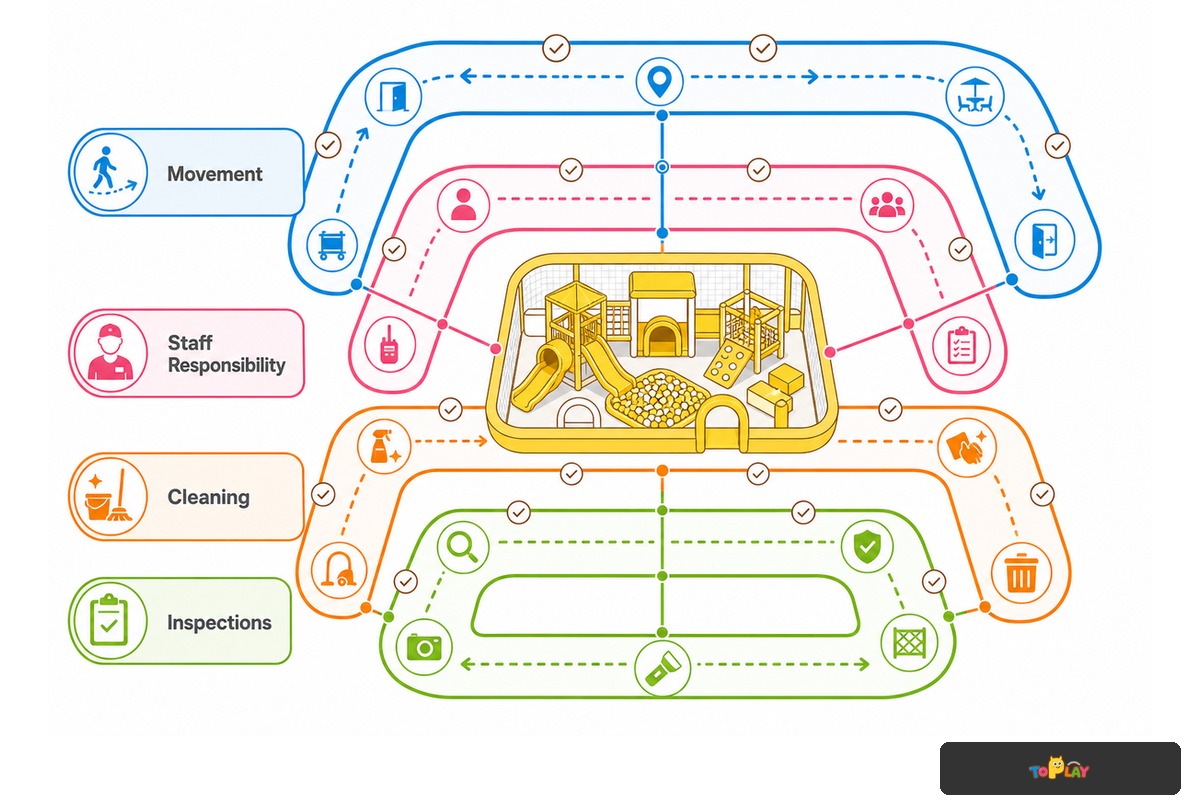
In this guide, “Hospitality & Restaurants” means venues that combine food, lodging, or guest service with a shared children’s play space. That includes restaurants, hotels, resorts, play cafes, and mixed family venues. The operating question is simple: can the team run the play area without weakening circulation, service, cleaning, or response procedures elsewhere in the venue?
This is deliberately different from Toplay’s hospitality and restaurant play-area solutions page. That page is the commercial next step for configuration and project fit. Here, the job is to help an operator decide what must be controlled before a project reaches that stage.
The demand context is real, but it should not be oversold. Hilton’s 2025 travel research reported that 70% of surveyed travelers with children chose destinations around their children’s needs, while 63% often or always let children influence dining choices. Those figures explain why family amenities receive attention. They do not predict the revenue of a particular restaurant or hotel.
The operating scope also follows the control categories in the CPSC soft-contained-play checklist: condition, cleanliness, clear circulation, and posted use guidance all sit alongside the play structure itself.
Operating rule: Treat the amenity as a shared operational risk, not an isolated product. The reason is that ambiguous responsibility, a blocked route, or an unresolved defect affects the restaurant or hotel even when the play equipment itself is intact.
Choose the Operating Model Before the Floor Plan
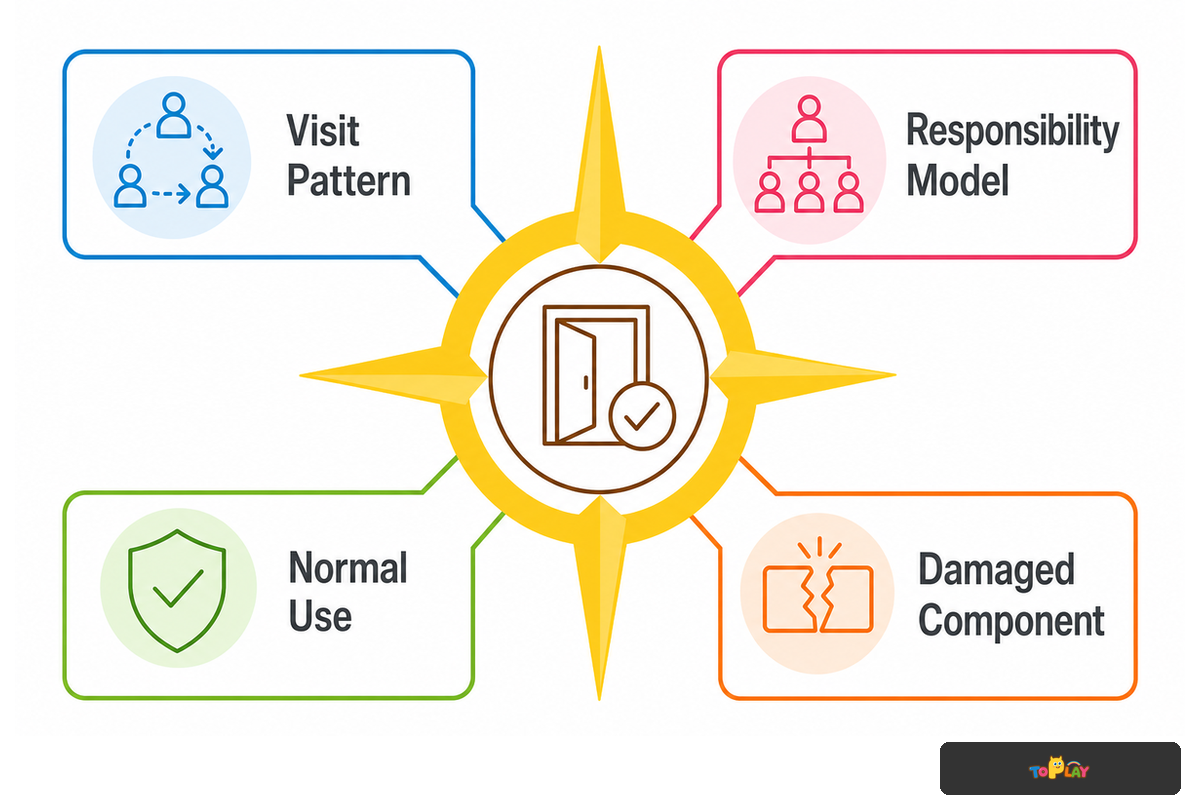
Restaurants, hotels, and play cafes can use similar equipment yet need very different operating rules. Start with the visit pattern and responsibility model. If no one can name the person who checks the area, handles an exception, and decides whether it may reopen, the concept is not ready for layout approval.
9-Model Venue Decision Grid
| Venue model | Visit pattern | Likely operating owner | Supervision assumption to test | Evidence needed before opening |
|---|---|---|---|---|
| Restaurant | Meal-led visits with arrival and service peaks | Shift manager with assigned floor staff | Parents remain responsible while staff manage venue controls | Route test, opening check, cleaning plan, incident path, handoff record |
| Hotel or resort | Longer stays and a changing age mix across the day | Rooms, recreation, or guest-services leader | Responsibility may change if programming or drop-off care is offered | Department handoff, access policy, operating hours, escalation list, closure authority |
| Play cafe | Play-led sessions with food service alongside | Duty manager or dedicated play lead | Entry control and staff observation may be more active | Capacity method, check-in flow, parent policy, session reset, cleaning and defect log |
| Resort activity zone | Long stays, scheduled activities, and seasonal peaks | Recreation leader with engineering support | Responsibility changes between open play and staffed programs | Program boundary, age policy, department handoff, weather contingency, closure authority |
| Buffet restaurant | Self-service movement with repeated trips between table and food stations | Restaurant manager with a named zone owner | Adults may leave the table more often than in table service | Hot-food route test, tray route, sightline map, spill response, peak observation |
| Food hall | Multiple vendors, open seating, and unclear shared-space ownership | Property operator or common-area manager | No single tenant should be assumed to control the play area | Landlord-tenant responsibility map, cleaning scope, incident routing, common-area rules |
| Family-friendly bar or pub | Day-to-evening change in crowd, sound, and alcohol service | General manager with time-based operating rules | The appropriate play schedule may change as the venue changes character | Operating-hour boundary, entry policy, noise observations, closing routine, signage |
| Hotel restaurant | Local diners and staying guests share the same amenity | Food-and-beverage leader with guest-services handoff | Room access and restaurant access may create different expectations | Access policy, booking flow, room-charge incident path, cross-department contact list |
| Event or private-dining venue | Irregular events with changing layouts and temporary staff | Events manager for each booking | A host may expect a service that the standard venue policy does not provide | Event brief, furniture reset, temporary barrier check, host acknowledgment, end-of-event handoff |
Be especially careful when the service model changes. Hotel playrooms where parents stay nearby are not the same as kids’ clubs. Cafes with casual parent supervision are not automatically equipped for drop-off sessions, camps, or classes. Those changes may affect staffing, background checks, licensing, insurance, emergency procedures, and local approvals.
For a multi-brand hospitality group, the policy may need one core control system with venue-level adjustments. Restaurants and bars can change their menu and culinary service without changing the play-area responsibility model, but a new event format, operating period, or child-care promise can. The aim is to inspire consistent decisions across the portfolio without pretending every location has the same risks.
One useful test is to ask three people—the owner, a shift manager, and a new employee—to describe who is responsible during normal use, a spill, a damaged component, and an injury. This reflects the CPSC handbook’s maintenance principle that inspections must connect to recorded problems and corrective action. If the answers conflict, write the policy before changing the drawing.
Design the Guest Journey Around Route Conflicts
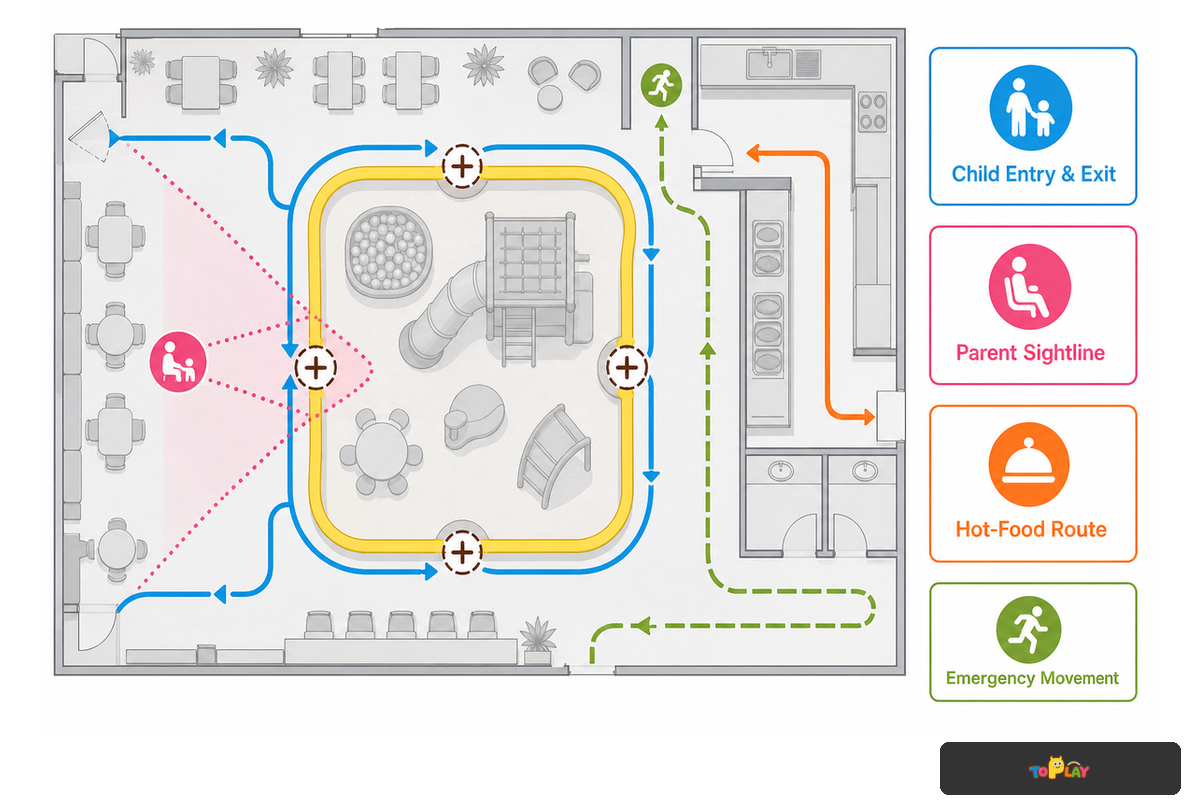
With the operating model defined, empty-room drawings still hide operating friction. That generous-looking route can disappear behind chairs, a birthday queue, stroller parking, high chairs, or a cleaning cart. Trace the venue during the busiest realistic period, not during an ideal quiet hour.
Guest-Flow Constraint Matrix
| Flow or viewpoint | Desired condition | Conflict signal | Owner | Evidence |
|---|---|---|---|---|
| Child entry and exit | One legible approach with no uncontrolled run into service traffic | Children cross a queue, pickup point, or server aisle | Operations manager | Peak-period route walk |
| Parent sightline | Caregivers can see the relevant entry and play zone from intended seating | Booths, columns, people, or displays create blind spots | Designer and floor manager | Occupied-seat sightline review |
| Food and hot-drink route | Servers reach tables without crossing the controlled play entry | Trays, hot drinks, or dirty dishes share the play approach | Restaurant manager | Service-route simulation |
| Restroom and stroller route | Families can move without narrowing required circulation | Strollers collect near gates or accessible paths | Front-of-house lead | Arrival and restroom peak check |
| Cleaning access | Staff can isolate and service the area without moving chemicals or waste through food pickup | Clean and soiled items use the same counter or route | Cleaning lead | Cleaning-route walk |
| Emergency movement | Required exits and circulation remain available under real occupancy | Queues, furniture, gates, or stored items reduce clearance | Qualified local reviewer | Authority-approved plan and operating check |
| Arrival and check-in | Families understand entry rules without blocking host or lobby service | Rule explanations create a queue across the service path | Host or guest-services lead | Peak-period observation and revised arrival script |
| Closing and handoff | Open exceptions remain visible to the next shift | A verbal-only handoff loses the status of a closed component | Outgoing and incoming shift managers | Signed handoff with unresolved items and reopening authority |
Run the test with realistic interruptions. One adult may be ordering while another manages two children. Servers may be carrying soup. Birthday groups may arrive as another party leaves. Children may need the restroom while a spill closes the shortest route. If the plan only works when every guest behaves perfectly, it does not work yet.
Sightlines deserve particular care. Low barriers or transparent panels may help, but visibility does not automatically equal supervision. The CPSC checklist also treats clear walkways and posted use guidance as separate controls. Adults can be distracted, structures have interior areas, and staff carrying food cannot simultaneously act as dedicated play monitors. Mark what each position can and cannot see, then pair visibility with entry control, posted rules, staffing, and response procedures.
Separate Age Zones and Plan Inclusive Routes Early
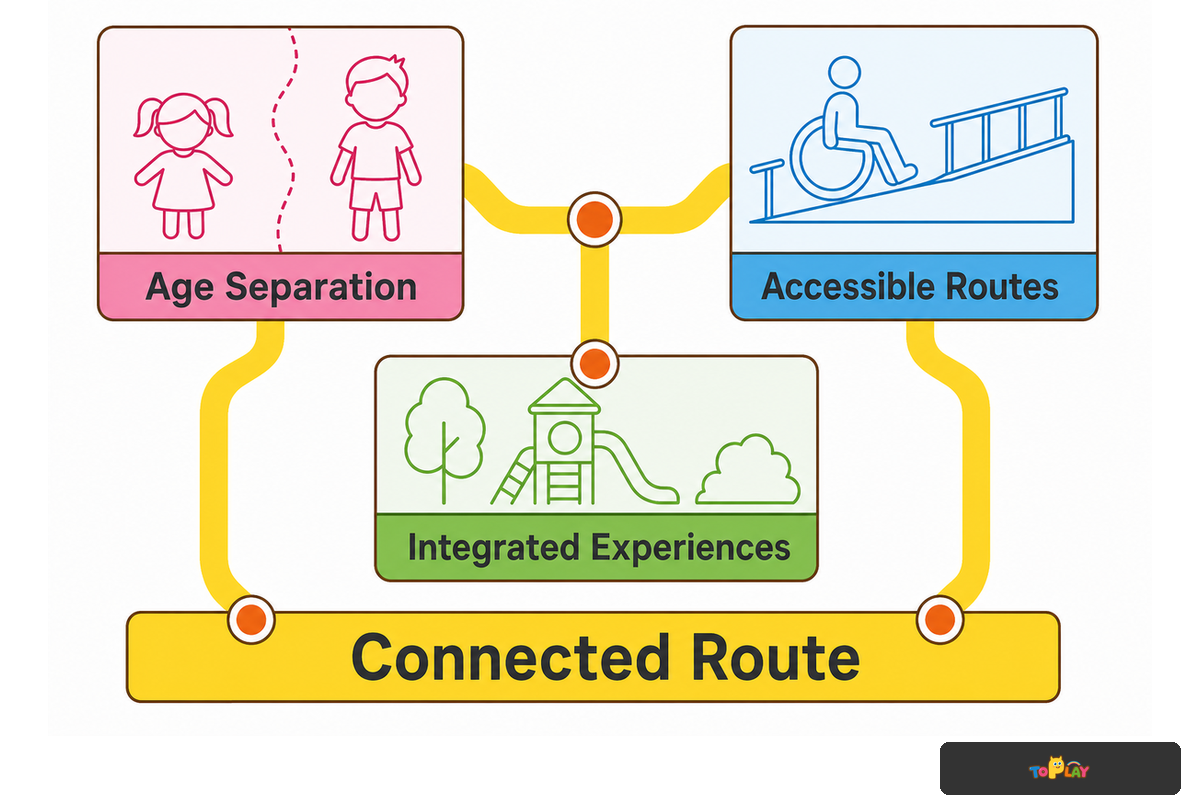
Age separation is an operating decision as much as a design choice. The U.S. Consumer Product Safety Commission’s soft-contained-play checklist warns that smaller children are at a disadvantage in collisions with larger children and advises following posted use and size recommendations. That supports a practical rule: define the intended users and enforce the boundary rather than letting the age mix drift during busy periods.
For soft-contained play, routine visual checks should cover the enclosure and use conditions. The CPSC checklist calls out torn or frayed netting, damaged rope or webbing, torn surfacing, cluttered walkways, general cleanliness, and compliance with posted guidance. Turn those points into venue-specific inspection prompts, then add the manufacturer’s instructions and local requirements.
Accessibility also belongs at the start. In U.S. facilities covered by the ADA, the U.S. Access Board play-area guide explains requirements for accessible routes, required play components, entries, and integrated ground-level experiences. Grouping accessible components away from the main play experience does not create the same integration. Outside the United States, different requirements may apply, but the planning question remains useful: can a guest reach the venue, dining area, restroom, play entry, and relevant experiences through a connected route?
Do not copy a dimension from an online guide and assume the venue complies. The answer can depend on the facility, alteration scope, play structure, route, local adoption, and professional interpretation. Keep accessibility, egress, and operational circulation on the same drawing so one review does not erase the work of another.
In practice, a restaurant team can run a 15 min observation and a 30 min busy-period review to see whether younger users, mobility devices, strollers, staff routes, and waiting families can use the planned boundaries together. These are test windows, not accessibility standards.
Assign Supervision, Inspection, and Escalation Ownership
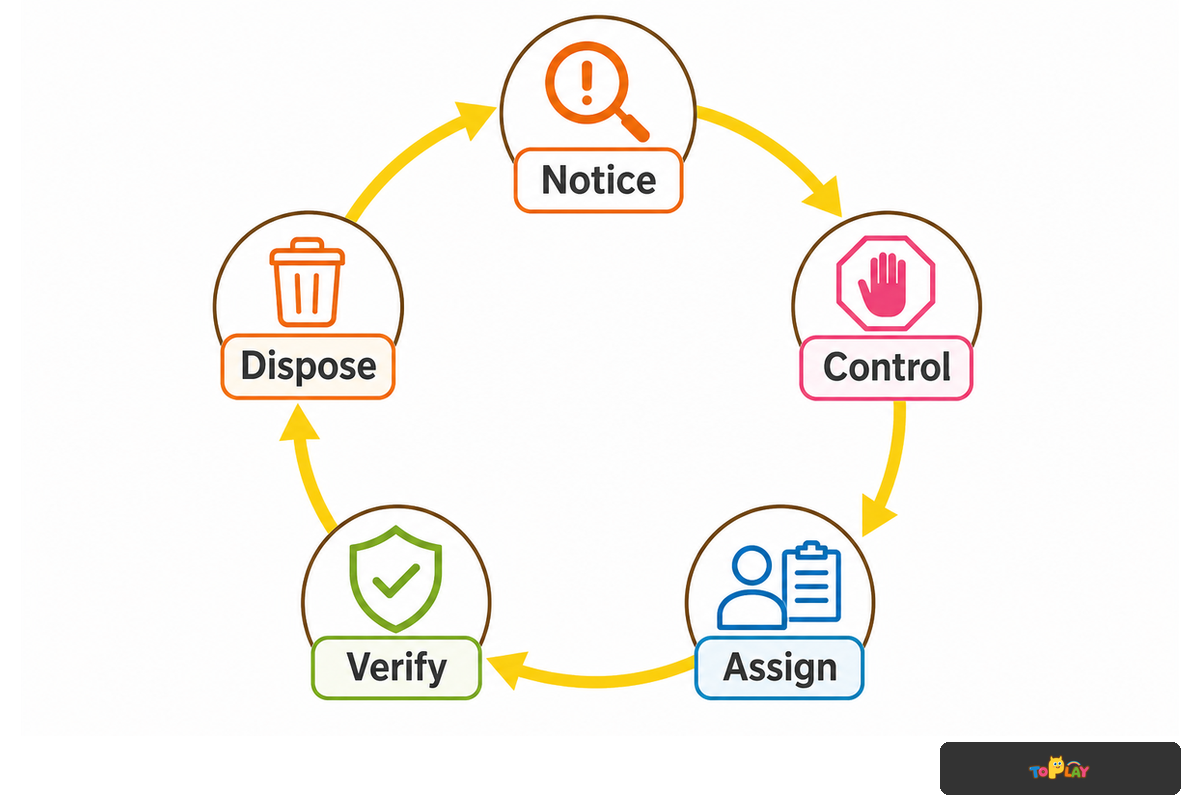
Once age boundaries and routes are mapped, parent-supervision notices still do not replace the operator’s own responsibilities. The venue needs to inspect the area, act on visible problems, enforce its posted restrictions, respond to incidents, and take an affected area out of use when necessary. At the same time, staff presence does not automatically mean the operator has accepted child-care responsibility. The policy must say what each party is expected to do.
The useful counterpoint is that staffing numbers and sightlines are not always evidence of effective supervision. NSW Department of Education supervision guidance emphasizes position, attention, environmental setup, scanning, and the ability to respond. Translate that adjacent-setting principle into a hospitality rule: a named employee should know the play area’s status, but the role must fit alongside that employee’s other duties. If the person is also covering a host stand, running food, and solving guest complaints, test whether the role is credible during the busiest 15 minutes.
One Defect, One Owner, One Disposition
- Notice: record the condition in plain language and identify the affected area.
- Control: stop use, isolate a component, redirect guests, or close the area according to venue policy.
- Assign: name the person responsible for cleaning, repair, manager review, or external service.
- Verify: confirm the action against manufacturer instructions and the venue’s acceptance criteria.
- Dispose: record whether the item is reopened, remains closed, or needs further escalation.
Possible stop-use signals include damaged netting, torn surfacing, an obstructed route, contamination, a missing barrier, an unresolved incident, or the absence of the responsible operating role. This is not a universal legal list. Each venue should build its list from the equipment manual, risk review, insurer input, and local requirements.
Turn Cleaning and Inspection Into an Evidence Loop
“Clean daily” is too vague to manage. It does not identify the surface, method, product, person, time, finding, or readiness decision. Frequency should reflect actual use, high-touch points, visible soil, food or drink incidents, bodily-fluid incidents, manufacturer instructions, product labels, and local health rules.
CDC guidance for early-care settings—not restaurant regulation—offers a useful sequence: clean visible soil before sanitizing or disinfecting, and use products suitable for the surface according to their labels. The setting matters. Hospitality operators should combine that hygiene principle with the equipment maker’s care instructions and local health requirements rather than copying a chemical or timetable from another venue.
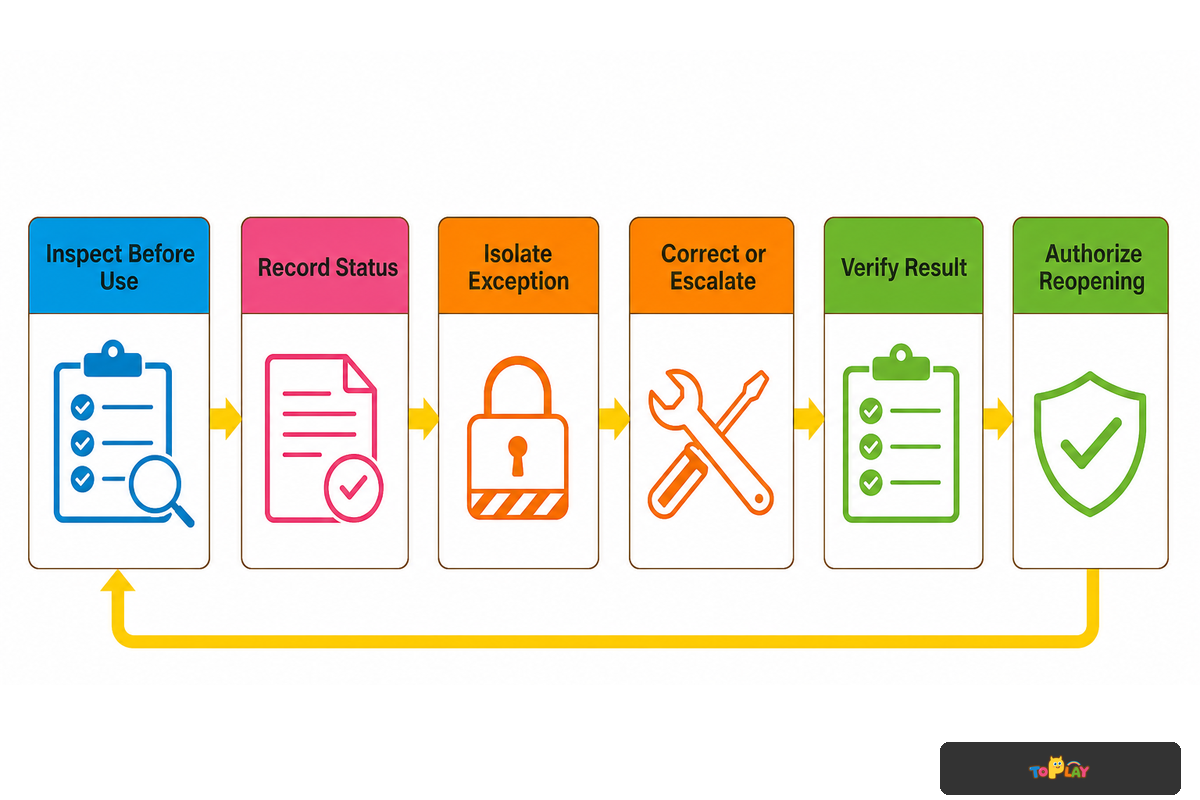
Opening-to-Closing Control Loop
- Inspect before use. Check routes, entries, barriers, netting, surfacing, visible cleanliness, posted guidance, and any manufacturer-defined points.
- Record status. Note the time, inspector, area checked, finding, and ready/not-ready condition.
- Isolate the exception. Keep affected items or areas separate from those ready for use.
- Correct or escalate. Clean, repair, replace, or refer the issue according to instructions and policy.
- Verify the result. A second check should confirm that the acceptance condition has been met.
- Authorize reopening. The role with reopening authority records the decision and any follow-up.
The CPSC Public Playground Safety Handbook makes an important distinction: inspections alone are not a full maintenance program. Problems found during an inspection need to be recorded and addressed. That is why the final two steps—verification and disposition—matter. Without them, a checklist becomes a stack of observations rather than a control system.
90-Day Pilot Measurement Plan
Treat the timing below as a measurement design, not a universal operating standard. Venues might collect a 7 days baseline, run staff simulations for 14 days, and use a 30 days soft-launch window before a 90 days review. During the pilot, sample a busy period in 15 min and 30 min blocks, review open exceptions after 2 hr and 4 hr, and require a manager to classify any unresolved item within 24 hr. Local rules, manufacturer instructions, incident severity, and actual use always take priority over the example windows.
Store response time in min, downtime in hr, completed checks as a %, recurring exceptions per 30 days, and corrective actions still open after 7 days. These units make comparisons possible without inventing a revenue claim. They also help a team see whether a policy works over 3 months, 6 months, and 12 months instead of judging it from one busy shift.
Reporting buckets should match the venue rather than become universal targets. A log can distinguish 5 min and 15 min response snapshots, a 30 min escalation point, open status at 1 hr, 2 hr, 4 hr, and 8 hr, manager review at 24 hr, and trend views after 7 days, 14 days, 30 days, 90 days, and 12 months. Use only the intervals that lead to a real decision.
Keep “clean” and “not ready” states physically clear. Labeled holding containers may work for small removable items. Barriers and status tags may be needed for a component or zone. Staff should never have to remember which item was awaiting attention from an informal conversation at the previous shift.
Control Noise Without Sacrificing Visibility
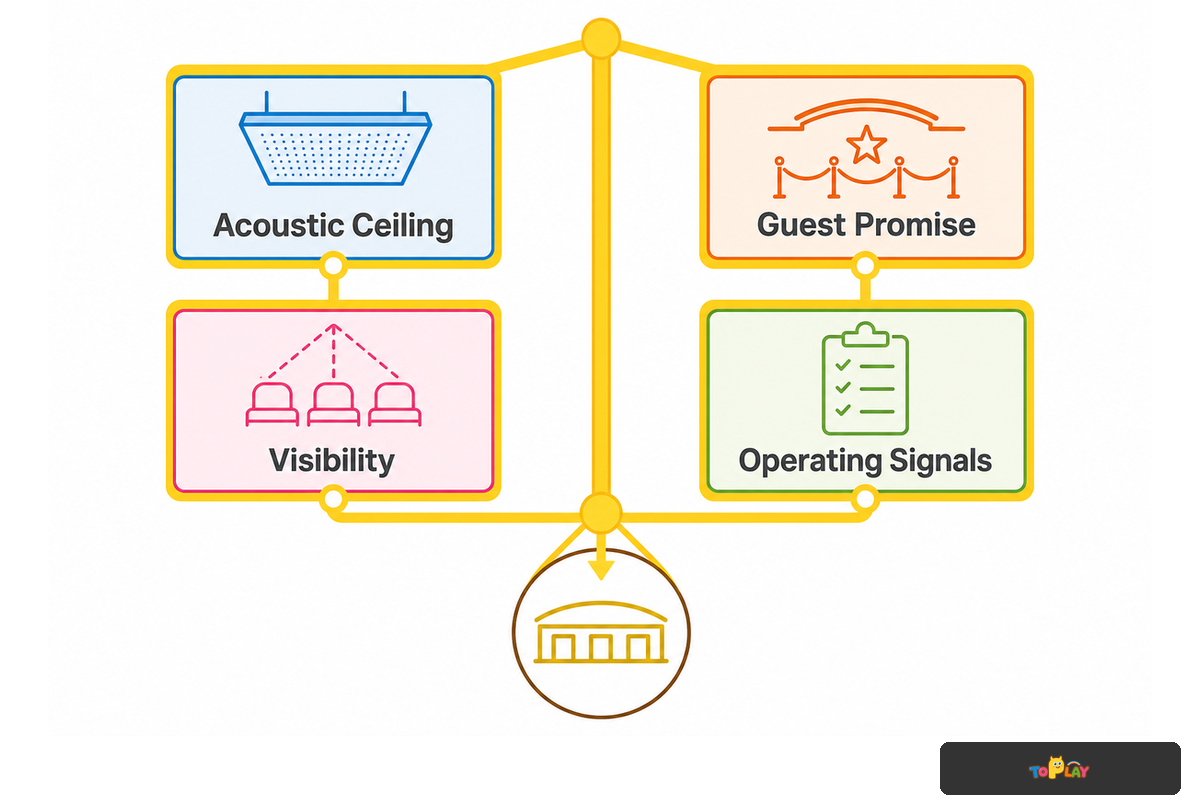
After cleaning states and routes are clear, noise control remains a trade-off rather than a single material choice. Full separation may improve acoustic containment but reduce observation or complicate access. An open layout may preserve views while allowing activity noise into dining or lounge areas. The right mix depends on room geometry, finishes, occupancy, mechanical systems, service style, and the venue’s guest promise.
Questions for the design team can include acoustic ceiling or wall treatment, durable soft finishes outside active-use zones, door behavior, seating position, barrier height, and separation of quiet activities from high-energy movement. The CPSC handbook treats visibility and unobstructed circulation as safety-planning concerns, so acoustic treatment should not create a new blind spot or route conflict. Keep cleanability, fire performance, durability, and accessibility in the review; an acoustic product is not useful if it cannot be maintained in the intended setting.
Avoid inventing a universal decibel threshold. Instead, create operating signals: guests request relocation, staff cannot hear normal service communication, instructions at the play entry are not understood, or complaints cluster around certain periods. Record when and where those signals occur. The pattern gives the acoustic professional a better brief than “make it quieter.”
Restaurant teams should compare at least one 15 min peak sample with one 30 min quieter sample because room use, occupancy, and service routes change the acoustic risk. A qualified acoustic professional can then work from recorded conditions rather than a vague request for a certified “quiet” result.
Give Every Shift the Same Playbook
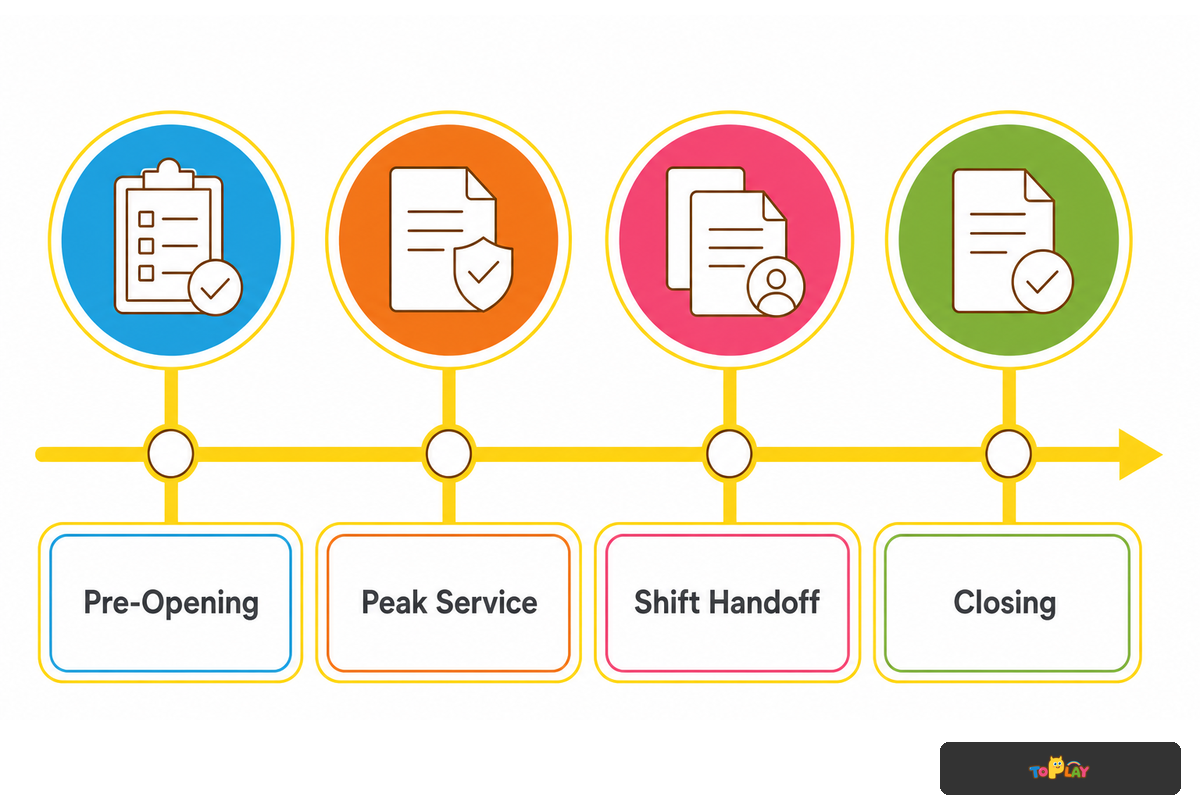
Those acoustic observations also need a shift owner. The play area should not depend on one experienced employee remembering everything. Put the handoffs into the shift routine and make open exceptions visible to the next team.
In a restaurant, a 15 min peak observation and a 30 min handoff review can reveal whether the named floor role is actually available. The evidence belongs in the same inspected shift record as any open exception.
| Moment | Owner | Action | Evidence |
|---|---|---|---|
| Pre-opening | Assigned opening employee | Complete condition, cleanliness, route, and status checks | Signed or digital opening record |
| Peak service | Named floor role | Watch entry conditions, bottlenecks, posted-policy issues, and visible exceptions | Timed observation or exception note |
| Spill or contamination | Cleaning lead and duty manager | Isolate, clean, follow the label and instructions, verify, decide readiness | Event and reopening record |
| Damage found | Duty manager | Stop use, identify scope, assign repair or service, communicate status | Defect ticket and closure tag |
| Injury or complaint | Manager under venue procedure | Provide immediate assistance, preserve facts, notify required parties, follow local and company procedures | Incident record with access controls |
| Shift handoff | Outgoing and incoming leads | Transfer closures, pending actions, guest issues, and next checks | Handoff acknowledgment |
| Closing | Closing employee | Remove area from service, clean, inspect, and assign unresolved work | Closing record and next-action owner |
Keep the record proportionate. Small venues do not need a complicated software platform to start. They do need consistent fields, accountable names, and a way to see open issues. This matches the CPSC maintenance guidance that identified problems should be documented and corrected. Paper logs can work if they are legible, reviewed, retained, and connected to corrective action. Digital logs can fail if employees click through them without looking.
Review Post-Launch Performance Without Inventing ROI
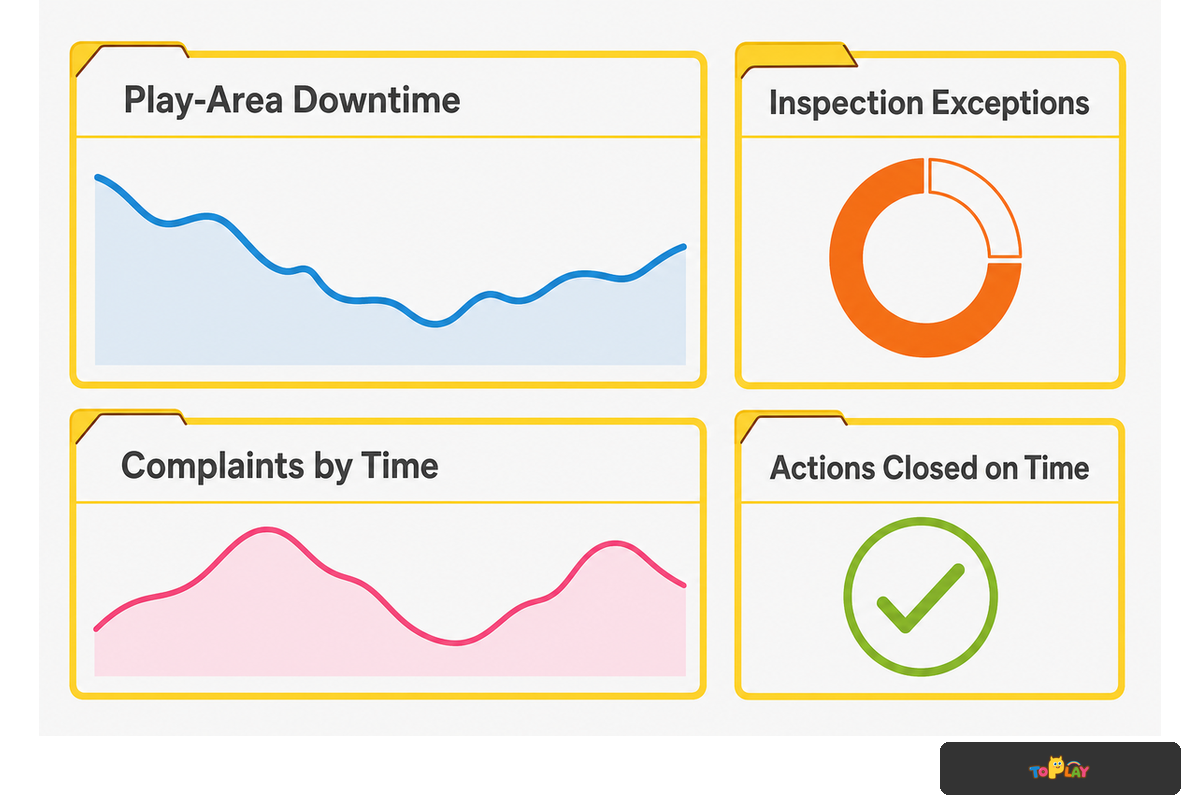
Play areas may influence family visits, dwell behavior, and guest preference, but they can also create labor, downtime, complaints, or service friction. Measure both sides. Establish a baseline before opening and define a review period; otherwise, one busy weekend can be mistaken for a lasting result.
Restaurant operators can compare a 7 days exception trend with a 30 days guest-feedback trend because the two measures answer different questions. Inspect both before changing staffing or attributing the result to the amenity.
A compact review can pair a 15 min peak observation with a 30 min handoff check, flag an item still open after 2 hr, require manager classification within 24 hr, and compare closure patterns after 7 days and 30 days. These are example decision intervals, not universal targets.
If a recurring exception is still unresolved after 48 hr, track whether the same failure pattern returns within 60 days.
| Metric | What it may signal | Owner | Review cadence |
|---|---|---|---|
| Play-area downtime | Reliability, repair delay, or weak reopening ownership | Operations manager | Weekly and monthly |
| Inspection exceptions | Recurring wear, training gaps, or unclear acceptance criteria | Maintenance or facility lead | Weekly |
| Cleaning completion and incident cleans | Workload pattern and schedule fit | Cleaning lead | Daily summary, weekly review |
| Complaints by type and time | Noise, cleanliness, visibility, behavior, or route conflicts | Guest-services lead | Weekly |
| Staff interruptions | Whether the assigned role is realistic during service peaks | Shift manager | Selected peak observations |
| Family visit or booking feedback | Whether the amenity matters to the target guest | Commercial or guest-experience lead | Monthly |
| Corrective actions closed on time | Whether findings become completed work | General manager | Weekly |
If the venue tracks dwell time, repeat visits, bookings, or average check, do so lawfully and ethically. Compare like periods, account for promotions and seasonality, and avoid claiming causation from one change. The operational side of the review should retain the CPSC handbook’s inspection-to-correction logic. Strong results are not only more traffic. They also show an experience the team can operate without rising exceptions, unresolved defects, or service disruption.
When Should an Operator Delay the Project?
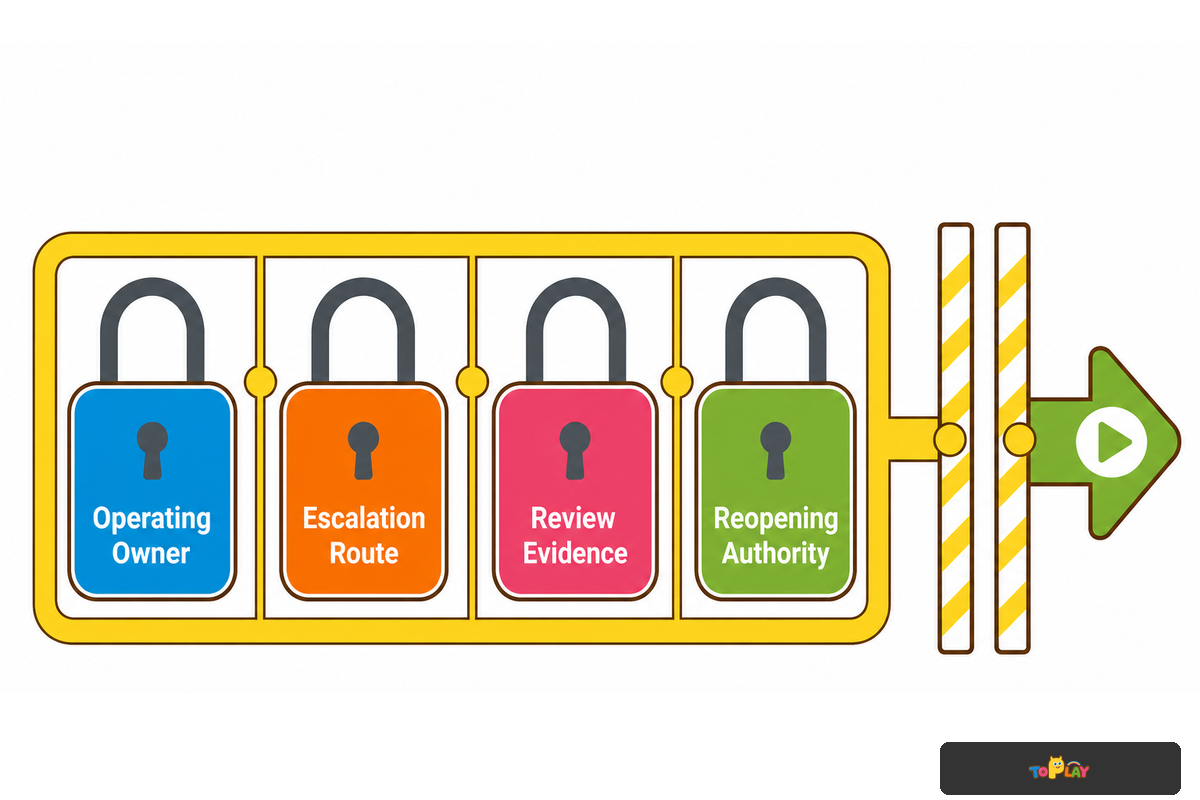
Post-launch evidence can also show when the operating foundation is missing. In that case, delay is sensible: a better floor plan cannot repair an undefined responsibility model after opening. Pause the project until the venue can name the operating owner, escalation route, review evidence, and reopening authority for each shift.
- No named manager owns the play area’s operating status.
- Parent, guardian, and staff responsibilities are ambiguous.
- Guest, service, hot-food, cleaning, or emergency routes remain unresolved.
- The team does not know which instructions, standards, or local reviews apply.
- Cleaning methods and material compatibility have not been confirmed.
- Employees can identify a defect but cannot close the area or reach the person who can.
- No one has authority to verify a correction and approve reopening.
- The venue cannot carry open issues across shifts.
- Post-launch metrics have no baseline or owner.
Resolve those points first. Then the commercial conversation becomes clearer because the venue can explain its users, operating hours, supervision model, routes, cleaning capacity, and acceptance process without asking the equipment proposal to solve every business problem.
A restaurant should also delay when a required certification or qualified local review remains unverified. For soft-contained play, confirm the applicable edition and scope rather than treating the ASTM F1918-21 listing as a substitute for local review. Delay as well when a 24 hr escalation has no owner or when the same exception stays open for 7 days without disposition.
Frequently Asked Questions
The questions below turn those readiness and delay conditions into brief operating answers.
What is a restaurant play area?
Restaurant play areas are designated spaces where children can play during a family’s visit while the venue continues normal food, guest-service, and facility operations. The useful definition includes much more than the equipment. It covers how families enter and leave, what parents can see, which age or size guidance applies, who among the staff knows the current status, how cleaning and inspection are recorded, and what happens after an incident or defect. The operating definition should also separate normal parent-supervised use from any staffed program or drop-off service. Equipment configuration belongs to the later project-design conversation; it cannot substitute for these daily controls.
Who should supervise children in a hospitality play area?
The venue should publish a policy that explains what parents or guardians must do and what the operator’s staff are responsible for. Parent-supervision rules do not remove the operator’s need to inspect the area, respond to hazards, enforce posted restrictions, handle incidents, and close an affected section. Exact responsibilities depend on local law, insurance, venue policy, and whether the service includes child care or drop-off programming.
How often should a restaurant play area be cleaned?
There is no single frequency for every venue. Build the schedule around use, high-touch surfaces, visible soil, spills, illness or bodily-fluid events, manufacturer instructions, product-label contact times, and local health requirements. Record routine cleaning and exceptional events separately. Staff should isolate anything that is not ready for use and clean visible soil before any required sanitizing or disinfecting step.
What should be in a daily play-area inspection log?
Useful logs record the date and time, inspector, area or component checked, condition found, status, corrective action, person assigned, verification, and reopening decision. Venue-specific prompts may cover routes, gates, surfacing, netting or barriers, cleanliness, signage, and unresolved defects. The log creates value only when findings lead to a named action and a documented disposition.
Can hotels use the same operating model as restaurants?
They can reuse the same control logic, but longer stays and cross-department handoffs require a venue-specific model.
Move From a Good Idea to a Controlled Operation
The practical sequence is straightforward: choose the venue model, trace conflicting routes, define parent and staff roles, turn cleaning and inspection into evidence, and review the result after launch. The hard part is not writing the checklist. It is making sure every shift can act on it.
When your operating inputs are ready, Toplay can discuss how the venue, target age groups, space, and project constraints fit a custom play-area direction.
Discuss Your Hospitality Play-Area Project
References & Sources
- U.S. Consumer Product Safety Commission: Soft Contained Play Equipment Safety Checklist
- U.S. Consumer Product Safety Commission: Public Playground Safety Handbook
- U.S. Access Board: Guide on Play Areas
- ASTM International: F1918-21 Scope and Active Status
- ASTM International: WK94593 Proposed Revision Work Item
- Centers for Disease Control and Prevention: Cleaning and Disinfecting Early Care and Education Settings
- Hilton 2025 Trends Report: Gen Alpha and Family Travel
- National Restaurant Association: Tourism Spending and Restaurant Sales



