Get in touch with Guangzhou Toplay amusement equipment co. Company

Daycare Playground Safety Checklist: What to Inspect and Which Standard Governs It

Project Build Support
Need an indoor playground layout before your next quote?
Send venue size, ceiling height, age range, theme direction and opening schedule. Toplay can match the play route, safety surface and delivery scope before you lock the quotation.
Layout fitFootprint, traffic and age zones
Build scopeEquipment, surface and installation
Quote pathFactory review before RFQ
RFQ Checklist
What to include for faster project matching
Venue and capacity
Floor size, ceiling height, entrance route, target age groups and daily visitor expectations.
Theme and operation
Brand direction, supervision plan, opening timeline and any food, retail or party-room requirements.
Delivery context
Send Project Details
City, floor access, installation window, local review needs and budget direction.
A daycare playground safety checklist is an operating record that connects each observable outdoor condition to an action, an evidence record, and the authority that applies to that item. It should cover outdoor equipment, protective surfacing, age-specific equipment, accessibility, supervision, recalls, and the records used to verify a correction; indoor soft-contained play requires a separate scope handoff.
A playground safety inspection checklist for child care centers also has to work for the people using it. Early childhood educators need plain fail conditions for outdoor play, while the person managing safety and compliance needs traceable evidence for every playground area.
This guide is an operating aid, not proof that a facility complies with every law. United States federal product rules, accessibility requirements, state child care licensing rules, adopted local codes, manufacturer instructions, and insurer conditions do not carry the same legal status. Verify the current rules and editions for your location before treating any row as a compliance requirement.
National injury studies based on visits to emergency rooms help identify broad playground patterns, but the reviewed dataset does not isolate daycare-only events. It is not used here as a current annual daycare injury count.
The decision rule behind this checklist
If a condition could expose a child to a fall, entrapment, impact, burn, collision, inaccessible route, or unsupervised area, keep the affected item or zone out of use until a competent person records an acceptable disposition. “Looks fine” is not a disposition.
What a Daycare Playground Safety Checklist Has to Cover
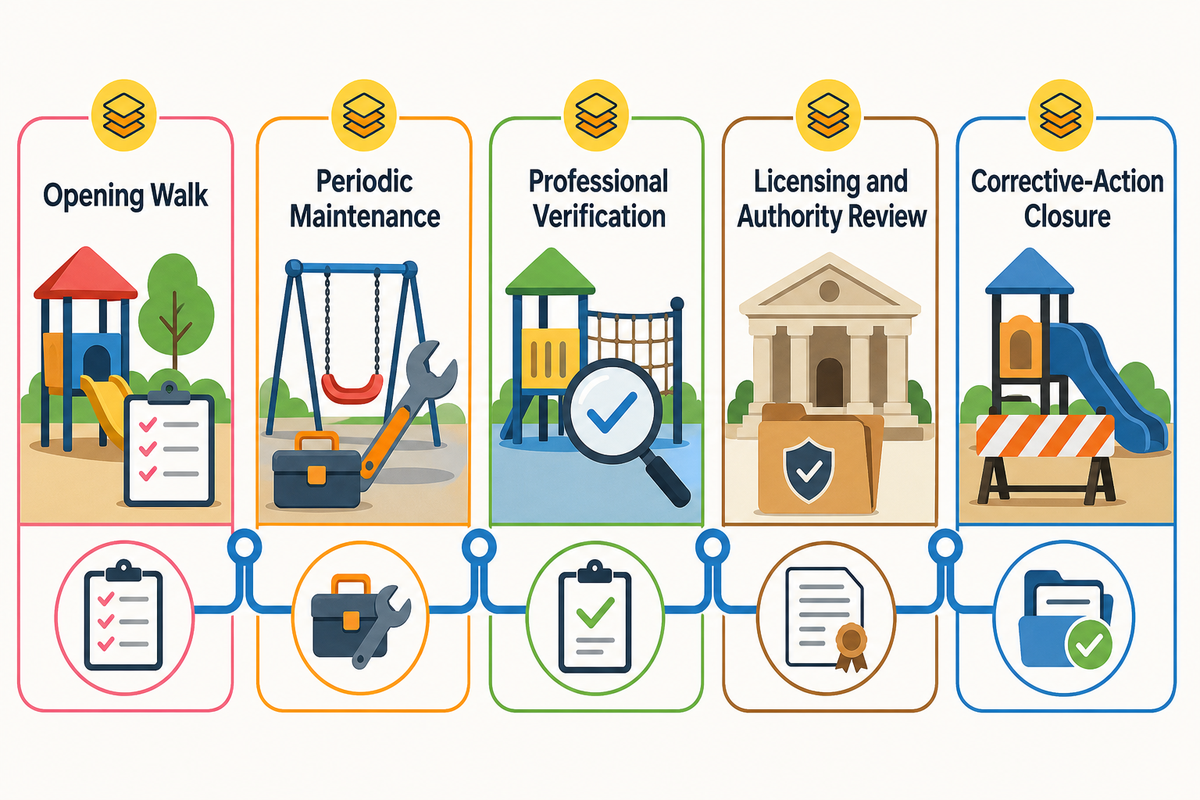
A useful daycare playground safety checklist has five connected layers: the daily outdoor walk, scheduled maintenance, professional tests or audits, licensing evidence, and corrective-action status. A form that stops at the first layer can still leave a recalled product, inaccessible route, or unverified repair unresolved.
Templates from a government website, an insurer, or an early-childhood training provider can be useful related resources. Treat them as starting points: compare their date, jurisdiction, equipment scope, and evidence fields with the current documents for your site.
| Control layer | Question it answers | Evidence to retain |
|---|---|---|
| Opening walk | Can children use the area now? | Dated checks, failures, isolation decision |
| Periodic maintenance | Is wear developing between daily checks? | Measurements, service records, replacement parts |
| Professional verification | Does the installed system meet the required technical criterion? | Audit or field-test report tied to the installed condition |
| Licensing and authority review | What does the governing authority require? | Rule citation, inspection report, correction plan |
| Corrective-action closure | Was the defect actually resolved? | Owner, due date, repair proof, verification and release |
The setting matters as much as the equipment. When planning or reviewing kindergarten playground equipment, separate the product specification from the room layout, child age group, accessible route, supervision plan, cleaning access, and post-handover inspection duties.
Which Standard Governs Which Part of Your Play Area
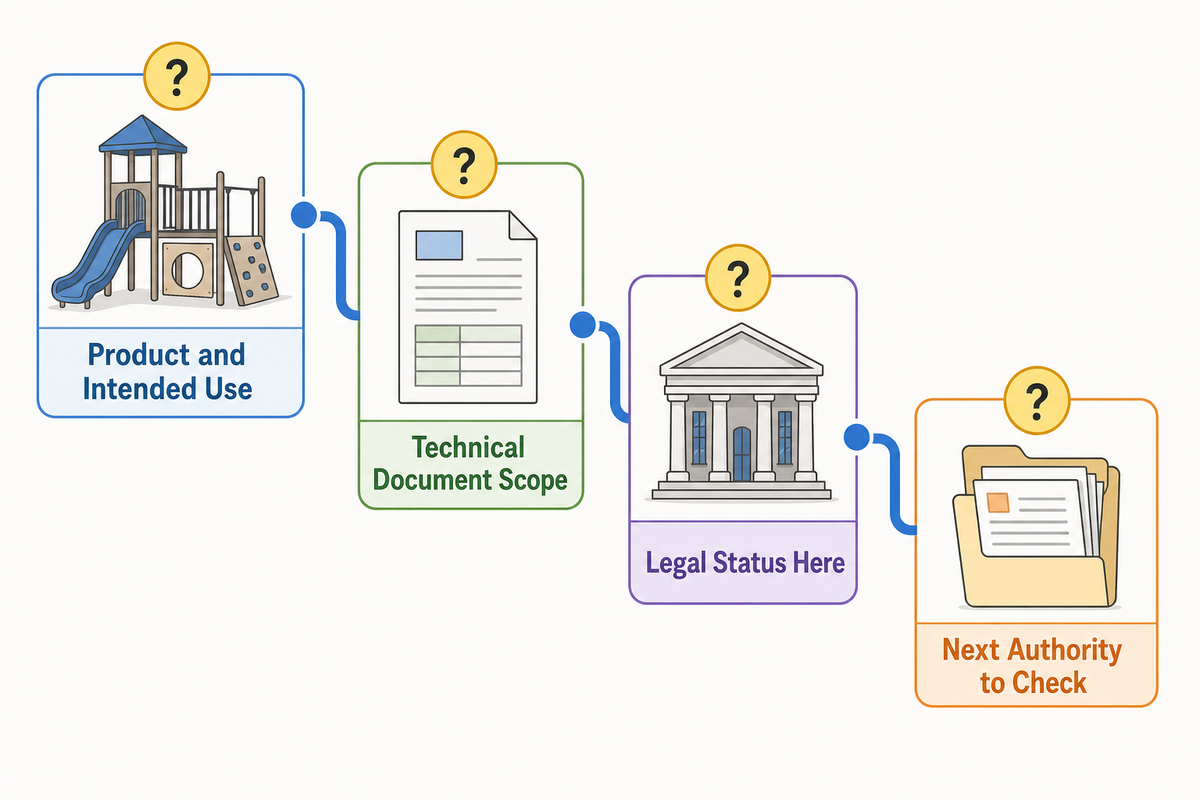
No single document governs every daycare play-space item. Start with the product and its intended use, identify the document’s technical scope, then check whether a federal rule, accessibility requirement, state license, local adoption, contract, or manufacturer instruction makes a particular provision binding.
This separation matters because safety standards describe technical criteria, while agencies and licensing bodies enforce safety rules through their own legal authority. Building safe playgrounds and providing a safe environment therefore require both a sound technical basis and a documented jurisdiction decision.
Standard Jurisdiction Table: “Covered by a standard” and “legally required here” are two different questions. Record both answers.
| Inspected item or decision | Primary document or authority | What it contributes | Legal status to record | Next authority to check |
|---|---|---|---|---|
| Public-use playground equipment, generally ages 2–12 | ASTM F1487-25 | Equipment design and performance scope | Consensus standard; verify adoption or incorporation | State license, local code, purchase specification |
| Soft-contained play equipment, generally ages 2–12 | ASTM F1918-21 | Access, egress, structure, fire safety, evacuation and maintenance topics | Consensus standard; verify adoption or contract | Fire authority, building official, licensing agency |
| Public-use equipment for children 6–23 months | ASTM F2373-24 | Age-bounded public-use equipment scope and exclusions | Consensus standard; verify adoption or contract | Product-specific federal and state rules for exclusions |
| Impact performance of surfacing within a use zone | ASTM F1292-22 | Impact attenuation and critical fall height | Consensus standard; may be adopted or specified | Installed-system report and field-test requirement |
| Accessibility of route surfaces | ADA Standards and ASTM F1951 reference | Accessible routes, entries, components, clear spaces, firmness and stability | Federal accessibility requirement where applicable | Project accessibility professional and authority |
| General public-playground operating guidance | CPSC Publication 325, 2025 edition | Federal safety guidance and inspection considerations | Guidance, not a rule by itself | Binding license, adopted standard and local requirement |
| Play yards | 16 CFR part 1221 and incorporated ASTM F406 provisions | Product-specific federal requirements | Federal product rule in the United States | Model identity, manufacture/import date, state room-use rule |
| Stationary activity centers | 16 CFR part 1238 and ASTM F2012-24 for the current effective group | Product-specific federal requirements | Federal product rule in the United States | Manufacture date, model, warnings and state use rule |
| Daily operation, child grouping and records | State child care licensing rules | Facility-specific operating and inspection duties | Binding within the issuing jurisdiction and facility type | Current agency rule, license terms and inspection report |
| Maintenance method and replacement parts | Manufacturer instructions and approved project documents | Product-specific frequency, method, torque, parts and exclusions | Contractual or operating obligation; not a universal law | Insurer, owner policy and competent inspector |
Use Toplay’s tool to route mixed-equipment scope when your venue contains several equipment classes. Do not attach one standard number to the whole room and assume that it covers the surfacing, access route, infant products, fire review, daily operation, and licensing records.
The Daily Visual Check: A 12-Item Playground Equipment Walk
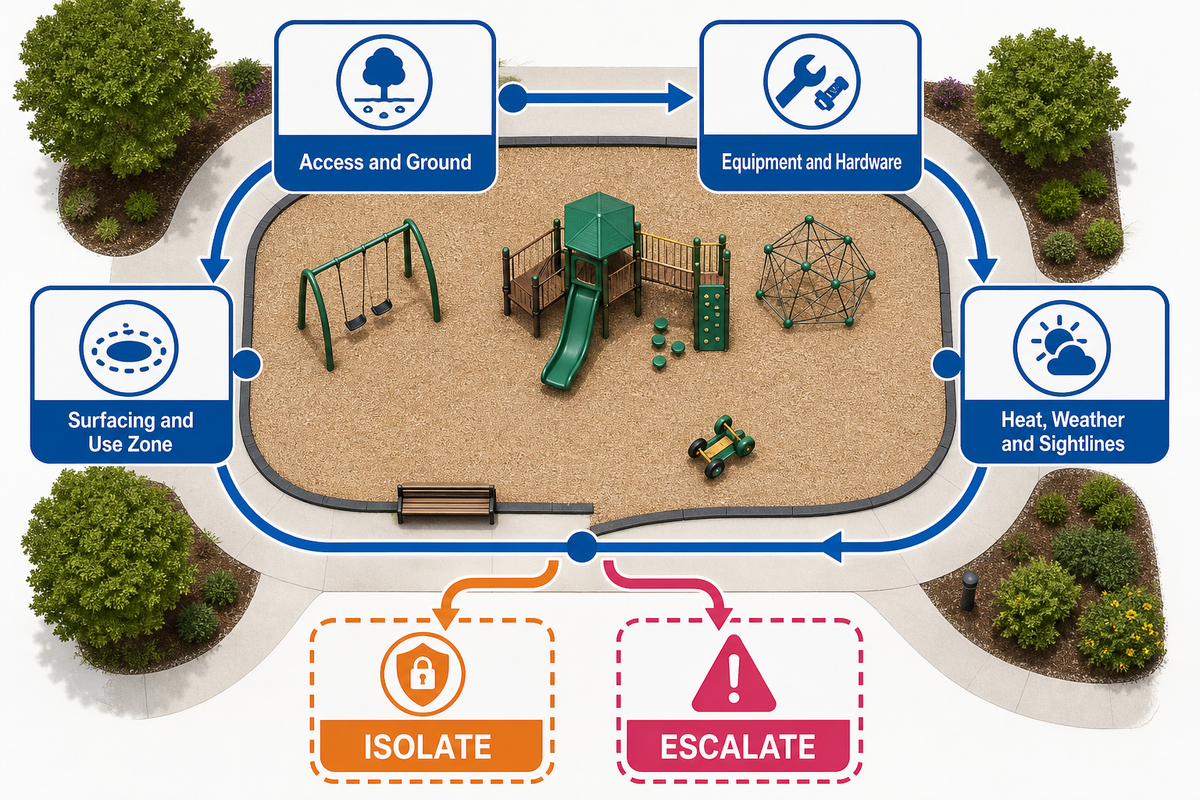
The daily walk asks one narrow question: is there an observable condition that makes the area unsuitable for use now? It does not replace measurement, impact testing, recall surveillance, a licensed-facility inspection, or a full-system playground audit.
Before active play begins, walk the outdoor area and surrounding grounds from the child’s route into the equipment zone. Many outdoor play areas change after rain, maintenance or community use, so look at every piece of equipment, confirm it appears anchored securely, and treat loose parts, damaged equipment, and recurring maintenance concerns as named findings rather than general comments.
| # | Daily check | Fail condition | Immediate disposition |
|---|---|---|---|
| 1 | Gate, fence and access control | Unsecured entry, damaged latch, climbable obstruction or escape route | Isolate the affected area |
| 2 | Ground and route | Glass, sharp debris, animal waste, root, hole, trip or blocked accessible route | Remove only if safely controlled; otherwise close the route or zone |
| 3 | Equipment stability | Unexpected movement, leaning, loose anchor or displaced footing cover | Stop use of the equipment and its fall zone |
| 4 | Broken, worn or missing parts | Crack, split, sharp edge, missing fastener, worn connector or damaged guardrail | Tag and isolate; do not improvise a repair |
| 5 | Exposed hardware and protrusions | Protruding bolt, open S-hook, exposed thread, sharp cap or snag point | Keep children away until corrected |
| 6 | Entrapment and entanglement | Changed opening, loose rope, loop, damaged net, catch point or clothing snag | Close the component for competent assessment |
| 7 | Protective surfacing | Displacement, hard spot, hole, exposed base, contamination, seam lift or measured depth below the site criterion | Close the affected use zone |
| 8 | Use-zone clearance | Furniture, toys, storage, border, queue or another activity intrudes into the required zone | Remove the conflict before opening |
| 9 | Sun and contact heat | Slide, platform, rail or surface is hot enough to present a burn concern | Shade, cool or stop use; recheck as conditions change |
| 10 | Water, ice and weather damage | Standing water, ice, washout, storm debris, unstable branch or wind damage | Close the exposed area and escalate |
| 11 | Sightlines and child separation | Blind corner, blocked view, unsafe mixing of age or size groups, or exit hidden from staff position | Change the layout, grouping or staff position before play |
| 12 | Previous defect status | Item still closed after a previous defect, undocumented repair, overdue action or missing acceptance evidence | Keep the item unavailable until the required verification and an acceptance decision are recorded |
Assign every row a result such as pass, correct before opening, isolate, or escalate. Add the checker’s name, date and time, affected asset, photograph reference, action owner, due date, and acceptance evidence. A blank box should never mean “probably acceptable.”
Pay special attention to metal slides and other surfaces exposed to direct sunlight, then scan paths for tripping and slipping hazards. These time-variable safety hazards can change after the morning check, so staff should repeat the relevant observation when weather or site use changes.
Playground Surfaces and Use Zones: What the Impact Standard Rates
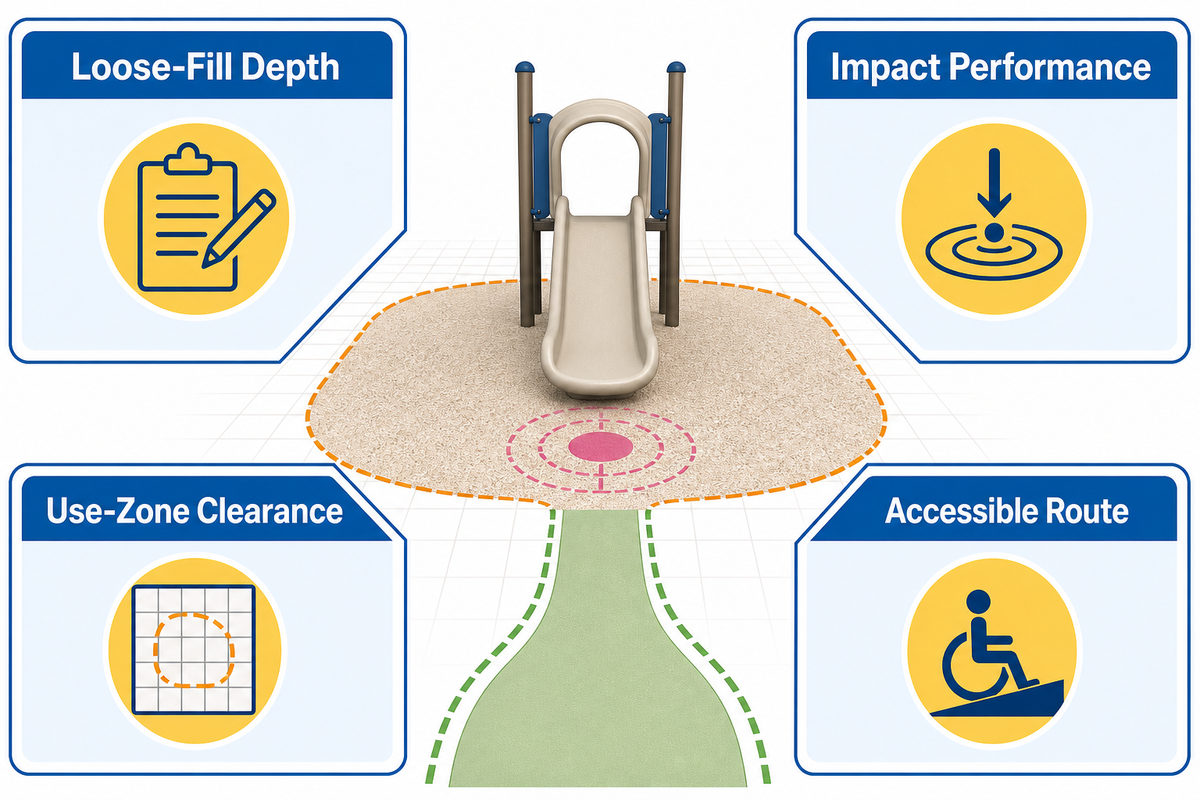
After the visual walk, surface depth, use-zone geometry, impact attenuation, and accessibility remain four related but different controls. A ruler can find displacement in loose fill; it cannot certify the impact performance of an installed system, and an impact result does not prove that an accessible route remains firm, stable, and usable.
Write down the exact surfacing materials and measurement grid. “Mulch” is too vague for a controlled record, and one surfacing depth at the border does not represent the safety surfacing under slide exits, swings, or other high-traffic points.
| Question | Operator observation | Evidence that answers the technical question |
|---|---|---|
| Is loose fill displaced? | Grid depth readings and visible low spots | Site depth criterion and recorded restoration |
| Does the system attenuate impact at the equipment fall height? | Cannot be established by appearance alone | Applicable ASTM F1292 report or field test tied to the installed system |
| Is the use zone clear? | Measured clearance and intrusion check | Layout, equipment instructions and applicable guidance |
| Is the route accessible? | Continuity, width, level changes, openings, firmness and stability observations | ADA project review and ASTM F1951-related surface evidence where applicable |
A worked loose-fill example
Suppose the site specification calls for wood chips with a maintained depth of 9 inches and the installation allowance is 25 percent for compression and weathering. The initial fill calculation is 9 ÷ 0.75 = 12 inches. After children kick material away from a slide exit, a 7-inch reading fails the maintained-depth criterion even though another point still measures 10 inches.
For stationary equipment, CPSC guidance commonly starts with protective surfacing extending at least 6 feet in all directions, subject to equipment-specific rules and permitted overlaps. A swing’s front and rear use zone is commonly based on twice the height of the suspending bar. Measure from the defined equipment reference, not from the convenient edge of a border.
Do not write “passes ASTM F1292” from the calculation above. The depth reading is an operating observation. Critical fall height depends on the surface system and its verified impact performance; the route’s accessibility remains a separate check.
Use Toplay’s layout tool to plot the daycare use zone and keep circulation clear. Where the route intersects the play area, verify the connected accessible play components as a distinct design and maintenance task.
Entrapment, Protrusion and Entanglement Hazards
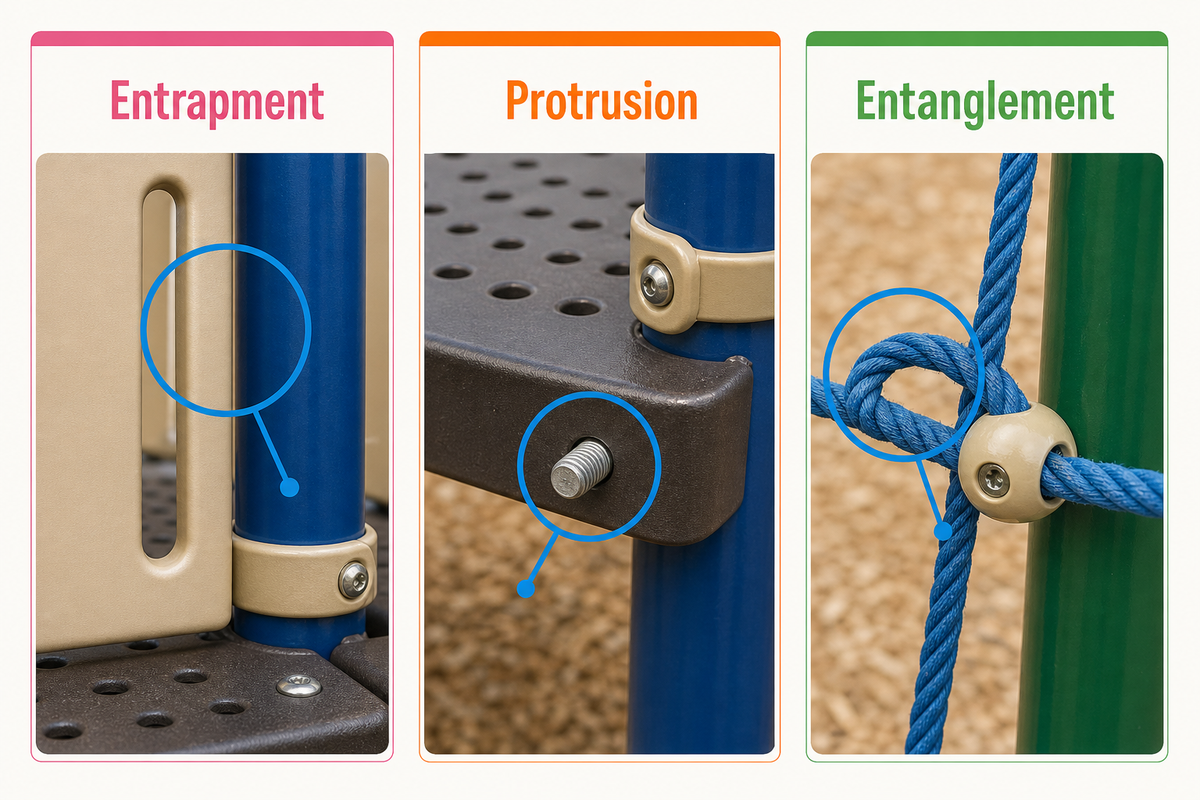
An opening can be hazardous if a child’s body can go through, but the head can’t. CPSC’s public-playground checklist identifies completely bounded openings between 3.5 and 9 inches as a potential entrapment range; formal testing must follow the applicable standard’s geometry, probes and exceptions instead of relying on an intuitive visual judgment.
Common places to flag include openings in guardrails, spaces beside ladder rungs, and flexible spaces that could trap children after a net or panel shifts. The daily check locates the change; the applicable formal test decides whether the opening is acceptable.
Entrapment
Check guardrail openings, ladder spaces, flexible net openings, transition points and any gap changed by wear or a repair. Escalate a suspect opening for the correct test template or probe.
Protrusion
Look for bolt ends, open hooks, missing caps, sharp corners, splinters and hardware that projects into a child’s movement path. A smooth-looking cap doesn’t excuse a loose connection underneath it.
Entanglement
Look for exposed threads, catches, ropes, loops, damaged netting and places where clothing or a drawstring could snag. Don’t add ropes or improvised ties to equipment not designed for them.
Measure only with the instrument and method required by the applicable procedure. A coffee cup, ruler, or staff member’s hand may help locate a concern during the daycare’s outdoor condition check, but it is not evidence that a formal entrapment or protrusion test passed.
Indoor Soft-Contained Play: Route the Rows Outdoor Guidance Omits
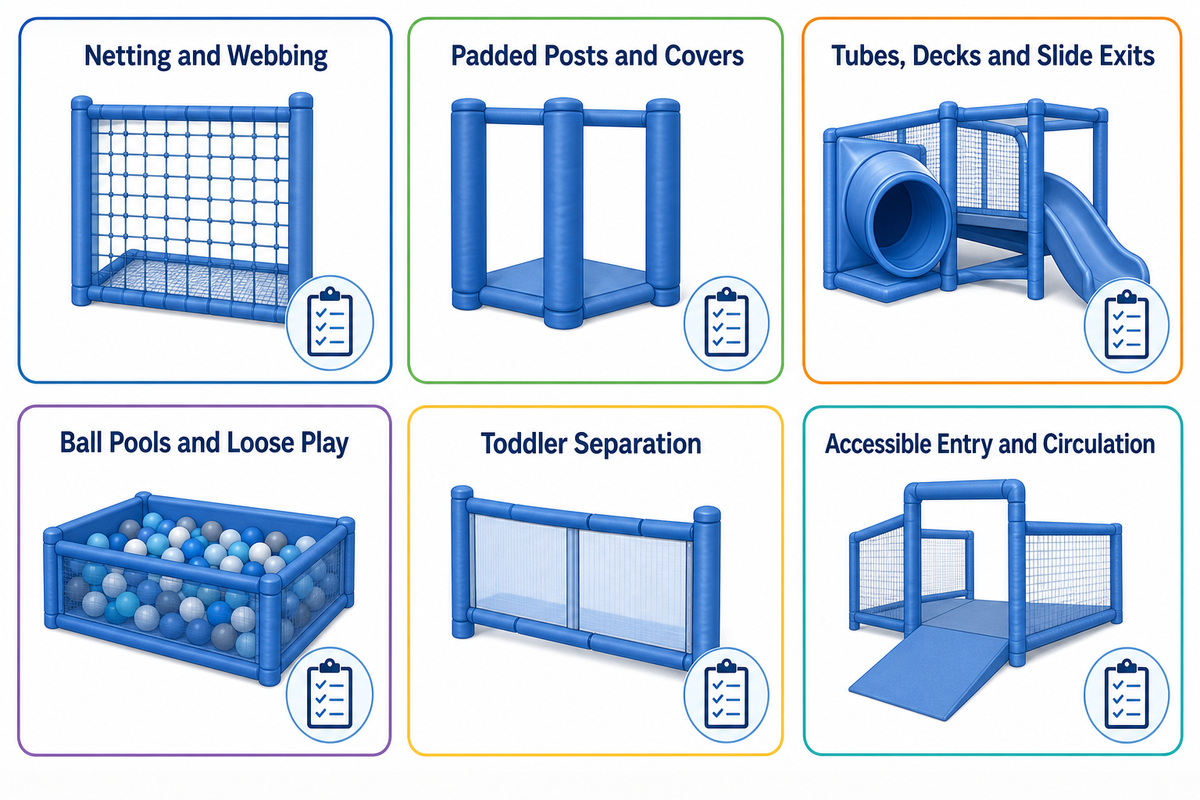
CPSC also publishes separate soft-contained-play guidance. ASTM F1918-21 covers soft-contained equipment topics, while licensing, fire, accessibility, manufacturer, and insurer requirements may add duties.
This daycare guide identifies the indoor records that need a separate owner; it does not reproduce room-level startup, closure, repair, and reopening procedures. Use the indoor playground operating-rules guide for those venue controls.
Uncovered-Item Register: Items Omitted by Outdoor Guidance
| Indoor item | Condition the daycare should record | Evidence or deeper review to route |
|---|---|---|
| Netting and webbing | Cut strand, enlarged opening, loose edge, failed tie | Approved material, attachment method, replacement instruction |
| Padded posts and vinyl covers | Tear, exposed hard edge, compressed foam, loose closure | Compatible repair material and acceptance of the repaired assembly |
| Crawl tubes, decks and slide exits | Obstruction, contamination, damaged viewing panel, blocked exit | Access, egress, evacuation and cleaning-access review |
| Ball pools and loose play elements | Foreign object, broken item, contamination, unsuitable mixing | Cleaning method, frequency, replacement and incident response |
| Toddler separation | Barrier moved, route crossed by older children, size rule not controlled | Age/size policy, capacity, supervision and licensing requirement |
| Accessible entry and circulation | Entry blocked, route narrowed, turning space used for storage | Required accessible entries, connected components and project exceptions |
For United States play areas covered by the ADA Standards, a soft-contained structure with three or fewer entry points needs at least one entry on an accessible route; four or more entry points require at least two. Treat that as an accessibility input, not as a claim that the whole structure passes its equipment standard.
When you request component-level supplier records, ask for a register that ties each net, pad, connector, deck, tube, slide, gate, sign and loose-play item to its inspection method and replacement instruction. A room-level certificate cannot substitute for that item-level ownership.
Infants and Toddlers Under Two: Follow the Scope Handoff
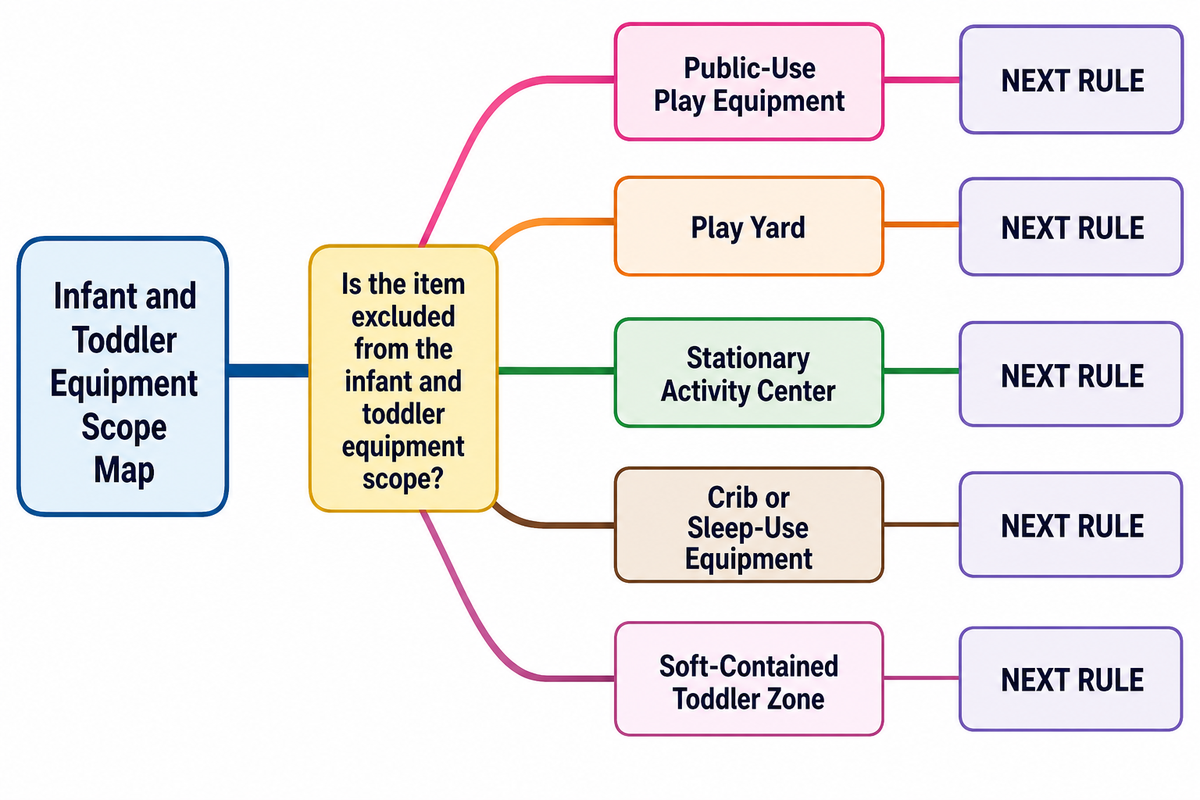
ASTM F2373-24 covers public-use play equipment for children from 6 through 23 months, but its exclusions include soft-contained play equipment and several juvenile products. An exclusion is a routing instruction under applicable rules, not permission to treat the item as unregulated.
Scope Cliff Chart
| Child or item | First scope question | Handoff if excluded | Checklist record |
|---|---|---|---|
| Public-use play equipment, 6–23 months | Is it within ASTM F2373-24’s equipment and use scope? | Check the named exclusions and state license | Age band, product identity, edition, site rule |
| Play yard | Is the product covered by 16 CFR part 1221? | Check manufacture/import date and state room-use restrictions | Model, date, warning labels, condition, permitted use |
| Stationary activity center | Is 16 CFR part 1238 the applicable product rule? | Current CPSC guidance uses ASTM F2012-24 for units manufactured after July 5, 2025 | Model, manufacture date, rule version, recall check |
| Crib or sleep-use equipment | Is it being used for sleep rather than play? | Federal crib rule and state child-care rule | Permitted use, age, product identity, room check |
| Soft-contained toddler zone | Is the item outside F2373 and within another equipment scope? | ASTM F1918, state licensing, fire/accessibility review and manufacturer instructions as applicable | Age/size controls, entries, egress, components, cleaning and supervision |
Do not round “23 months” to “two years” in a way that hides the boundary. Record the child group, product identity, intended use, manufacture date where relevant, and the authority used for the next decision. If identity or intended use is unclear, stop and classify the item before assigning a checklist.
This classification helps protect the children in your care without pretending that age alone answers every question. Product type, intended use, room function, warnings, supervision, and local licensing all affect how early childhood equipment is controlled.
How Often Must You Run a Playground Inspection?
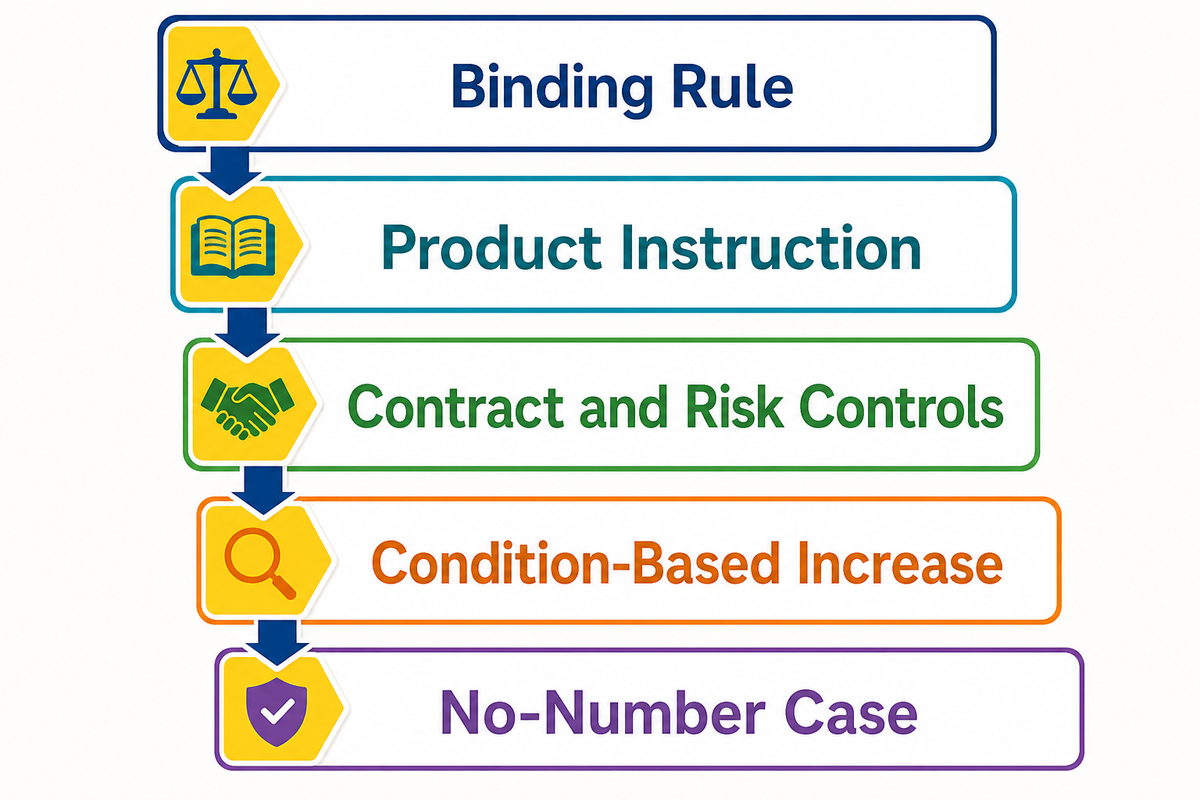
No national playground standard sets one universal inspection interval for every licensed child care facility. Cadence is assembled from the current state child care rule, manufacturer instructions, insurer or owner conditions, usage and environmental exposure, equipment type, and findings from prior inspections.
Inspection Interval Source Order
- Start with the binding rule: find the current state licensing provision and any facility-specific correction order.
- Next, use the product instruction: follow the manufacturer’s maintenance and inspection schedule for the exact model.
- Add contract and risk controls from the insurer, owner, lease and project requirements.
- Make a condition-based increase for high-use, moving, weather-exposed or previously defective items.
- For the no-number case, adopt a competent risk-based schedule and record who approved it.
State practice varies. The South Dakota licensing page describes unannounced annual program and facility-safety inspections, while a federal audit of Maine providers cites a state rule requiring staff to inspect the play area daily before children have access. Those examples prove variation; neither should be copied as the rule in another jurisdiction.
Who should inspect?
| Task | Appropriate role | What the result can establish |
|---|---|---|
| Opening condition walk | Trained facility staff | Observable condition and use decision for that time |
| Scheduled wear and maintenance inspection | Competent maintainer or inspector familiar with the product | Measurements, service needs and part disposition within assigned scope |
| Full-system audit after installation or major repair; reassessment after a standards change when an applicable rule, contract, authority or competent risk review requires it | Qualified playground safety professional; use a credential required by the authority or contract | Systematic findings against the defined audit basis |
| Impact, accessibility, structural, fire or evacuation verification | Specialist with the required instruments and authority | A technical result within the report’s test method, site and date |
The National Recreation and Park Association’s Certified Playground Safety Inspector credential may be useful or required by a project, insurer, or jurisdiction, but the credential does not turn every visual inspection into an engineering test. Define the task, required evidence, applicable equipment class, and acceptance authority before selecting the inspector.
The practical goal of maintaining safe playgrounds is to escalate the right question to the right person. Facility staff can spot change quickly; a qualified specialist can determine what a test establishes; and the licensing authority decides what evidence it will accept.
What a Child Care Licensing Inspector Asks to See
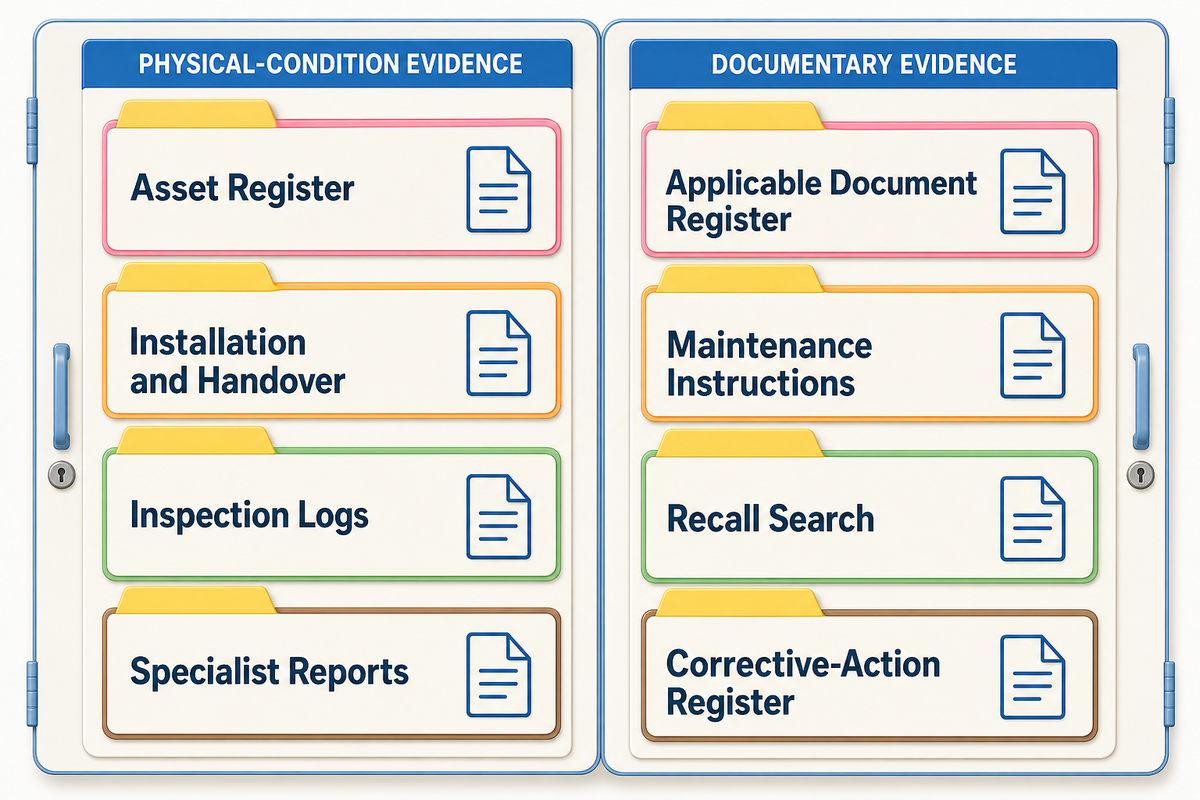
Prepare two tracks: physical conditions and documentary evidence. California’s CARE inspection domains include the physical plant as well as supervision, children’s records, reporting, staff records, and staffing; a California complaint report also shows that disrepair of infant-playground equipment itself can support a cited finding.
Licensing-ready playground evidence pack
| Record | Primary owner | Obtain or update when | Closure evidence |
|---|---|---|---|
| Asset register: product, model, serial, location, age group | Centre with supplier input | Quotation, delivery and every equipment change | Installed asset matched to purchase and drawing |
| Applicable document, edition and legal-status register | Centre / project professional | Design, purchase and standards update | Named authority and scope decision |
| Installation and handover records | Supplier, installer and centre | Before acceptance and after relocation | Approved drawing, deviations, completion and acceptance |
| Maintenance and replacement-part instructions | Manufacturer | Request at quotation; revise with approved changes | Current controlled manual and part identity |
| Daily and periodic inspection logs | Centre / contracted inspector | At the defined cadence | Dated result, defect, owner and disposition |
| Recall and safety-warning search | Centre | Before acceptance, periodically, and after an alert | Search date, product match, remedy and release decision |
| Impact, accessibility or specialist reports | Qualified specialist | Installation, material change, required interval or adverse finding | Report tied to location, method, date and installed condition |
| Defect and corrective-action register | Centre with assigned action owner | Every failed check, incident or authority finding | Rule or criterion, correction, completion date and verifier |
South Dakota’s public process illustrates the structure: the inspection report lists monitored standards, while the corrective-action plan records the cited rule, required correction, provider action, and completion date. Build your own file so an inspector can follow the same chain from finding to remedy without reconstructing it from emails.
Request the supplier-side portion early. Toplay’s page for supplier-held project records is a useful discussion point, and a pre-shipment release matrix can help identify which records must exist before equipment leaves the factory. Treat supplier documents as product evidence within their stated scope, not as a substitute for site licensing or acceptance.
What Changed in 2025—and What Did Not
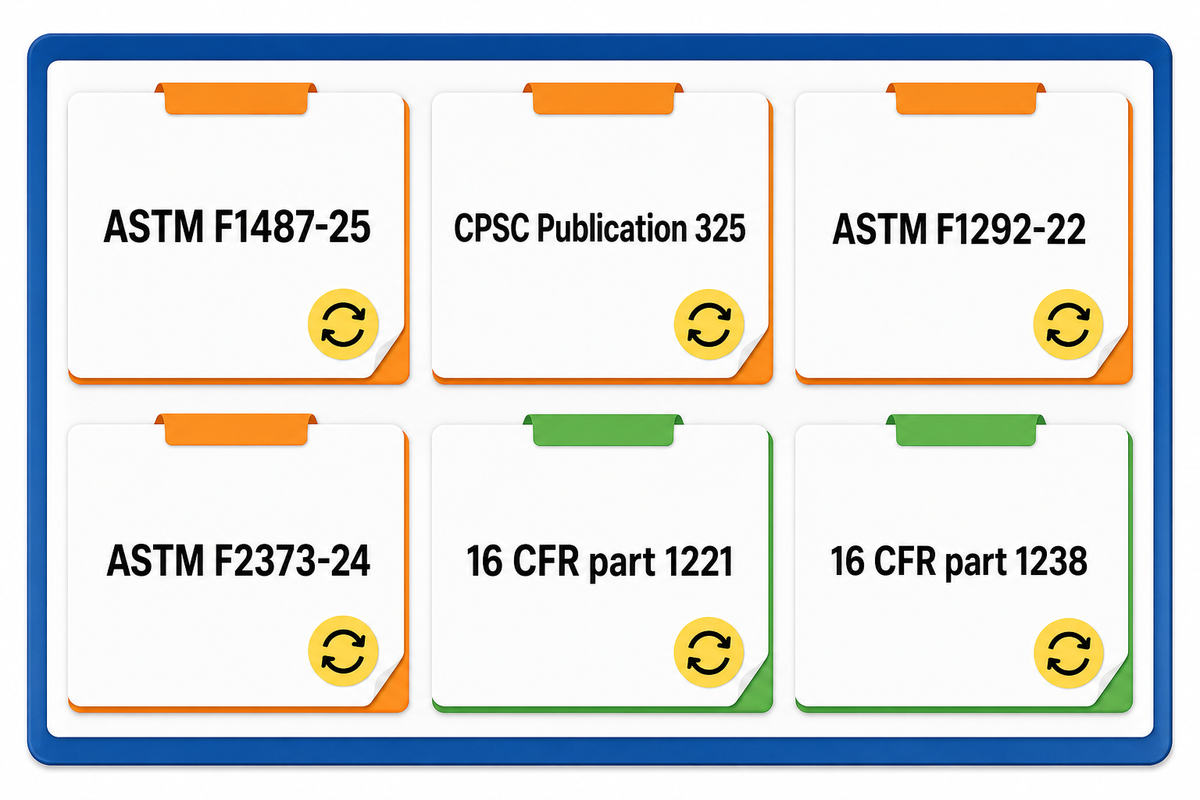
The reference set moved in 2025, but not every document changed. As checked on September 3, 2026, ASTM F1487-25 is the current public-use equipment edition, CPSC Publication 325 has a 2025 edition dated July 30, 2025, and ASTM F1292-22 remains the current impact-attenuation edition rather than a 2025 revision.
| Document | Current point verified | Checklist consequence |
|---|---|---|
| ASTM F1487-25 | ASTM’s official store lists F1487-25 as the active edition; check the standard text or an authorized summary for its exact change set | Recheck the edition on equipment and audit references |
| CPSC Publication 325 | 2025 edition dated July 30, 2025; explicitly not a rule | Replace an older download but keep the legal-status label |
| ASTM F1292-22 | Still the active edition; no verified 2025 replacement | Reject unsupported claims that a 2025 revision alone requires retesting |
| ASTM F2373-24 | Active edition for 6–23-month public-use equipment; updated January 16, 2025 | Update the infant/toddler scope and exclusion register |
| Play yards under 16 CFR part 1221 | ASTM F406-24 with CPSC modification for products manufactured or imported on or after April 5, 2025 | Use manufacture/import date when routing the product rule |
| Stationary activity centers under 16 CFR part 1238 | ASTM F2012-24 for products manufactured after July 5, 2025 | Remove stale F2012-18e references from current checklists |
Do not infer a standard update from a vendor headline. Ask for the designation, edition, effective date, issuing body, and the exact product or site condition it covers. Market-size forecasts are not used as safety evidence in this article.
Review site readiness before installation whenever a changed standard or product rule affects the project brief. That is the right moment to assign document owners, test requirements, accessible routes, fire-review inputs, and acceptance evidence.
Frequently Asked Questions
What are the safety guidelines for children on the playground?
Use age-appropriate equipment, active supervision, clear use zones, impact-attenuating surfacing, controlled access, safe openings and hardware, and a stop-use rule for defects. These controls help prevent injuries and keep kids safe. They must be connected to the technical standard, state child care license, accessibility requirement, and manufacturer instruction that applies to the item.
What are best practices for daily outdoor playground safety checks?
Check access control, debris, equipment stability, broken parts, exposed hardware, entrapment and entanglement, displaced surfacing, use-zone intrusions, heat, water or ice, sightlines, and unresolved defects before children enter. Isolate failures pending a verified acceptance decision; assign an owner for each.
How can child care programs keep playgrounds safe for infants through school-age children?
Divide the inventory by age range, product identity, intended use, and equipment class instead of applying one checklist to everyone. Keep infant and toddler areas separated from faster or larger users, verify the rule for excluded juvenile products, position staff for active supervision, and document every scope handoff. That makes playgrounds safer without reducing a safe and fun play experience to one generic form. This inventory split keeps rules and records attached to each equipment class to which they apply.
Do indoor soft play structures need a different checklist than outdoor playgrounds?
Yes. Do not copy the outdoor checklist into an indoor room. Create an indoor item register for netting, padding, crawl tubes, viewing panels, loose-play elements, age separation, accessible entries, and evacuation; route each item to its instruction and evidence owner.
CPSC publishes separate soft-contained-play guidance, so do not rely on an outdoor checklist alone. Use the separate indoor playground safety rules guide for room-level operating controls; this daycare checklist keeps the licensing and evidence handoff distinct.
Does a daycare playground need a third-party inspection?
The need for a third-party inspection depends on the state rule, insurer, project specification, manufacturer instruction, equipment type, and task. Trained staff can perform a defined opening walk, but impact testing, accessibility verification, structural or fire review, and a full-system audit require appropriate competence and may require a named credential or authority acceptance.
What are red flags in a daycare playground?
Red flags include an unsecured gate, unstable equipment, a broken guard, exposed hardware, a suspect entrapment opening, damaged netting, displaced surfacing, a hot contact surface, a blocked route, an unresolved recall, or a repair with no verification record; close or isolate the affected area.
How long should we keep playground inspection records?
Follow the current state licensing rule, insurer, owner policy, legal retention schedule, and any corrective order. Keep the evidence long enough to show the inspection, finding, action, completion, and release as one continuous record; do not copy another state’s retention period without checking yours.
Turn the Checklist into a Controlled Routine
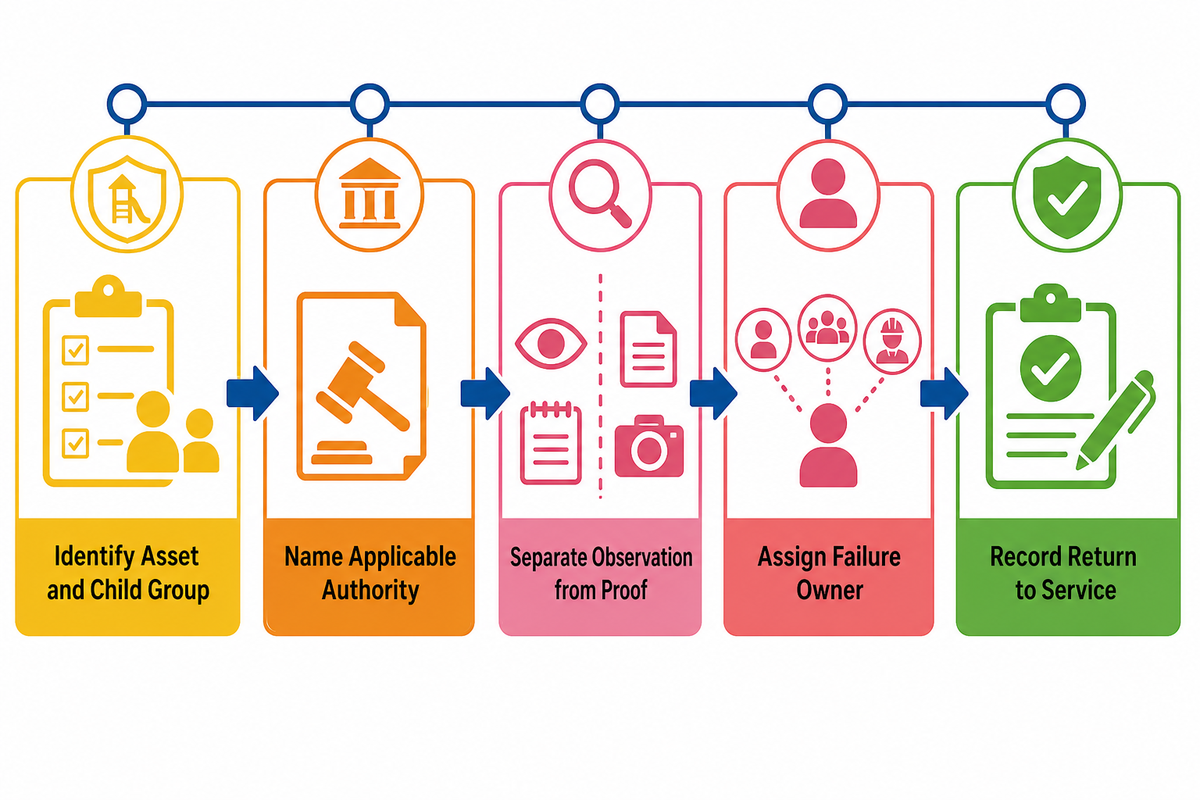
The best checklist is not the one with the most boxes. It is the one that identifies the asset and child group, names the applicable authority, distinguishes observation from technical proof, routes a failure to a named owner, and records how the item returned to service.
Used this way, the form becomes a handoff between early childhood staff, maintenance, specialists, suppliers, and regulators. It does not guarantee that every risk is removed, but it makes unresolved conditions visible and gives each decision an accountable owner.
Guangzhou Toplay Amusement Equipment Co., Ltd. works with indoor children’s playground projects and customizable equipment. For an equipment-project discussion, bring the room dimensions, child age groups, target market, equipment inventory, accessible-route inputs, local authority requirements, and required handover documents. Licensing, accessibility and site acceptance remain with the relevant authority or qualified professional.
Planning a daycare play-area equipment project?
Share your layout, age bands, destination market and equipment requirements with Toplay.
References & Sources
- U.S. Consumer Product Safety Commission: Public Playground Safety Handbook
- U.S. Consumer Product Safety Commission: Public Playground Safety Checklist
- U.S. Consumer Product Safety Commission: Playground Equipment Business Guidance
- U.S. Access Board: ADA Accessibility Standards
- U.S. Consumer Product Safety Commission: Recalls and Product Safety Warnings
- Federal Register: 2025 Public Playground Safety Handbook Notice
- ASTM International: ASTM F1487-25
- ASTM International: ASTM F1918-21
- ASTM International: ASTM F2373-24
- ASTM International: ASTM F1292-22
Evidence boundary: Current editions and public pages were checked on September 3, 2026. This article does not assert that Toplay, any named product, or any installed site holds a certification or passes a standard. Product and site acceptance require the applicable records and competent review.



