Get in touch with Guangzhou Toplay amusement equipment co. Company
Indoor Climbing Equipment Guide: From Gear to Venue Design

Project Build Support
Need an indoor playground layout before your next quote?
Send venue size, ceiling height, age range, theme direction and opening schedule. Toplay can match the play route, safety surface and delivery scope before you lock the quotation.
Layout fitFootprint, traffic and age zones
Build scopeEquipment, surface and installation
Quote pathFactory review before RFQ
RFQ Checklist
What to include for faster project matching
Venue and capacity
Floor size, ceiling height, entrance route, target age groups and daily visitor expectations.
Theme and operation
Brand direction, supervision plan, opening timeline and any food, retail or party-room requirements.
Delivery context
Send Project Details
City, floor access, installation window, local review needs and budget direction.
By Cherry · Updated October 2026
Indoor climbing equipment contains personal gear, climbing walls, and play structures. For a first gym visit, begin with rented shoes and the venue’s required orientation. For home or public installation, decide on the activity first, then plan the full space and ongoing maintenance.
A harness is a part of some climbing activities, not all. A wooden toddler climber serves a different purpose from a roped wall. This guide explains what each setup requires, what to rent prior to buying, and how families and facility owners/managers can evaluate space, cost and maintenance.
Start with your use:
- First gym visit: separate what you wear from what the gym provides.
- Home or family play: match the actual product to its users and room.
- Public venue: choose the session you can operate, then budget for the equipment and recurring work.
- Any installed wall: include support, landing, access and maintenance space.
What Equipment Do You Need for Indoor Climbing?
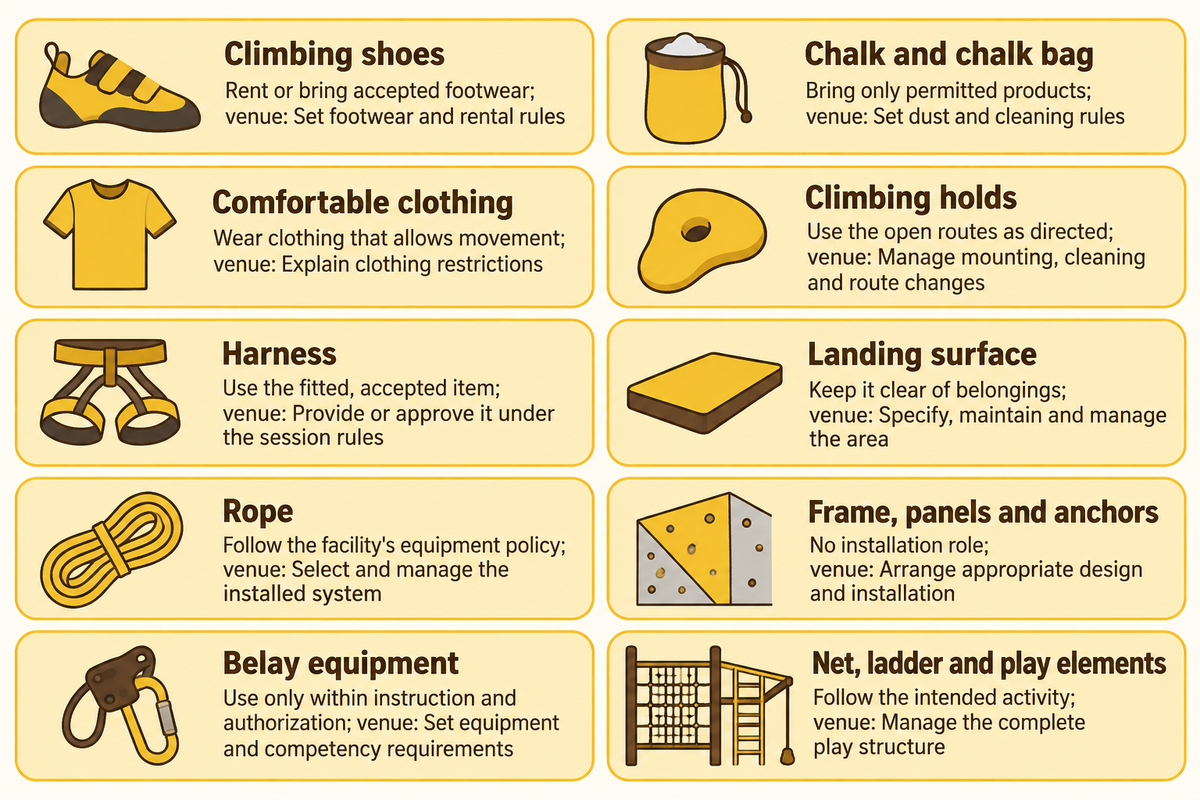
For a first indoor climbing session, have climbing shoes, clothes that allow free movement and the equipment included in the gym’s introductory package. Roped climbing also uses a harness and a protection system appropriate to the activity. Bouldering uses a managed landing area instead. Buy the gear after learning what activity and venue you’ll use.
Venue rules settle the packing list. UCLA’s bouldering wall requires climbing shoes and an introduction for new users and bans loose chalk. NC State’s climbing center has bouldering and roped climbing, provides equipment (shoes and harnesses), and bans personal ropes. Bring the gym’s rental information into the buying decision, rather than assuming every facility is the same.
Which indoor climbing equipment is best for beginners?
For new visitors, rented climbing shoes and the gym’s beginner session are great starting points. Add a rental harness for a roped session when the facility requires one. That allows beginners to learn the rules of the facility and try the activity to find the right fit before purchasing their own rock climbing gear.
Shoes should fit snugly, but not so tightly that climbing becomes uncomfortable during a session. Renting first-visit items is allowed only if they’re available for rent at the facility. Chalk isn’t always required, and some gyms restrict the types of chalk and/or supply their own. It’s best to discuss the rules for roped climbing and instructed activities, including protection-system use, with venue staff to determine the required equipment and personal setup.
The following table separates a participant’s shopping list from equipment managed by the facility.
| Item | First visitor’s role | Venue’s role | Applies to |
|---|---|---|---|
| Climbing shoes | Rent or bring accepted footwear | Set footwear and rental rules | Sport climbing |
| Comfortable clothing | Wear clothing that allows movement | Explain clothing restrictions | All planned activities |
| Harness | Use the fitted, accepted item | Provide or approve it under the session rules | Relevant roped activities |
| Rope | Follow the facility’s equipment policy | Select and manage the installed system | Roped climbing |
| Belay equipment | Use only within instruction and authorization | Set equipment and competency requirements | Relevant roped activities |
| Chalk and chalk bag | Bring only permitted products | Set dust and cleaning rules | Where permitted |
| Climbing holds | Use the open routes as directed | Manage mounting, cleaning and route changes | Climbing walls |
| Landing surface | Keep it clear of belongings | Specify, maintain and manage the area | Relevant wall or play design |
| Frame, panels and anchors | No installation role | Arrange appropriate design and installation | Installed equipment |
| Net, ladder and play elements | Follow the intended activity | Manage the complete play structure | Specified play products |
A pack and water bottle should be left outside the active landing area. Buying a bundle of personal equipment cannot replace the introduction to the facility’s protection system or the checks required before using it.
Indoor Climbing Types: Bouldering, Ropes and Play
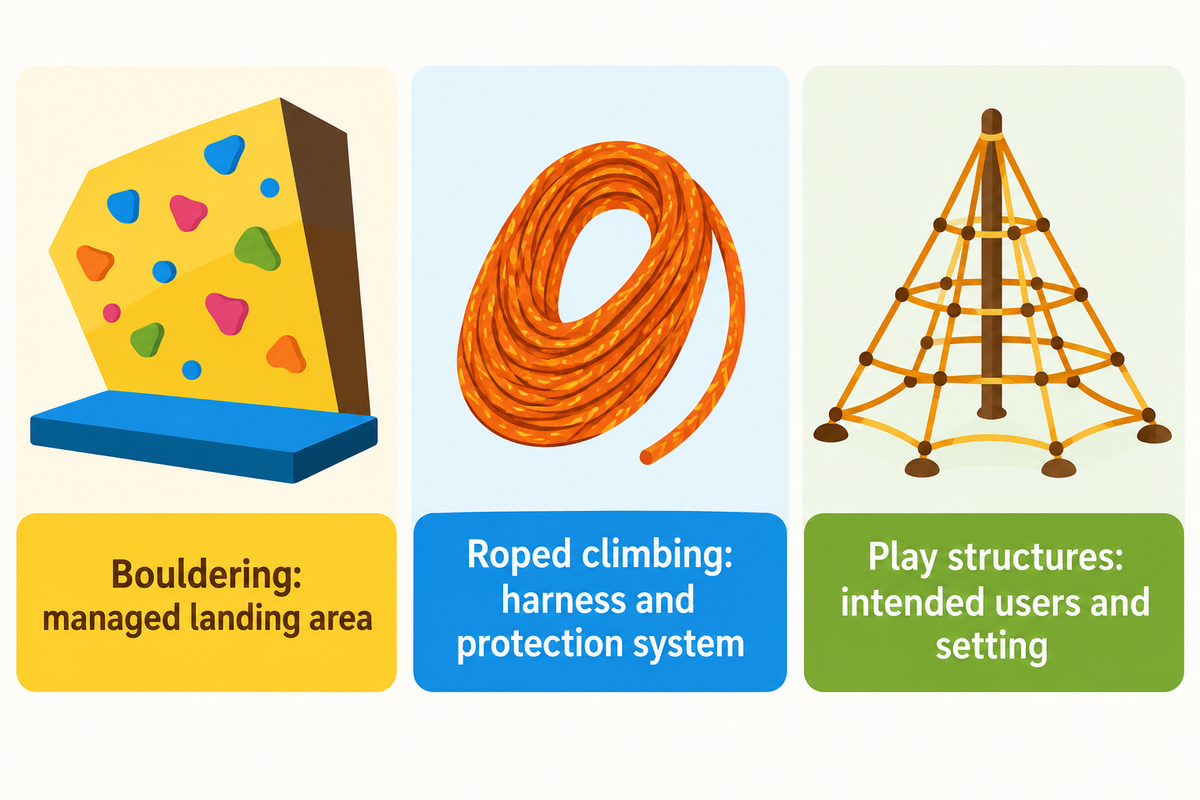
Bouldering provides an alternative to roped climbing, as it uses landing pads rather than a rope-based protection system. Play equipment for children often incorporates climbing movements but may use other systems and equipment as well.
Sport climbing
The climber practices movement on routes or problems. Holds, route changes, landing management and activity-specific instruction shape the experience.
Climbing as play
The child explores a play structure. Nets, transitions and other activities must suit the product’s intended users and operating setting.
Top-rope climbing, lead climbing, and auto-belay climbing are distinct arrangements in roped activities. An auto-belay requires proper connection and a facility’s operating procedures. The UIAA’s 2025 account of Norwegian auto-belay incidents identifies climbing without connecting as an accident mechanism. Automatic rope handling doesn’t eliminate that human task.
The Climbing Wall Association’s 2025 Fourth Edition of Industry Practices covers climbing operations; clip-and-climb, amusements and inflatable climbing walls fall outside its scope.
“The Fourth Edition reflects this evolution by focusing exclusively on climbing operations.”
A traverse is movement across a wall and isn’t a universal safety classification. Likewise, a colorful wall can be sport equipment or part of a playground: graphics don’t determine the intended use. The U.S. Consumer Product Safety Commission’s playground guidance differentiates home and public playground contexts. A home-use label should remain with its named product and designated context.
For a family, this distinction changes the outing: a supervised first climbing session introduces sport movement, while an adventure play visit offers a broader mix of activities. For an operator, this means a different design team and equipment training and care that must be arranged prior to opening.
Home Climbing Walls and Children’s Climbing Toys
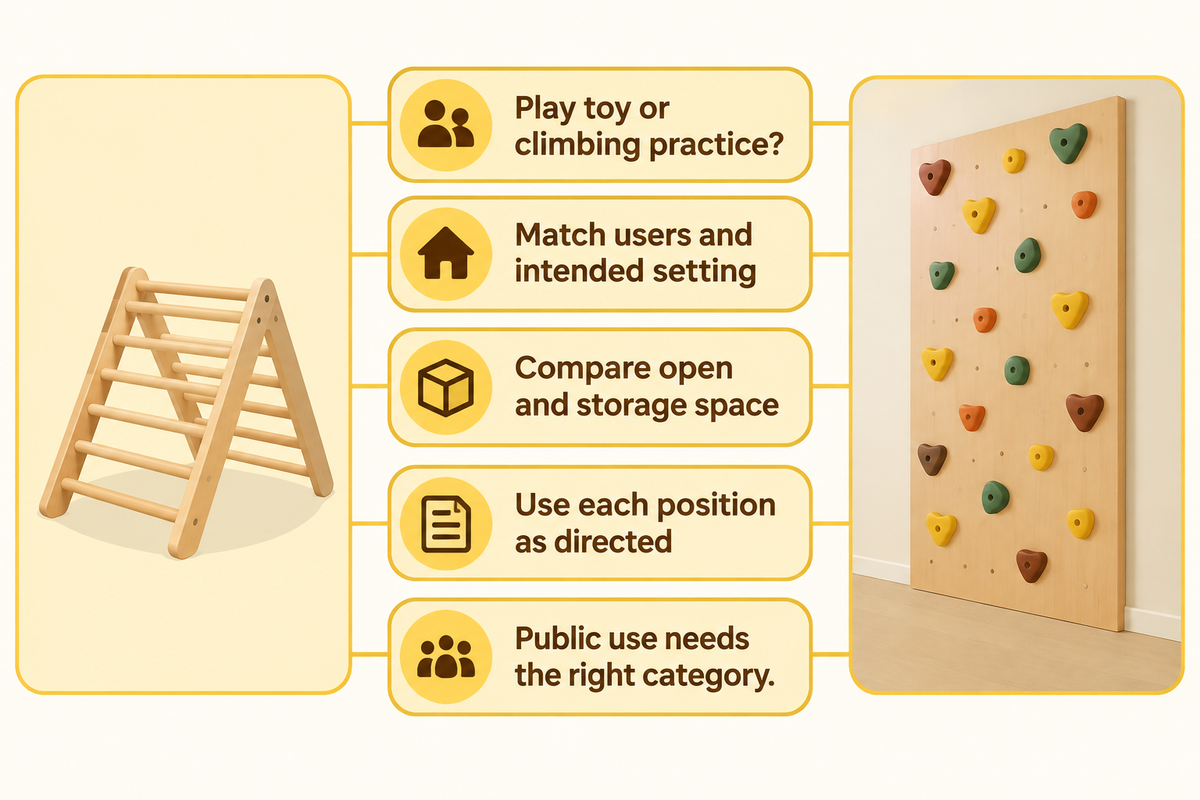
Climbing toys support play activities, and a home climbing wall supports climbing practice. A toddler’s low wooden climber and an adult training wall have different users, installation needs and landing arrangements. Begin with the manufacturer’s intended setting, age, and usage.
A Pikler triangle typically presents a ladder-like climbing form; an arch or rocker offers another movement pattern. Toys sold as Montessori climbing toys differ in construction and use. The term “Montessori climbing toys” describes a category, not a substitute for the instructions. For a Pikler triangle, for instance, toddler climbing toys should be chosen around the movements the little ones can perform.
Adjustable equipment can provide changes as interests develop, but each position still needs to be used as directed. A combination product may include a slide or other accessory; the space needs to accommodate active play, not just the folded storage size. When planning a sensory play session, determine which movements and surfaces the child is comfortable using. For connected public play installations, the indoor play structures guide provides information on other structure categories.
Example: a family making a choice about a shared living room. Their child is fond of climbing a ladder during play visits but loses interest when every movement is difficult. The family prefers a wooden climber that can be put away after use. They compare the complete open dimensions, the permitted configurations and where adults can supervise. They wouldn’t choose a larger fixed wall because it would occupy the main passage of the room. A removable toy is acceptable to them only if its instructions allow the proposed setup and storage. They first choose a play setting and determine which movements the child is interested in using, then choose a product for that interest.
Home gyms introduce another question: Is the goal general physical activity or repeated rock climbing practice? A pull-up station and monkey bars can support different activities from a climbing wall. A swing has its own movement area. Buying them together as a jungle gym doesn’t eliminate their space requirements.
Public use calls for an appropriate product category and operating arrangement, rather than simply increasing a household user’s weight allowance. This matters when a home product looks attractive for a café, school or paid play venue; see the CPSC’s distinction between home and public equipment.
Which Climbing Experience Fits Your Venue?
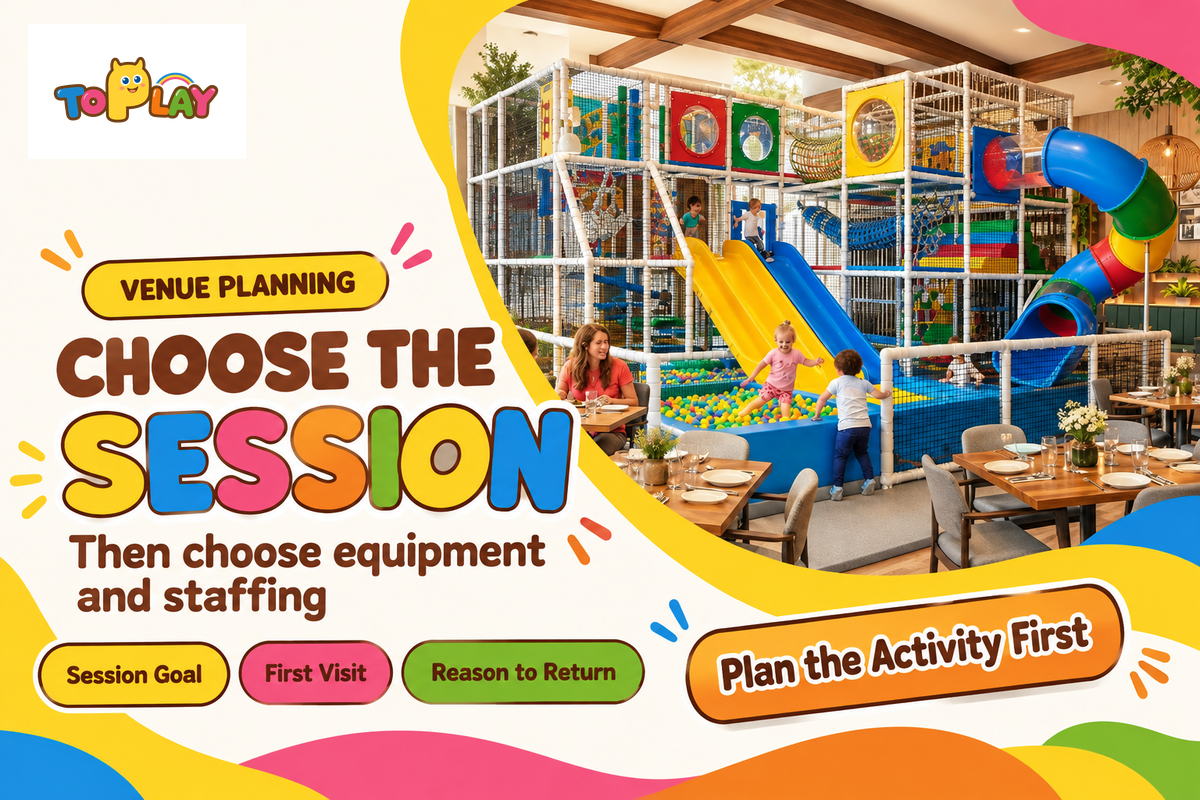
Choose the climbing experience your team can introduce, supervise and refresh. Repeat sport practice needs a different service model from a short family play visit. Owners should decide what guests will do during the visit; operations should name the work required to deliver the service; and finance should budget for that work, and the facilities required to support the service.
The 3-Question Climbing Session Test
The 3-Question Climbing Session Test is a planning exercise: name the session goal, first-visit service and reason to return before selecting equipment.
- What will the guest do? Practice a climbing problem, learn a roped activity or explore a play route.
- What happens on the first visit? Identify the orientation, equipment issue and assistance the chosen activity requires.
- What changes on the next visit? Provide new problems, progressive instruction or varied play opportunities that the team can maintain.
This exercise is for comparing operating models, not safety. NC State’s separate bouldering and roped offers illustrate why “climbing” is too broad a session description.
Example: A family entertainment center adding climbing. The owner wants an activity to add alongside the other play activities offered. Management expects families that come to the center without climbing experience. Finance prefers a fixed cost, while the supervisor says that orientation and care will be required after the purchase. The team picks a play activity rather than a sport activity. The sport-wall option is set aside until they have the resources for instruction and routesetting. For family entertainment centers, the question should be which session fits the existing guest journey and staffing plan, rather than which wall looks the most dramatic.
Freestanding or Wall-Mounted: Compare the Whole Footprint
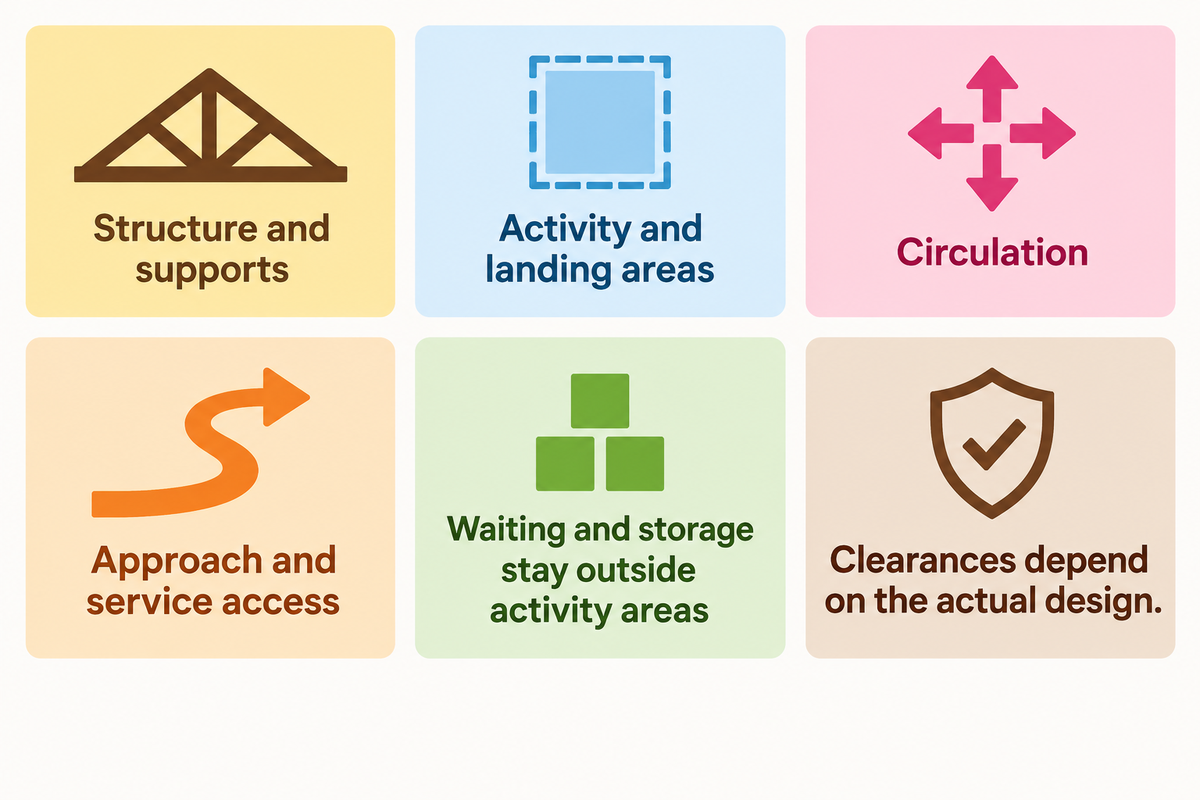
Compare both freestanding and wall-mounted equipment based on the total space each installation occupies. Include approach and service access, as well as activity and landing areas, circulation, and the structure and supports. A freestanding structure can free up an existing wall for other uses, but the supports can still occupy space that a front-view drawing doesn’t show.
‘Freestanding’ is a description of a particular product. Some home wall designs need no permanent wall or floor attachment; other structures have a different anchoring scheme. Steel support legs, projecting panels and the space needed to reach hardware belong on the plan. This means a small climbing face can take up a much larger area.
Sketch in the fixed elements of a space first: doors, columns, services on the ceiling, routes people use, etc. Place the proposed support envelope next. Place the activity and landing areas specified on the plan next. Keep waiting visitors and storage outside the specified activity and landing areas. Space planning should cover how the equipment reaches the room and how a worn component can be removed later.
For public children’s play areas in the USA, the Access Board’s accessibility standards address indoor play areas as well as outdoor ones. Impact attenuation is addressed in applicable use zones. A landing mat does not automatically provide the required access surface, and an access surface does not automatically provide the required impact performance.
Provisions for play areas include an exception for play areas in amusement attractions. That’s a scope distinction for those provisions, not an exemption from the entire accessibility law. Bring the actual facility classification and route into the design review. The equipment design and site assessment should define the clearances.
What Goes Into an Indoor Climbing Equipment Budget?
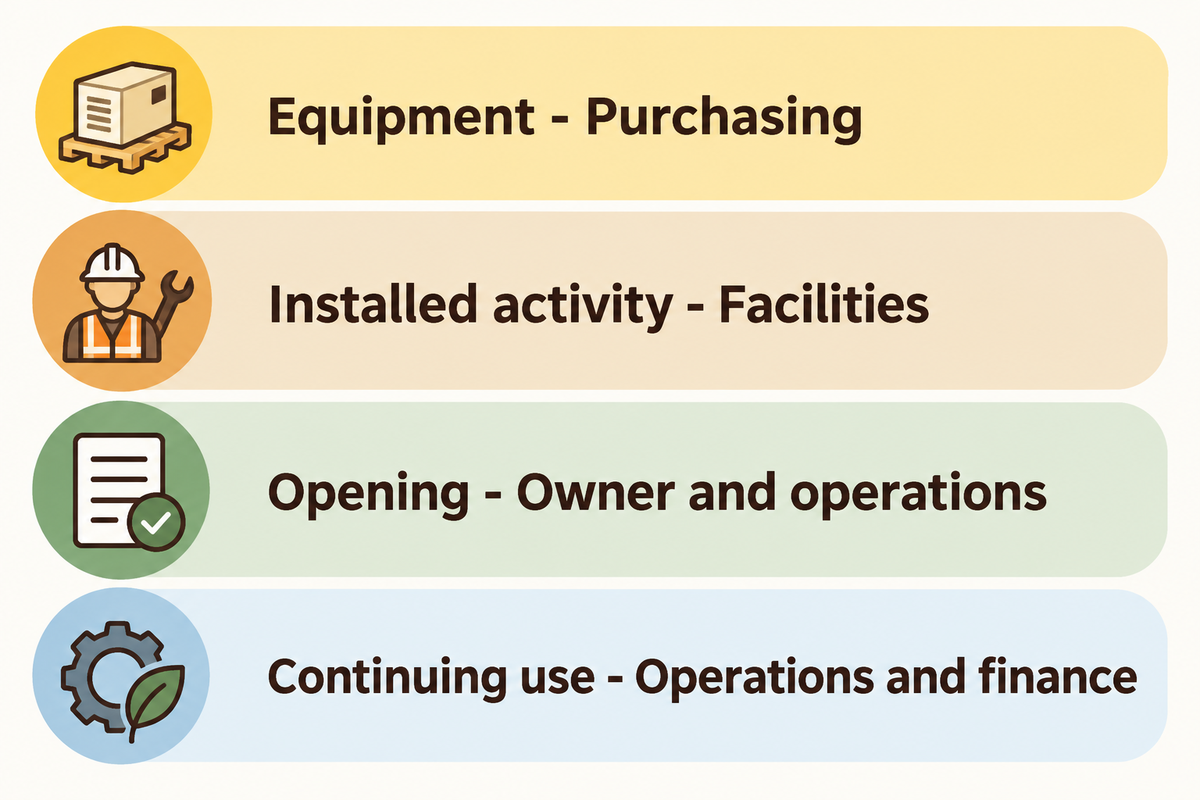
Budget for the usable activity, not just the wall or equipment carton. A visitor’s budget covers admission, rental and instruction. The budget for a home setup includes landing arrangements and replacement items. The budget for a public attraction includes delivery, operating resources, and care. Keep these three purchasing situations distinct and compare prices accordingly.
Budget other fixed assets, lease costs, staff and insurance costs as outlined in the public business-plan resource description of the Climbing Wall Association. A wall only budget may not include holds and flooring. A structure or design quotation may not include transport, local works and building adaptations. These are different costs and not interchangeable with price per unit area.
Use this table during a budget meeting. The person responsible for each line should enter the amount to be budgeted. A left-blank space indicates an unresolved cost, not a zero.
| Budget layer | Include | Who owns the amount? |
|---|---|---|
| Equipment | Named structure, holds, pads and accessories actually supplied | Purchasing |
| Installed activity | Freight, delivery access, assembly and local works | Facilities |
| Opening | Required approvals, training and operating preparation | Owner and operations |
| Continuing use | Inspection, cleaning, route work, replacement and storage | Operations and finance |
Example: assumed workload inputs. A venue budgets 2 staff-hours each week for a cleaning and changeover task across 48 operating weeks, resulting in an allocation of 96 staff-hours. If this task requires 4 hours, the allocation becomes 192 hours, a difference of 96 hours. At an assumed loaded labor cost of $25 per hour, this represents a cost difference of $2,400 per year. Replace all inputs with the site’s own task estimates and costs; required inspections and specialist work remain separate.
Consider the recurring workload of the two proposed activities while considering equipment prices, and determine if the lower priced option can be accommodated within the available maintenance time.
What Maintenance Keeps the Attraction Usable?
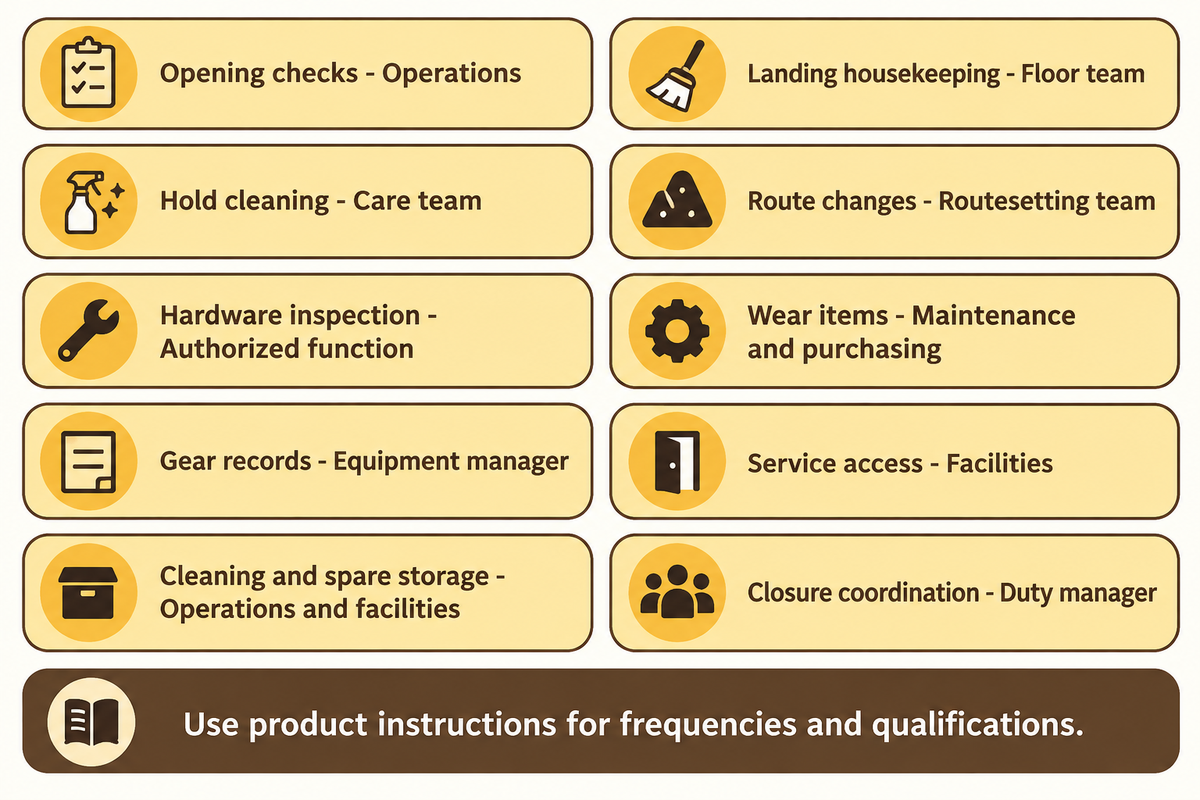
Make climbing equipment usable by assigning inspection, cleaning, replacement and activity change to named individuals prior to opening. Refer to the actual product and facility instructions and arrangements for this. Personal gear, home climbers and public attractions require different levels of service; a single generic maintenance calendar can’t cover all set-ups.
For sport walls, recurring route work requires people, tools and climbing holds as well as a wall. In the CWA’s 2026 discussion of routesetting budgets, Ashley Routson, General Manager of Planet Rock separates people-related and climbing-related spending. The access and availability of replacement parts is important when a part closes an activity. Purchasing needs a supply route, and maintenance needs access and time.
The first-year workload table shows where an activity can become unavailable. Use it to determine the role and budget allocation. Frequencies and qualifications come from the product instructions and operating plan.
| Task | Affected equipment | Responsible function | Consequence if unplanned |
|---|---|---|---|
| Opening condition checks | Equipment scheduled for use | Operations | Affected activity may remain closed |
| Landing-area housekeeping | Mats and activity floor | Floor team | Belongings intrude into the activity |
| Hold cleaning | Rock-shaped and other grips | Routesetting or designated care team | Cleaning competes with open climbing time |
| Route changes | Sport-climbing holds and volumes | Qualified routesetting team | Refresh work has no allocated time |
| Hardware inspection | Specified fasteners and connections | Authorized inspection function | Components await inspection or correction |
| Wear-item replacement | Specified rope, net or padding items | Maintenance and purchasing | Unavailable spares extend closure |
| Personal gear records | Rental harnesses and relevant gear | Equipment manager | Retirement and replacement are hard to track |
| Service access | Panels, supports and concealed connections | Facilities | Routine work requires avoidable dismantling |
| Cleaning and spare storage | Tools, holds and approved supplies | Operations and facilities | Work equipment occupies guest space |
| Closure coordination | Routes or play sections under work | Duty manager | Maintenance conflicts with booked sessions |
Does rock climbing gear expire?
Yes, climbing gear can reach a manufacturer defined service life limit, or be retired due to other factors. Use the instructions for the specific gear along with required inspections and records. A harness, rope and metal component do not share one universal replacement age simply because they are used indoors.
Keep the product identity and relevant purchase or service records for rental equipment. Take an item out of service if the manufacturer’s instructions or an inspection require it, rather than waiting for a routine anniversary. A durable-looking shell or clean surface is not a substitute for the specified checks.
Keep visitors waiting outside the active landing area. Virginia Tech’s bouldering rules direct resting users off the mats and away from other climbers’ falling areas. Where climbing sits alongside obstacle activities, the ninja course equipment guide covers that adjacent equipment category.
Choose the Right Supplier for Each Equipment Category
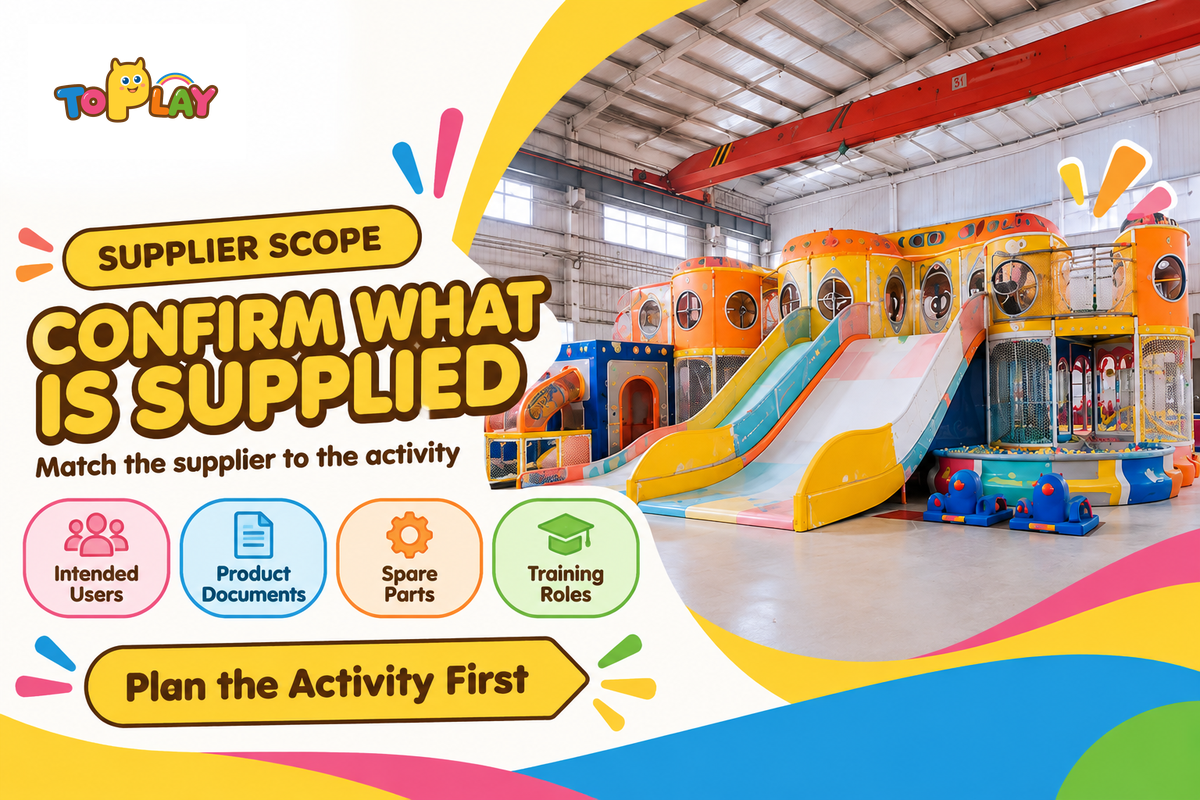
Use an equipment provider for personal climbing gear and a structure supplier for the installed equipment. Clearly state the responsibility and obligation in the same contract. When providing a complete sport climbing facility and a commercial play structure, equipment and operating resources differ.
Toplay is a supplier of commercial play structures and has the documents identified in the quotation. The operator is responsible for sourcing the personal gear, unless named in the order. For more information on solutions for the commercial climbing structure path, see indoor climbing equipment Solutions.
The intended users, installation configuration, product documentation, site connections, spare parts and responsibilities for installation and training should be established before placing the order. Ask which exact products any test evidence covers. The CPSC’s product-category guidance differentiates home from public use. For info on our company and products, see About Toplay.
What Is Changing in Indoor Climbing?
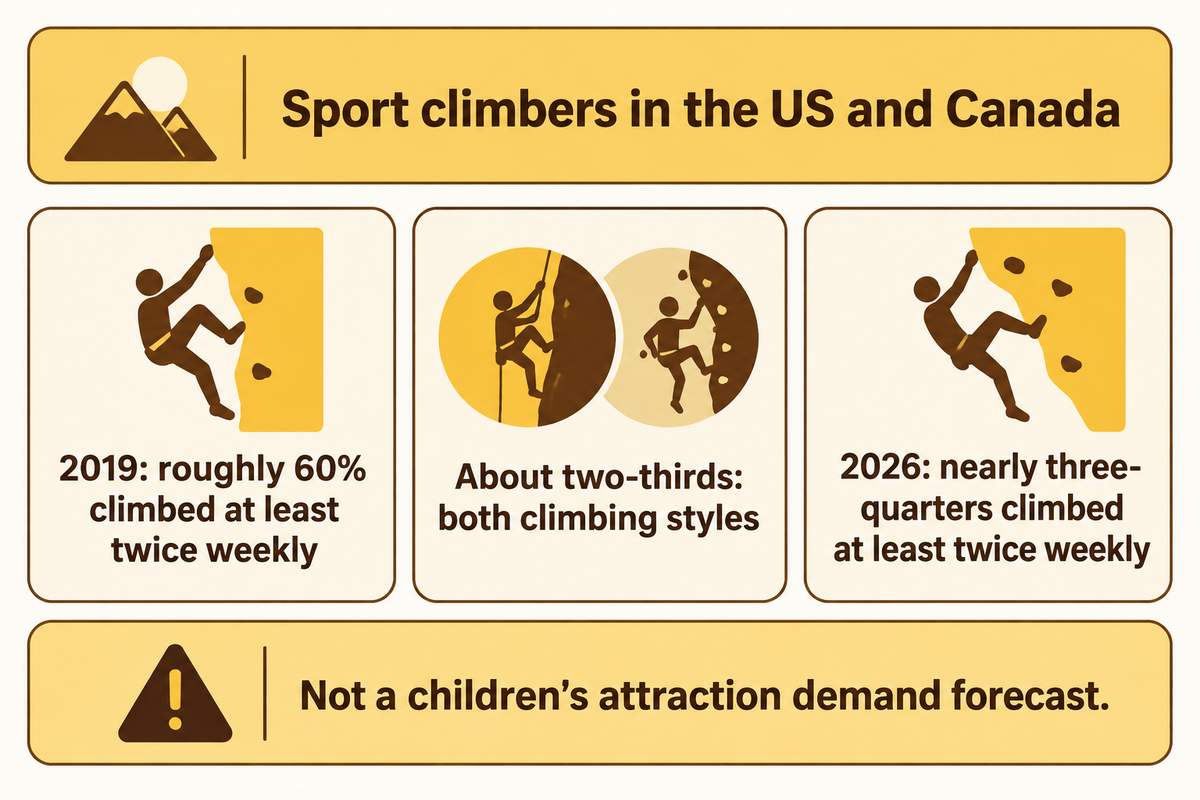
Plan for repeat participation and continuing route work while providing for the first-time visitor experience. Recent North American climber research indicates frequent users moving between bouldering and roped climbing. A sport facility typically favors equipment and layouts that can be maintained and refreshed. Children’s commercial play needs its own audience and session evidence.
About two-thirds of the more than 5,000 climbers in the US and Canada covered by the CWA’s 2026 comparison of its earlier and current Indoor Climber Surveys were involved in both bouldering and roped climbing. Nearly three-quarters climbed at least twice weekly in 2026, compared with roughly 60% in 2019. Those numbers are for sport-climbers and aren’t a projection of the estimated demand for a children’s attraction.
Example: a community facility choosing between wall layouts. One alternative provides a larger climbing face. However, circulation would contain cleaning tools and replacement holds. The other provides a smaller climbing face but has space for service and storage. The program prefers the latter because the planned route work has space to happen. Finance compares its recurring task hours with the larger concept’s projected program, rather than treating extra wall area as automatic revenue. They retain both options until the program, maintenance plan and building assessment can be evaluated together.
Budget working time and equipment for route changes, and include the refresh plan in the floor plan for ongoing operation after opening. Changing a route can give returning climbers a new problem while retaining appropriate opportunities to practice.
Frequently Asked Questions
Is bouldering a cheap hobby?
It can be an affordable way to try climbing.
A first visit may need only admission and rented shoes under the gym’s rules. Repeat visits add travel, session fees and possibly instruction. Compare the actual rental package with a membership before buying shoes or other gear for regular use. A local beginner package can bundle entry, equipment and an introduction.
How can I be sure that the product is safe for my kids?
Choose equipment intended for the setting and users.
The complete configuration, suitable installation, supervision and continuing care all matter. A toddler toy and a public play structure serve different situations. Read its instructions, installation requirements and relevant test documents together. A claim to certify one component shouldn’t be extended to every possible assembly. Keep the named model and its instructions together after purchase.
Steel, or a wooden climber?
Choose the complete product that suits the activity.
Steel frames and wood climbers can serve different uses. Compare connections, finishes, cleaning requirements and replacement parts rather than selecting by material alone. Plywood panels also form part of some climbing-wall designs; the specified assembly and support system determine how they’re used. Storage and the room’s intended activity should be considered alongside the material.
What ages is it for?
Use the particular product’s stated age range.
A toddler climbing toy, children’s playground structure and sport wall have different intended users. Match the activity, ability and supervision to the named product, rather than applying a single age band to all climbing equipment.
Classes or a gym at home?
Start with classes if you want instruction and varied climbing.
A home setup suits repeated practice or family play when the product, users and room fit. It also brings installation, space and equipment-care responsibilities. Trying the activity first helps distinguish a wish for occasional recreation from a habit worth allocating permanent space to. A home wall doesn’t replace the instruction needed for roped climbing.
What if my kids don’t use it?
Try the activity before choosing a permanent installation.
Watch whether children return to the movement or prefer another challenge. Relevant adjustment or play options may help sustain interest, but they also need usable room. Choose around observed play rather than an assumed training schedule.
Is indoor climbing equipment safe?
Use equipment designed for the actual activity and setting.
Appropriate installation, user instruction, inspection and operation remain necessary. A home toy, commercial play structure and roped wall need different arrangements. Follow the product and venue requirements; this guide compares categories and planning tasks rather than providing anchoring, rigging or belaying instructions. An indoor location removes neither equipment wear nor the need to manage climbing and landing areas.
Planning a commercial play attraction? Bring the intended users, activity and room plan into the conversation. Toplay can help define the commercial climbing structure scope.
References & Sources
- Rock Wall — University of California, Los Angeles Recreation.
- Climbing Center — North Carolina State University Wellness and Recreation.
- Reversing autobelay accidents in Norway — International Climbing and Mountaineering Federation, 2025.
- Fourth Edition of Industry Practices announcement — Climbing Wall Association, 2025.
- Playground Equipment — U.S. Consumer Product Safety Commission.
- ADA Accessibility Standards — U.S. Access Board.
- Business Plan resource description — Climbing Wall Association.
- Advocating for Routesetting Budgets — Climbing Wall Association, 2026.
- Bouldering Wall — Virginia Tech Recreational Sports.
- What Seven Years of Climber Data Tell Us About Where Indoor Climbing Is Headed — Climbing Wall Association, 2026.