Get in touch with Guangzhou Toplay amusement equipment co. Company

Indoor Play Equipment for Kindergarten: A Practical Buyer Framework

Project Build Support
Need an indoor playground layout before your next quote?
Send venue size, ceiling height, age range, theme direction and opening schedule. Toplay can match the play route, safety surface and delivery scope before you lock the quotation.
Layout fitFootprint, traffic and age zones
Build scopeEquipment, surface and installation
Quote pathFactory review before RFQ
RFQ Checklist
What to include for faster project matching
Venue and capacity
Floor size, ceiling height, entrance route, target age groups and daily visitor expectations.
Theme and operation
Brand direction, supervision plan, opening timeline and any food, retail or party-room requirements.
Delivery context
Send Project Details
City, floor access, installation window, local review needs and budget direction.
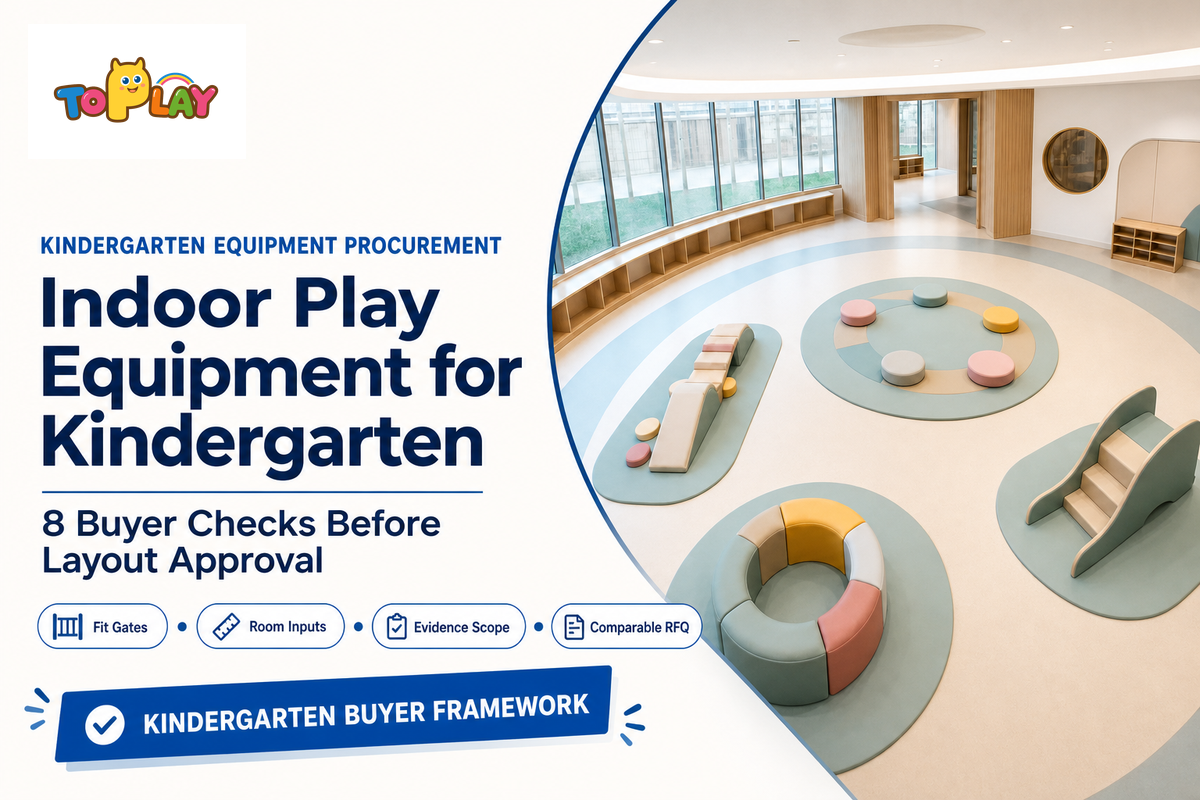
Indoor play equipment for kindergarten is a room-scale system selected from one shared operating brief, not from a catalog shortlist. Define the children, intended play actions, room limits, supervision plan, cleaning workload, evidence scope, and supplier responsibilities before approving a layout.
One briefGive every supplier the same room and use inputs.
Four fit gatesCheck age, ability, action, and supervision together.
Five decision assetsTurn broad preferences into comparable records.
One scope ledgerConnect each claim to the exact offered configuration.
What this guide does and does not decide
The kindergarten buyer guide is a procurement framework for comparing equipment scope, room fit, operating duties, and evidence; it is not a developmental assessment, building approval, fire review, accessibility determination, or product certification. Product classification, local rules, manufacturer instructions, and qualified project review remain controlling.
Translate search and catalog labels before comparing products
Market language overlaps home, school, commercial, indoor, and outdoor categories. The table turns those phrases into buyer questions without adopting the marketing claims behind them.
| Search or catalog category | Translate it into the brief |
|---|---|
| kids indoor, kids play, children play, little ones, toddler, play area, play space, playroom | Name the actual users, shared-use schedule, intended actions, supervision, and room rather than relying on an audience label. |
| indoor soft, active play, active fun, active exploration, engaging play, exciting playground, safe and fun | Replace each adjective with observable actions, controls, evidence, and operating checks. |
| outdoor playground, outdoor play, trampoline park, family entertainment center, play center | Do not transfer an environment, business model, or equipment assumption into a kindergarten project without rechecking scope. |
| wooden indoor, Montessori, triangle, climbing set, climbing structure, trampoline | Identify the product class, intended use, dimensions, anchoring or installation, access, care method, and evidence for the exact item. |
| play solutions, indoor play collection, play offers, themed, versatile, modular, blend | Ask what is included, what can change, who approves a change, and which documents remain applicable afterward. |
| durable, durability, high-quality, craftsmanship, thoughtfully designed | Request the material and construction schedule, inspection points, replaceable parts, instructions, and service boundary. |
| creativity, motor skills, coordination, stimulate, foster, elevate, transform, soar | Treat outcome language as a program question, not proof that equipment will cause a developmental or learning result. |
| Avenlur and other named brands in search results | Use brand pages for product discovery only; verify intended setting, evidence scope, and commercial responsibility independently. |
| rainy days, engaging space, play indoor | Rewrite the shorthand as a measurable operating need, schedule, storage plan, and room constraint. |
Searches for kindergarten play equipment or kindergarten playground equipment may mix home, outdoor, and commercial products. Treat those phrases as discovery labels, then return to the same kindergarten operating brief.
1. Start With a Kindergarten Operating Brief, Not a Catalog
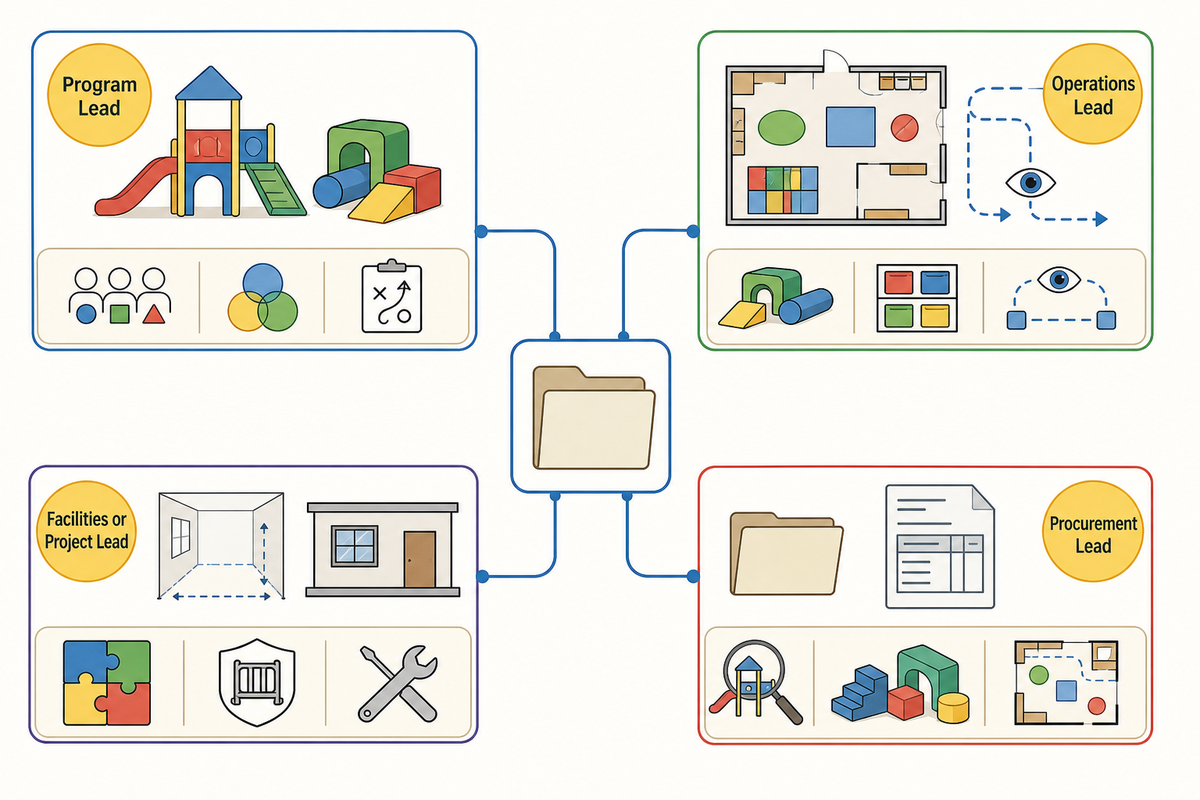
Following the shared brief above, a proposed supplier should receive information about the program, staffing, facility constraints, room limits, and operating constraints before preparing equipment options.
Catalog-first risk: proposals become inconsistent because each supplier may assume a different user group, room boundary, or service scope. The resulting mismatch is difficult to see in a headline price.
| Decision owner | Input to freeze | Question to answer | Evidence at handoff |
|---|---|---|---|
| Program lead | User groups, schedule, intended play actions, transition needs | Who uses each zone, when, and for what kind of participation? | Approved use brief |
| Operations lead | Staff positions, cleaning windows, inspection access, stop-use process | Can the team see, reach, clean, and reopen each part as intended? | Staff-flow and care notes |
| Facilities or project lead | Room geometry, overhead conflicts, delivery route, utilities, protected areas | Can the proposed equipment be delivered, installed, used, and serviced in this room? | Dimensioned room record |
| Procurement lead | Common inclusions, exclusions, evidence schedule, service responsibilities | Are all bidders pricing the same project boundary? | RFQ and clarification log |
For Head Start programs covered by the safety-practices rule at 45 CFR 1302.47, age-appropriate equipment connects with supervision, cleanliness, maintenance, safe facilities, and staff responsibilities. Other requirements may affect that integration as well, including building and local regulation questions, fire and sanitation review, and licensing, landlord, or insurer practices that assign additional decision owners.
Key takeaway
A supplier can compare equipment only after the kindergarten defines who will use the room, how staff will operate it, and which local reviewers control unresolved project questions.
2. Check Age, Ability, Play Action, and Supervision Together
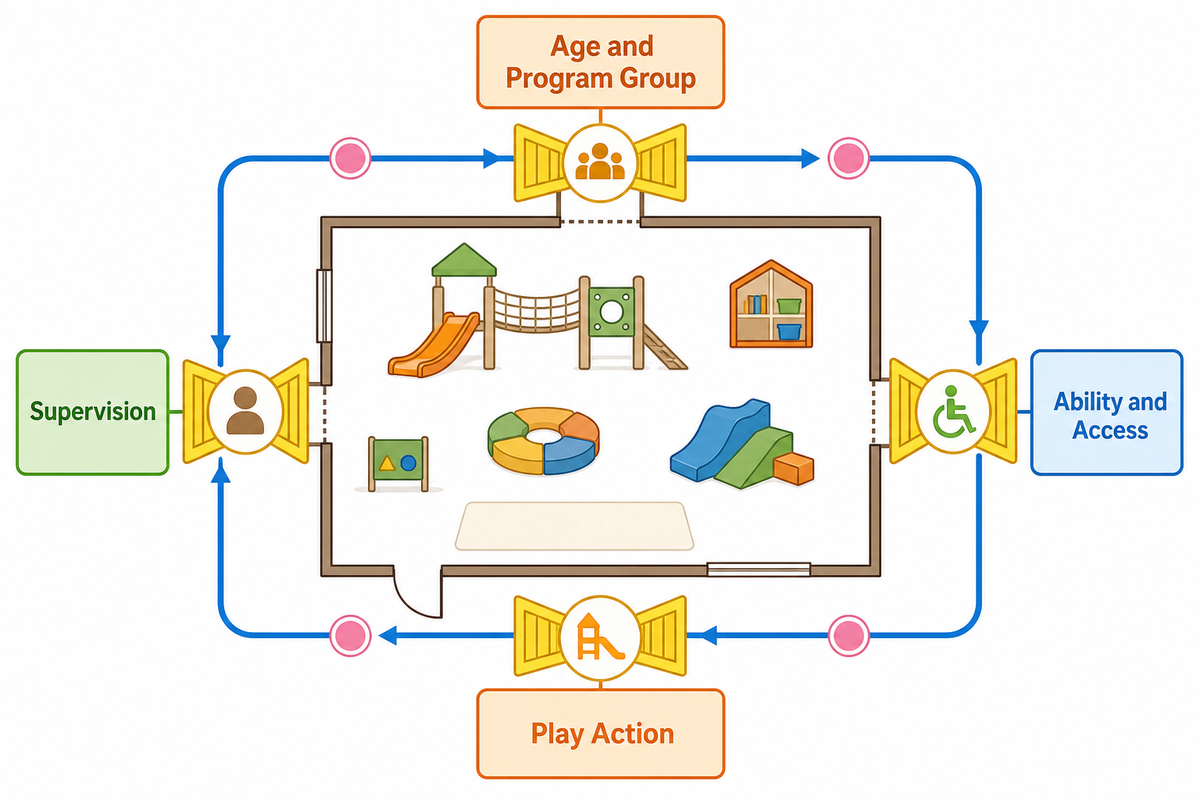
Age requirements, while restricting the product search, don’t determine suitability. Other requirements, including intended action, known abilities, access controls, staff supervision and visibility, and the exact configuration, must also align to determine suitability.
Fit risk: an age-band match can still fail when ability, play action, staff visibility, access control, or the exact configuration doesn’t match normal use.
| Concurrent gate | Record in the brief | Layout implication | Pause the decision when |
|---|---|---|---|
| Age and program group | Groups using the room together or at different times | Scale, pacing, entry, and separation need an explicit basis | One broad age band is offered without explaining shared use |
| Ability and access | Mobility, balance, transfer, communication, and sensory-access questions | Provide viable ways to enter, participate, pause, and exit | A nominal age match hides an access barrier |
| Play action | Crawl, climb, balance, slide, pretend, cooperate, or reset | Circulation and landing areas follow the action, not the product name | Opposing or unequal-intensity actions cross the same path |
| Supervision | Staff position, sightline, intervention route, and access control | Entries, exits, blind pockets, and queues remain observable and reachable | Normal use can place a child outside practical staff view |
Consumer Product Safety Commission operating guidance links relevant program practices to posted size recommendations and separation of smaller children from older-child areas; those requirements are a scoped reference, not a certificate.
Buyer action: complete this sentence for every zone: “This zone is intended for [group], permits [actions], requires [staff position or control], and excludes [conflicting use].” If the team cannot complete it, the zone is not ready for layout approval.
3. Build a Balanced Kindergarten Play-Action Mix
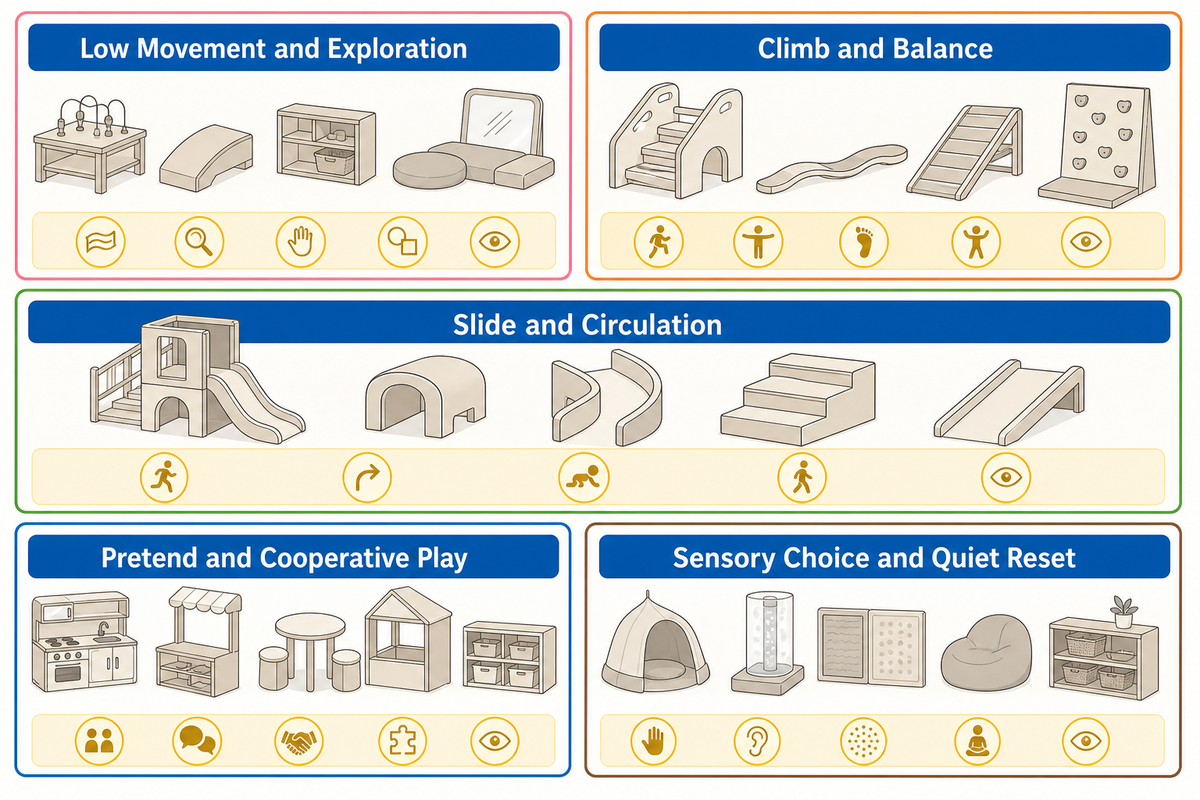
Programs and practices should offer more than one form of participation without repeating the same movement across the room. That distinction matters because a long equipment list can still leave a gap in usable choices.
5-Part Kindergarten Play-Action Mix Matrix
| Play-action family | Possible equipment family | Program question | Operating question |
|---|---|---|---|
| Low movement and exploration | Low foam forms, crawl-through elements, floor-level loose pieces | Does this add a distinct choice rather than a smaller copy of another zone? | Can staff see and reach the full route? |
| Climb and balance | Graded climber, low obstacle course, supervised climbing wall concept | What actions are intended, and which are out of scope? | Where are the entry, recovery, landing, and intervention paths? |
| Slide and circulation | Low slide or contained loop within a defined play structure | Does the loop create a useful choice or only increase queue pressure? | Can the exit remain clear during normal traffic? |
| Pretend and cooperative play | Themed role-play panel, build area, shared activity station | What type of imaginative play or cooperative play is intended? | How are loose parts counted, stored, and cleaned? |
| Sensory choice and quiet reset | Lower-intensity tactile, visual, or enclosed pause option | Can a child choose a different intensity without being isolated? | Can staff maintain visibility and manage noise spillover? |
Outcome measurement in the systematic review focused on the outdoors and reported mixed or no findings related to play equipment. It doesn’t support extrapolating any outcome to the indoor kindergarten equipment package.
Resist the catalog trap: a ball pit, sensory ball pit, indoor playset, Swedish wall ladder, trampoline, jungle gym, or rock climbing wall is a product label, not a complete use case. Define the intended action and controls before deciding whether any named family belongs in the room.
For deeper comparison of foam forms, movable pieces, and installed systems, use the daycare soft play equipment buyer brief. Keep that product-family detail separate from this article’s whole-room selection framework.
4. Freeze the Room and Access Inputs Before a Layout
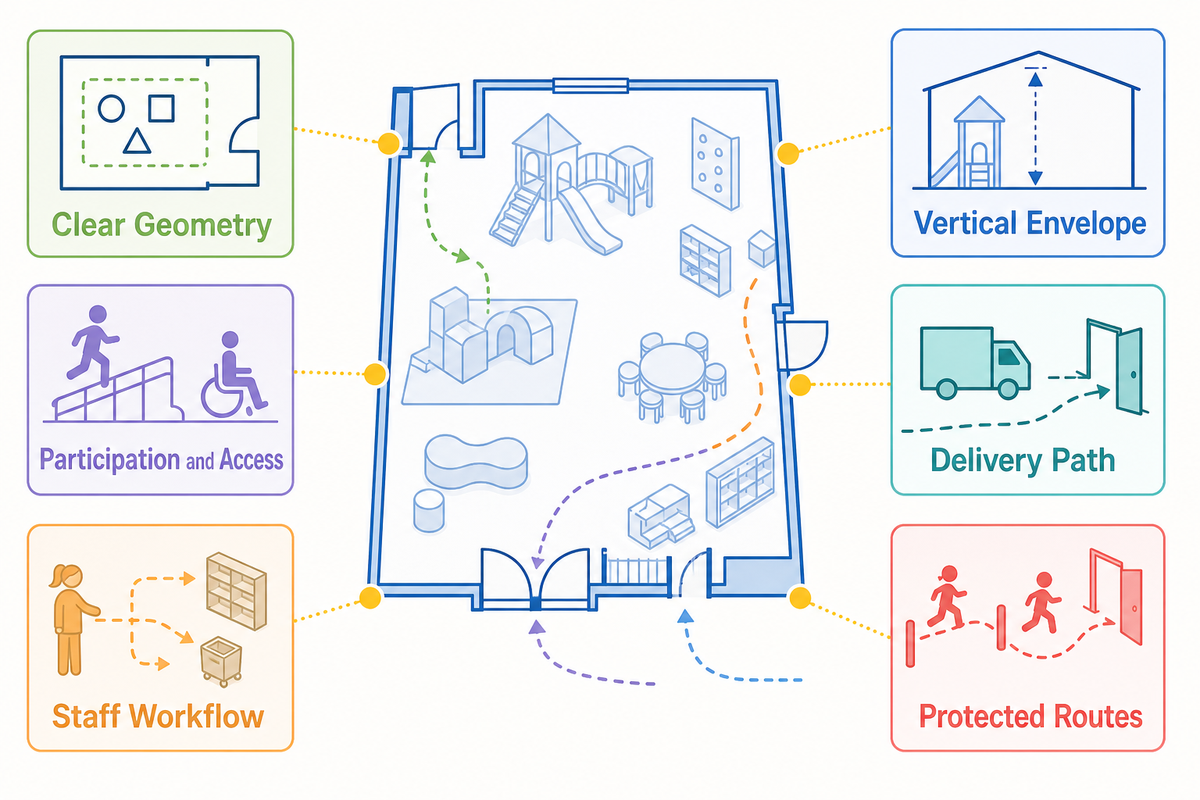
The total floor area of a space doesn’t define the size of an indoor playground. That sizing decision follows the play-action mix only after the room and access inputs are frozen. The supplier must have a clear definition of the limits of the space, delivery and access ways, protected routes, staff movement, and local-review questions before the layout is evaluated.
Room-to-Equipment Fit Card
| Input | Record | Why it changes the proposal |
|---|---|---|
| Clear geometry | Walls, columns, doors, windows, steps, radiators, and fixed obstructions | Gross area can include space that cannot accept equipment or circulation |
| Vertical envelope | Finished height plus lights, ducts, sprinklers, signs, beams, and no-build areas | Overhead conflicts can change both equipment choice and local review |
| Delivery path | Loading point, doors, corridors, lifts, turns, stairs, and time restrictions | Modules still have to reach the room and remain replaceable |
| Protected routes | Egress, fire equipment, service panels, utilities, and local clearances | A visually open area may still be unavailable for the concept |
| Participation and access | Applicable route, entry, clear-space, transfer, surface, and support questions | Access must be part of concept review, not added after approval |
| Staff workflow | Normal positions, intervention paths, check-in, toilets, handoffs, cleaning access | A layout that fits equipment may still fail daily operations |
Measurement-record example: a completed survey line might read “8,500 mm clear width, 10,000 mm clear length, 3,200 mm clear height, 900 mm narrowest delivery opening, and 72 m² clear area” only when those are the actual measured project values. The numbers are formatting examples, not recommended kindergarten dimensions.
Weak room brief
- Gives only approximate square footage
- Omits overhead conflicts
- Leaves delivery and egress unmarked
- Assumes staff can adapt later
Comparable room brief
- Includes dimensioned geometry
- Marks the usable vertical envelope
- Records delivery and protected routes
- Plots normal staff movement
How much space do I need for indoor play equipment?
There’s no standard or average value that can be generally applied to the total floor area of a kindergarten. Required area depends on usable geometry, selected actions, circulation, access, egress, occupancy, staff sightlines, delivery constraints, maintenance access, and the rules applied by the project location.
Local-review boundary: the 2024 International Building Code includes a special section for certain children’s play structures above stated size thresholds in covered occupancies. Use that only as U.S. model-code context; the adopted code and authorities having jurisdiction decide what applies to the actual project.
The indoor playground design process details the design and implementation of equipment and systems that begins after the information captured in this card is complete.
5. Design Sightlines, Transitions, and Access for Staff
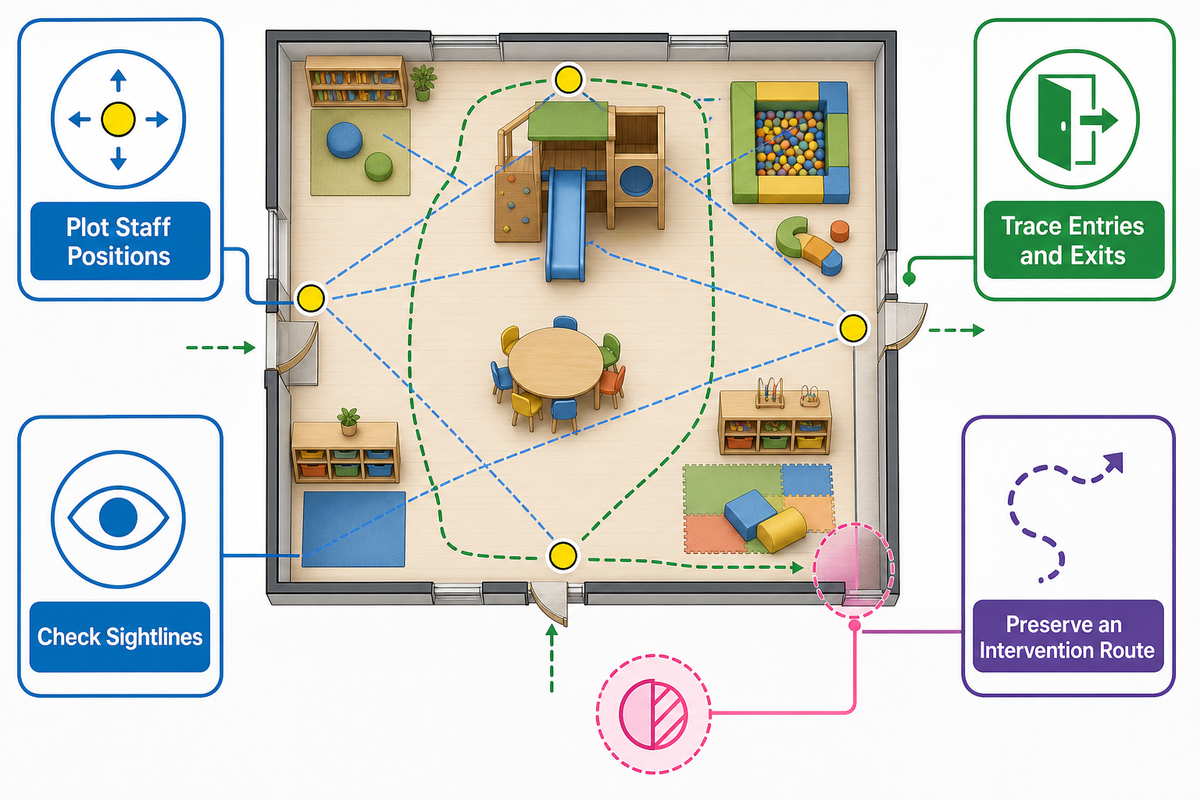
Supervision and care of children can’t be added to a completed layout. The physical design must address entries, exits, queues, crossings, blind pockets, mixed-intensity zones, routes, and areas where staff members can intervene to supervise children.
Do
- Plot likely staff positions
- Trace children through entries and exits
- Check sightlines at child and adult height
- Preserve a practical intervention route
Don’t
- Hide a quiet zone behind a high element
- Cross a slide exit with a climbing queue
- Rely on one perfect viewing point
- Move cleaning work into active supervision time
Trade guidance from Playground Professionals and Early Childhood Care and Education (ECCE) personnel offers connected perspectives on supervision, age-appropriate design, surfacing, maintenance, staffing conflicts, and blind spots. ECCE personnel describe staffing conflicts that occur when a staff member assigned to supervise children is required to perform a different task, such as cleaning, that takes the same staff member away from supervision.
Stop/go review: stop if normal use creates a hidden pocket, if a staff member cannot reach a predictable conflict, or if access control depends on constant improvisation. Go forward only after the revised concept shows the observation and intervention path.
6. Ask What Each Safety or Standards Claim Actually Covers
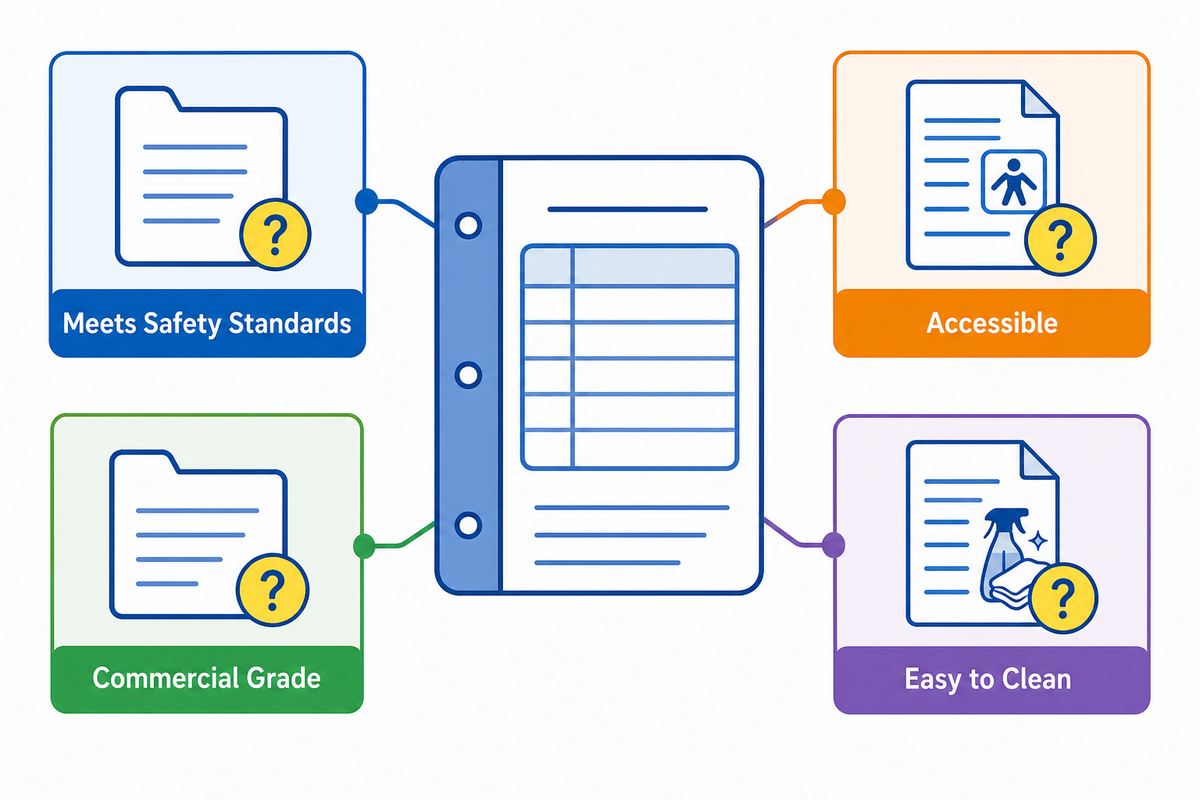
Claims of conformity require specific information from the supplier about the product class, documentation, scope, configuration, date, issuing authority, and exclusions. Once the supervision plan is visible, the same scope discipline must be applied to every safety or standards claim. Badges or certificates don’t determine the scope of coverage.
Claim-to-Evidence Scope Ledger
| Claim heard | Request | Bind it to | Leave open |
|---|---|---|---|
| “Meets safety standards” | Named standard, edition, report or certificate, issuer, scope, and exclusions | Quoted model, materials, components, dimensions, and destination | Applicability and local acceptance |
| “Commercial grade” | Intended-use statement, material schedule, construction record, care and inspection instructions | Actual user group, operating plan, and offered configuration | Meaning of “commercial” for this quote |
| “Accessible” | Applicable design basis, route and entry details, component access, and project assumptions | Current drawing and installation condition | Qualified accessibility and project review |
| “Easy to clean” | Material list, surface-care method, access procedure, compatible products, and reopening conditions | Every relevant exposed and hidden component | Feasibility in the kindergarten’s schedule |
CPSC business guidance separates home-use playground equipment, products that may qualify as children’s toys, and public-use equipment found in places such as schools or child-care facilities. Identify intended use and product form before accepting a standards statement.
Scope example, not a certification: ASTM’s public record identifies F1918 as a standard for soft-contained-play equipment. A buyer still needs configuration-specific evidence and must not treat the designation as a blanket approval for loose toys, home play products, the room, installation work, or every destination rule.
How safe is play equipment?
In the absence of additional evidence, no adjective should be relied upon to affirm equipment suitability. Review the equipment and intended user, how it will be used and installed, the room environment and supervision, the user’s understanding of operation instructions, inspections and routine maintenance, product classification, evidence scope, and applicable local requirements together.
Continue the operating review: use the daycare playground safety checklist for routine inspection questions after a suitable configuration has been selected.
7. Test Cleanability, Inspection Access, Parts, and Service Burden
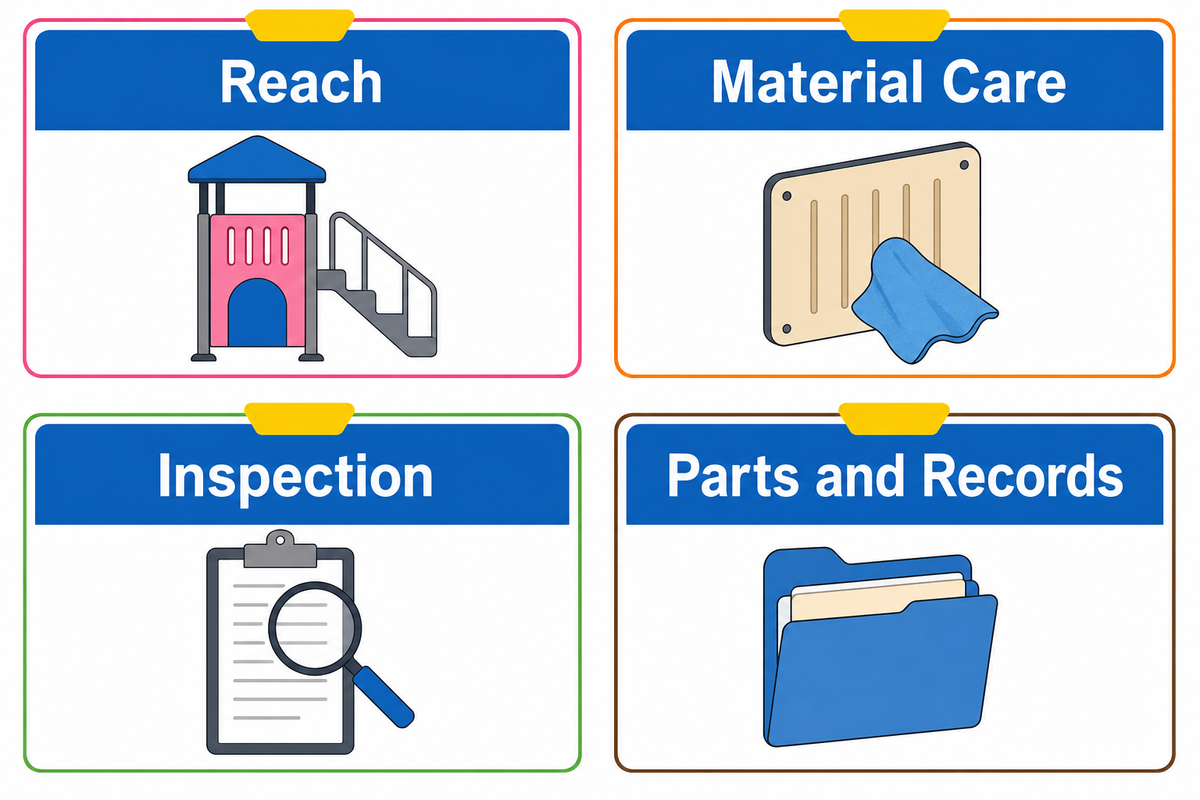
The appearance of a surface doesn’t determine ease of maintenance. The evidence ledger should therefore identify the care and inspection instructions for the quoted configuration. The same maintenance reasoning should cover detecting, identifying, and replacing worn or failed components, plus reach, seams, cavities, removable parts, hidden inspection points, compatible care methods, and documentation.
Operations Burden Test
| Test | Ask the supplier to show | Kindergarten check | Comparison flag |
|---|---|---|---|
| Reach | How staff access high, enclosed, and hidden surfaces | Can the method be performed without unsafe improvisation? | Special access is unnamed |
| Material care | Surface-specific cleaning, sanitizing, or disinfecting instructions | Are products, contact time, ventilation, storage, and reopening workable? | One chemical is suggested for every material |
| Inspection | Closures, netting, fixings, padding, seams, wear points, and stop-use criteria | Can staff inspect the actual points on a practical schedule? | Critical areas are concealed without access |
| Parts and records | Component identifiers, manuals, drawings, parts route, and service contact | Can the team identify what must be isolated or replaced? | Replacement depends on guesswork |
The September 24, 2026 version of the CDC’s early care and education web page differentiated the terms cleaning, sanitizing and disinfecting. It described considerations for using disinfectant products suitable for the surface, including label directions, contact time, ventilation, and safe chemical storage. The CDC web page doesn’t alter manufacturer instructions or the responsible local authority’s controlling method for the product and project.
Ask for a demonstration: have the supplier walk through one exposed surface, one seam or closure, one enclosed point, and one replaceable component on the proposed design. A generic care brochure is not enough if it cannot be mapped to the current layout.
The indoor playground maintenance checklist owns detailed maintenance cadence; this section only compares whether the offered system can support a workable routine.
8. Issue One RFQ and Compare Supplier Scope Like for Like
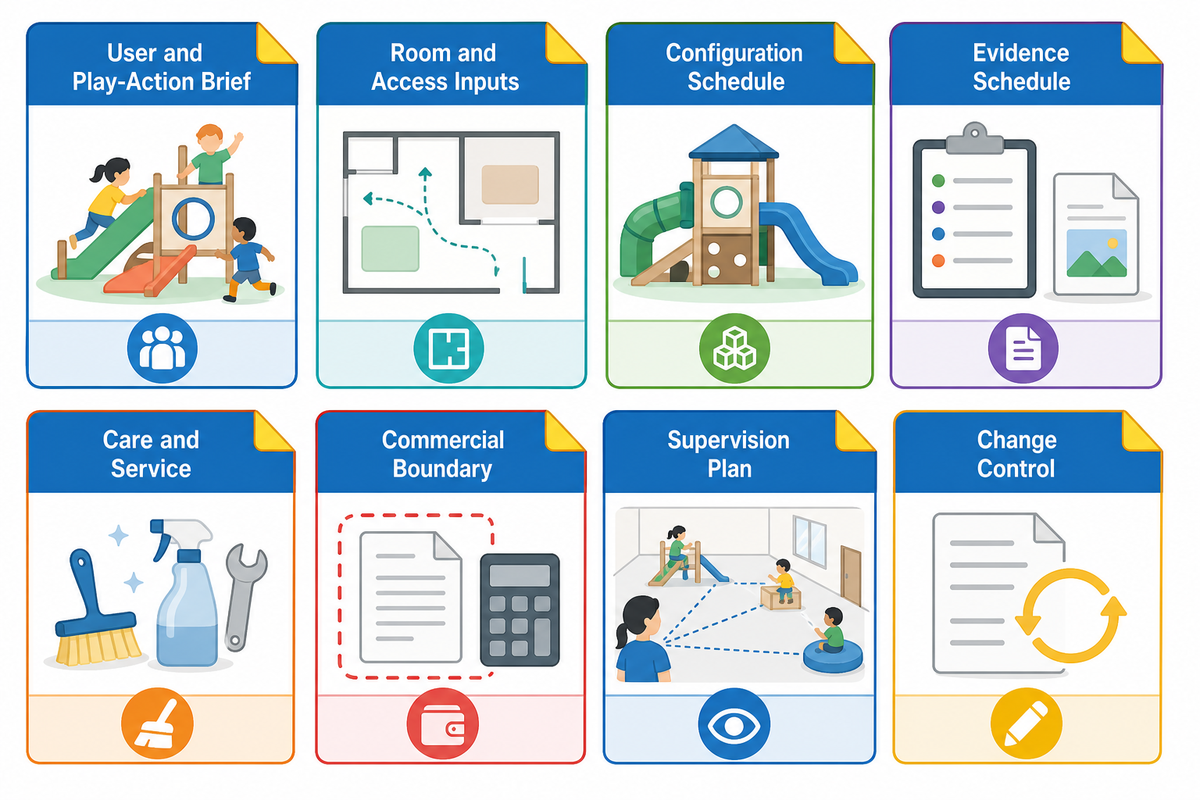
It isn’t meaningful to compare prices for equipment, components and services of different scopes. There should be one base brief for every supplier, with each item and deviation made visible.
Buyer rule: compare the same brief, configuration boundary, evidence schedule, and service responsibility before comparing the final totals.
RFQ checklist: copy these fields into every quote request.
| Parameter | Required response | Why it matters | How to verify |
|---|---|---|---|
| User and play-action brief | State intended groups, actions, exclusions, and shared-use assumptions | Prevents a broad age label from carrying the whole decision | Map each zone to the approved brief |
| Room and access inputs | Return a drawing with assumptions, protected routes, and delivery plan marked | Makes room-fit differences visible | Compare against the fit card |
| Configuration schedule | List models, modules, materials, accessories, loose items, and exclusions | Connects price and evidence to the same offer | Cross-check quote, drawing, and bill of materials |
| Evidence schedule | Name documents, issuers, editions, scopes, dates, and configuration links | Separates proof from marketing language | Use the scope ledger |
| Care and service | Provide instructions, inspection points, parts identification, support route, and buyer duties | Shows the operational burden after installation | Run the Operations Burden Test |
| Commercial boundary | List price inclusions, exclusions, local-review duties, delivery, installation, and acceptance steps | Stops the lowest total from hiding omitted work | Resolve each item in a clarification log |
| Supervision plan | Mark normal staff positions, sightlines, intervention routes, and access controls | Makes operating conflicts visible before layout approval | Trace the observation and intervention routes on the drawing |
| Change control | Price and document every approved configuration or scope revision | Keeps the quotation, drawing, bill of materials, and evidence schedule aligned | Issue a versioned clarification and approval log |
Kindergarten Equipment Selection Scorecard
25%Child and action fit
20%Room and supervision fit
20%Evidence clarity
20%Operations burden
15%Commercial scope
The weights above are editorial sample values, not an industry standard. Replace them with the kindergarten’s priorities, score only documented information, and keep unresolved local-review items outside the supplier’s self-score.
Commercial handoff: when the shared brief is ready, review Toplay’s custom indoor playground options for kindergartens for configuration discussion and quotation. This page remains the commercial owner; the guide you are reading remains the comparison framework.
9. Know When a Large Installed Structure Is Not the Best Choice
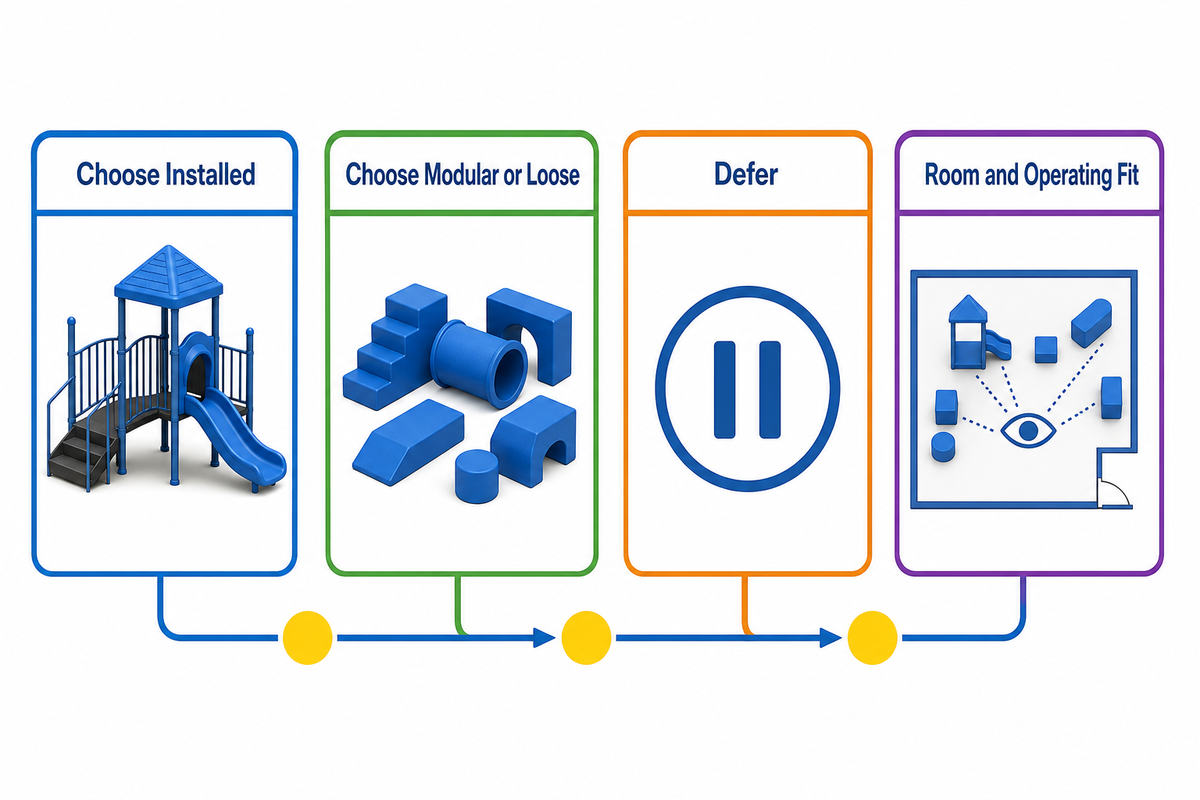
When making decisions about how to best spend education budgets, the best way to create long-term value isn’t always to build or buy complex structures. The like-for-like RFQ can reveal when installed complexity adds cost without solving an operating need. Choose the format only after program fit, room certainty, supervision, cleaning capacity, local review, and lifecycle burden are clear.
Hidden commitment risk: an installed footprint is harder to change because delivery, fixings, protected routes, service access, and local review may all be tied to the approved concept. Toplay should therefore receive the same frozen brief before proposing either a modular or installed option.
Choose installed
Inputs are stable
- The room and delivery path are verified
- Use groups and actions are defined
- Staff visibility and care access are workable
- Evidence and local-review responsibilities are clear
Choose modular or loose
Flexibility has real value
- The program changes zones frequently
- Smaller choices meet the stated actions
- Storage and parts control are manageable
- Installed complexity adds little benefit
Defer
Critical inputs remain open
- Dimensions or overhead limits are uncertain
- Blind spots remain unresolved
- Cleaning access isn’t demonstrated
- Authority or building questions may change the concept
The exact focus term held roughly 10 monthly searches across the available 60-month history, while the observed results were commerce-led rather than informational. This is a search-specificity signal, not evidence that the kindergarten equipment market is growing or shrinking.
Decision rule: trend novelty should never override room and operating fit. A versatile modular concept can be the stronger choice when it answers the brief with less unresolved burden, while a larger custom play structure can be appropriate when the project inputs support it.
10. Frequently Asked Questions
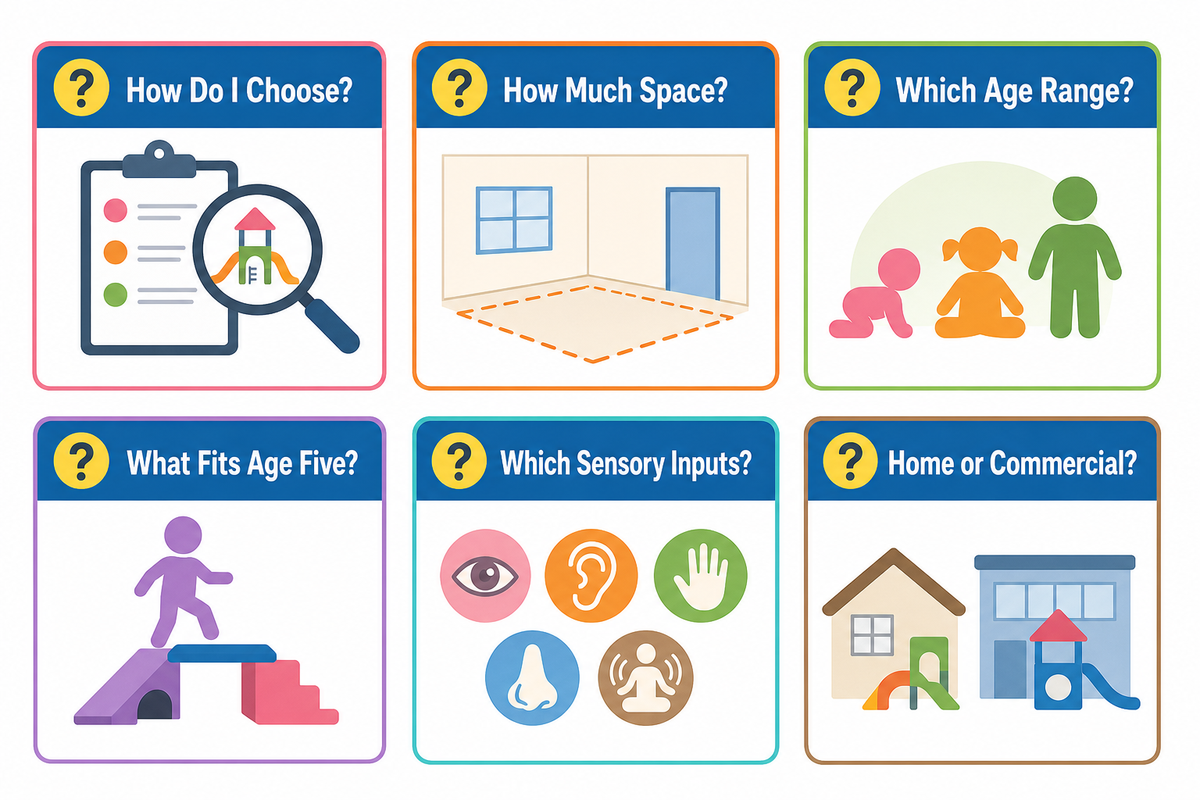
How do I choose the right indoor play equipment for a kindergarten?
Start with a common brief that defines children and user groups, intended play actions, room and delivery constraints, staff sightlines, access needs, cleaning and inspection capacity, evidence requirements, and commercial scope. Gate each zone by age, ability, action, and supervision, then compare documented proposals with the same scorecard rather than choosing from photos or total price alone. Keep any unresolved building, fire, accessibility, sanitation, or licensing question assigned to the appropriate local reviewer.
How much space do I need for indoor play equipment?
No universal square-foot figure works for every project. The answer depends on clear room geometry, overhead conflicts, proposed actions, equipment dimensions, circulation, applicable use zones, access, egress, occupancy, supervision, delivery, maintenance access, and local requirements. Send measured inputs, photographs, and marked constraints before asking a supplier to develop a layout, and require the drawing to identify every remaining assumption.
What age range is indoor play equipment designed for?
Age ranges depend on the product family and specific configuration, so a broad catalog band is only a starting point. Verify the intended age group together with ability, play action, access control, supervision, instructions, product classification, and evidence that applies to the quoted model or custom arrangement. Also ask how mixed-age use, transitions, and posted restrictions will be managed in the actual room.
What is a good indoor playset for a 5-year-old?
A good option is one whose intended actions, scale, access, exits, circulation, supervision, care method, and evidence fit the actual children and room. “For age five” alone can’t establish that fit.
Can indoor play equipment support children with sensory processing needs?
Equipment can be planned to offer choices in intensity, route, texture, sound exposure, participation, pause, and exit, but no package should be presented as a universal sensory-support solution. Involve the family, educators, accessibility lead, and qualified specialists as appropriate, then translate individual needs into observable project inputs. Ask the supplier to show how the exact layout provides choice, preserves staff visibility, avoids forced participation, supports a practical exit or pause, and communicates any unresolved limitation before approval.
What is the difference between home and commercial indoor play equipment?
Intended use, product classification, construction, documentation, installation, inspection, and applicable evidence may differ. Ask the supplier to state the product’s intended setting and the exact scope of every claim instead of assuming a home playset or indoor wooden climber is interchangeable with commercial playground equipment.
Turn the framework into a comparable kindergarten proposal
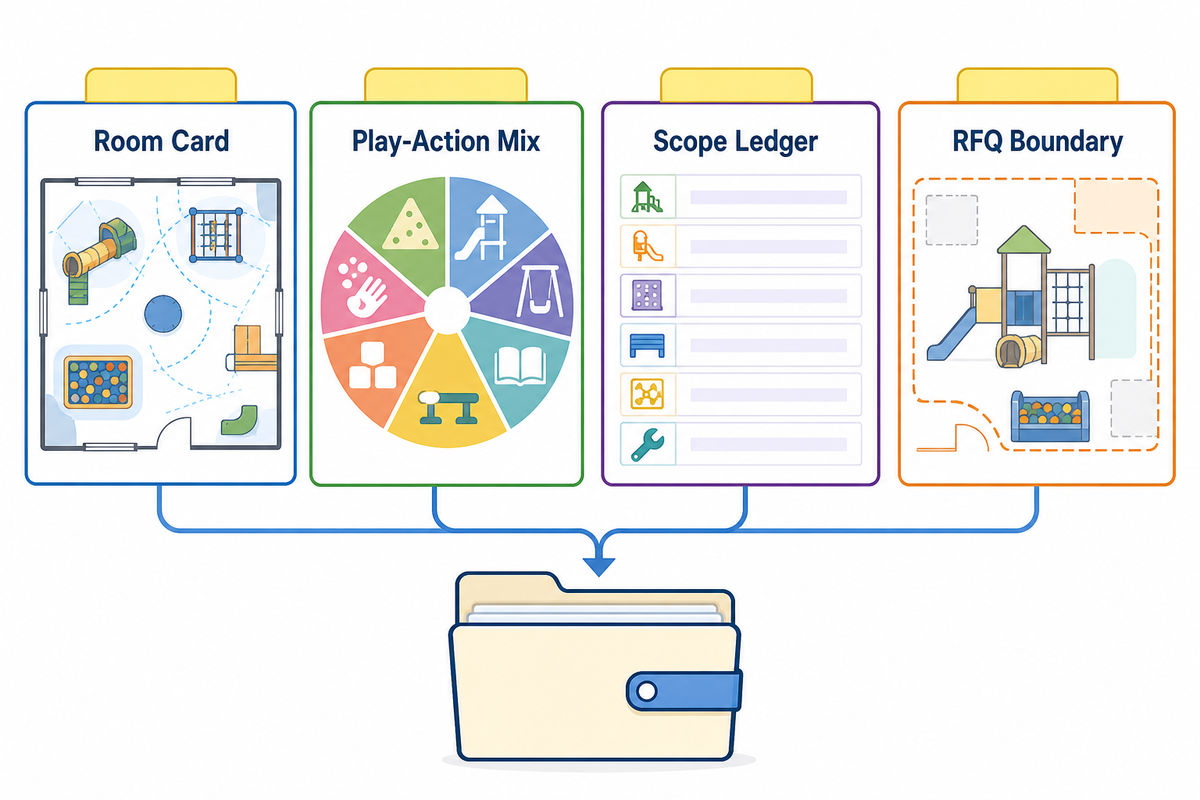
Send Toplay your completed room card, play-action mix, scope ledger, and RFQ boundary so the design team can discuss a custom configuration without hiding the open questions. Keep the intended-use and evidence-scope boundaries, plus the local-review boundary from the FAQ, visible in that proposal.
About Toplay
Guangzhou Toplay Amusement Equipment Co., Ltd. states that it was established in 2014, offers customizable indoor children’s playground equipment, sells more than 90% of its products to the global market, has exported to more than 40 countries, and provides 24/7 online consultation and after-sales support. The client also supplied an average annual growth figure above 20% and noted participation in international fairs; request current, project-specific substantiation before using any company statistic in a tender.
The supplied founder story names Guangzhou Didi Land Amusement Equipment Co., Ltd. as a separate corporate identity; this guide doesn’t merge that narrative into an independently verified Toplay company claim.
References & Sources
- U.S. Head Start: 45 CFR 1302.47 Safety Practices
- U.S. CPSC: Soft Contained Play Equipment Safety Checklist
- U.S. CPSC: Playground Equipment Business Guidance
- ASTM International: F1918-21 public scope record
- U.S. Department of Justice: 2010 ADA Standards for Accessible Design
- International Code Council: 2024 IBC Chapter 4
- U.S. CDC: Cleaning and Disinfecting Early Care and Education Settings
- Peer-reviewed systematic review of ECEC physical-environment factors
- Playground Professionals: supervision as a design and operations input



